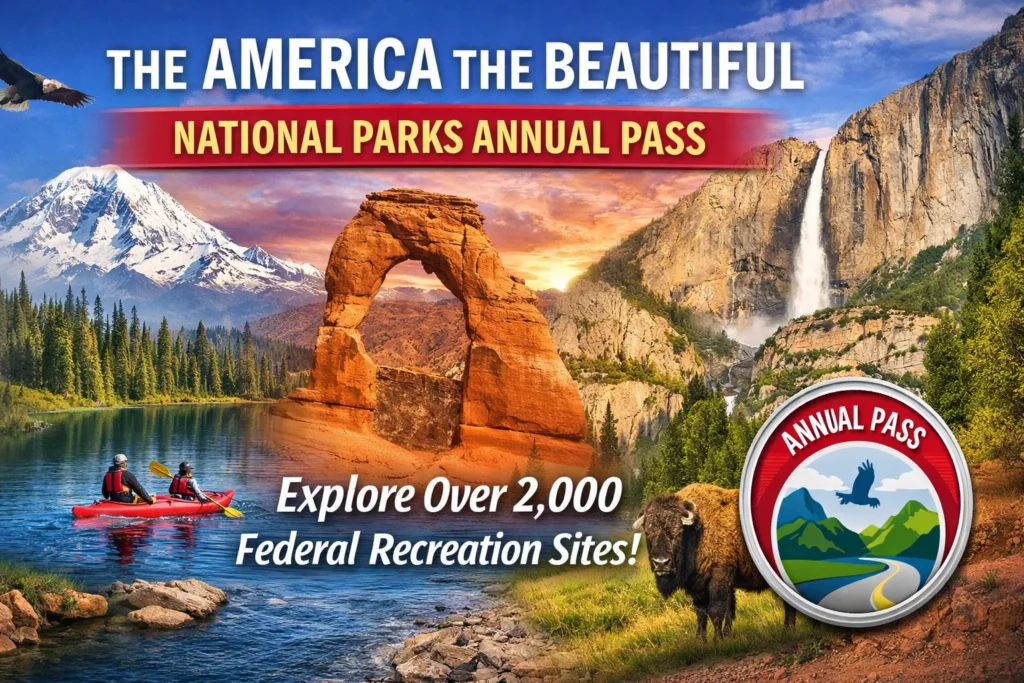
Is the America the Beautiful Pass Worth It? Real Cost Breakdown, Savings & Road Trip Guide (2026)
Is the America the Beautiful Pass actually worth buying, or is it cheaper to just pay at each park? For most travelers, the honest answer sits on one number: three. Visit three or more fee-charging parks in a 12-month span and the $80 pass beats paying at the gate every time. Visit fewer, and it might not.
That’s the whole decision, but the details change depending on which parks are on your route, whether you’re traveling solo or with family, and whether you qualify for a cheaper pass altogether. This breaks down the real math for the trips people actually take, so you can figure out the right call for your own itinerary before you get to the entrance station.
The Break-Even Number: How Many Parks Before It Pays Off
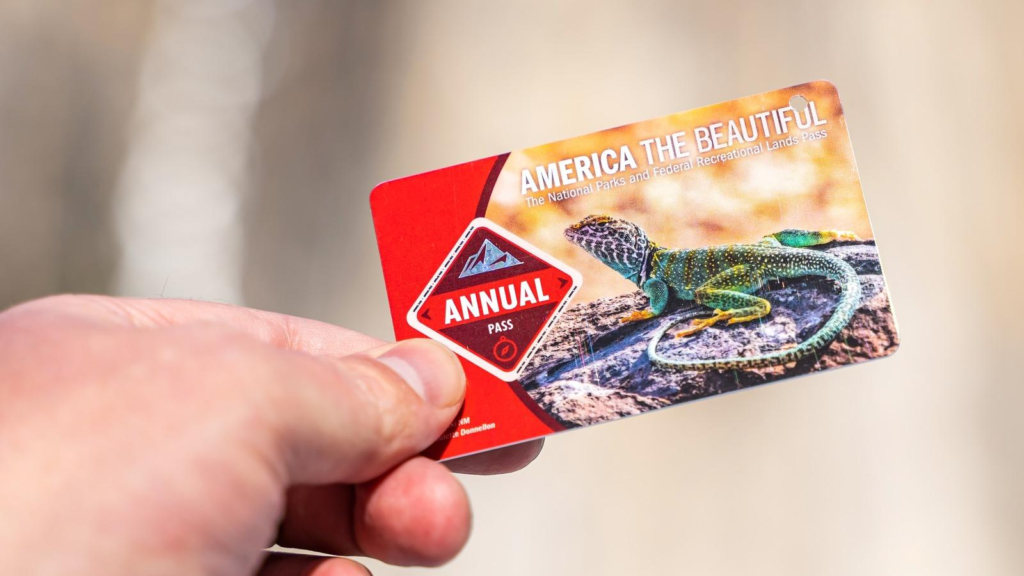
For 2026, the America the Beautiful Annual Pass costs $80 for U.S. citizens and residents. It covers the pass holder’s vehicle and everyone in it at parks that charge per vehicle, or the pass holder plus three additional adults at parks that charge per person. Children under 16 are already free everywhere, so they don’t factor into the math at all.
Most fee-charging national parks charge $30 to $35 for a private vehicle, valid for seven consecutive days. A handful charge less — Capitol Reef is $20, some smaller parks charge $15 to $25.
Run the numbers on a typical $30–$35 park:
- One park visit: you pay $30–$35 at the gate. The pass costs more. Skip it.
- Two park visits: you’d pay $60–$70 in gate fees. The $80 pass is close, sometimes slightly more, sometimes slightly less, depending on which parks.
- Three park visits: gate fees hit $90–$105. The pass has already paid for itself, and you still have 12 months of access left over.
That’s the entire decision in one sentence: if your trip touches three or more fee-charging parks within a 12-month window, the pass wins. At exactly two parks, it’s a coin flip. At one park, don’t bother.
The pass is valid for a full 12 months from the month of purchase, not the calendar year, so a park visit in November counts toward the same pass as one the following October.
Here’s the same math laid out as a quick reference, using a typical $30–$35 vehicle fee:
| Parks Visited | Individual Entrance Fees | Annual Pass | Savings with Pass |
|---|---|---|---|
| 1 park | ~$35 | $80 | –$45 (pass costs more) |
| 2 parks | ~$70 | $80 | –$10 (roughly a wash) |
| 3 parks | ~$105 | $80 | +$25 |
| 4 parks | ~$140 | $80 | +$60 |
| 5 parks | ~$175 | $80 | +$95 |
Actual savings will vary a little since not every park charges exactly $30–$35 — Capitol Reef is $20, for example, while some parks run closer to $35 at the top end. But the pattern holds regardless of which specific parks you’re visiting: the third park is where the pass turns from an expense into a discount.
Quick Decision Table
If you just want the short answer for your trip type, start here. The detailed reasoning for each of these follows below.
| Trip Type | Buy the Pass? | Why |
|---|---|---|
| One national park | No | A single $30–$35 standard pass is cheaper |
| Two parks (~$70 total) | Usually no | Standard fees are close to or under $80 |
| Three or more parks | Yes | Gate fees already exceed $80 |
| Utah’s Mighty 5 | Yes | $150 in separate fees vs. $80 for the pass |
| Yellowstone + Grand Teton | Borderline | $70 combined; worth it only with a third stop planned |
| Long western road trip (2+ weeks) | Yes | Almost always crosses three parks |
| Senior, military, disabled, or 4th-grade eligible | No | A free or cheaper specialty pass covers the same access |
Real Trip Scenarios: Does It Pay Off?
Generic advice like “it depends” isn’t useful when you’re staring at a checkout screen. Here’s how the math plays out for the trips people actually plan.
A One-Week Vacation to a Single Park
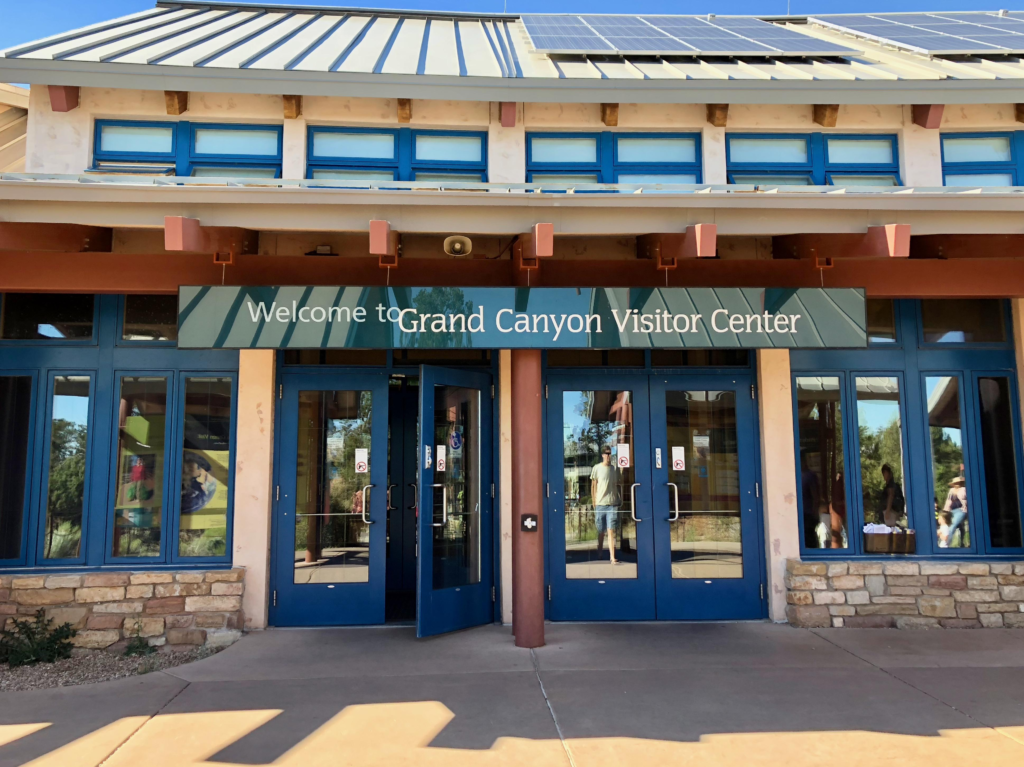
If your entire trip is built around one destination — say, a week based near Grand Canyon’s South Rim with no other park stops — the standard $35 seven-day vehicle pass already covers your whole visit. You don’t need the annual pass. Buying it anyway would mean paying $45 more than necessary for access you’re not going to use again this year.
The exception: if you’re the kind of visitor who might make a second unrelated park trip later in the year — a fall visit to a different park, a work trip that happens to pass near one — the math shifts, because that second visit is what pushes you into “pays for itself” territory. If you genuinely don’t know whether you’ll travel again, it’s fine to buy the standard pass now and reassess later. You can’t retroactively apply gate-fee money you already spent toward an annual pass.
A Two-Week Road Trip Hitting Several Parks
This is where the pass earns its price almost automatically. A two-week western road trip realistically touches three to six parks — even a modest loop through the Southwest or the Rockies. At three parks charging $30–$35 each, you’re already past $90 in gate fees alone, more than the $80 pass. Every additional park after that is free admission you’d otherwise be paying for.
For couples or families traveling in one vehicle, the savings are identical to a solo traveler’s, because the pass covers the whole vehicle regardless of headcount. A family of four hitting four parks on a two-week trip would otherwise pay $120–$140 in separate gate fees; the pass caps that at $80.
A Month-Long Road Trip
Over a month, most road-trippers end up at five or more parks, sometimes far more if the route includes national forests, wildlife refuges, or Bureau of Land Management sites that also honor the pass. At this scale, not buying the pass is close to irrational — you’d need to actively avoid additional fee-charging stops to make paying individually cheaper. This is the clearest “yes” scenario in the entire pass economy.
Grand Canyon Only
Grand Canyon’s standard vehicle fee is $35 for seven days, covering both the South Rim and North Rim. If Grand Canyon is the only fee-charging park on your itinerary, the $35 standard pass is cheaper than the $80 annual pass by $45. Buy the standard pass at the gate or in advance through Recreation.gov, and skip the annual pass unless you have a second national park trip already planned for the same 12 months. For a full breakdown of what’s included in that $35 — and what isn’t, like mule trips or backcountry permits — see our Grand Canyon entrance fee guide.
If you’re visiting only Grand Canyon, check our Grand Canyon Entrance Fee Guide for the latest entrance fees, pass options, and what’s included.
Yellowstone and Grand Teton Together
This is a scenario people consistently get wrong, so it’s worth spelling out clearly: Yellowstone and Grand Teton are separate parks with separate entrance fees, even though many visitors reach Yellowstone’s South Entrance by driving straight through Grand Teton. According to the National Park Service, entering Yellowstone through the South Entrance means paying the Grand Teton fee first, then the Yellowstone fee separately. Each is $35, so a South Entrance route costs $70 in gate fees for the two parks combined.
At $70 for two parks, you’re just $10 short of the $80 annual pass. If there’s any chance you’ll add a third national park stop this year — even a smaller one on the drive home — the pass becomes the better deal. If Yellowstone and Grand Teton are genuinely the only two parks on your calendar, paying the $70 in separate fees is marginally cheaper, but the difference is small enough that many travelers buy the pass anyway simply to avoid a second transaction at the gate. Our Yellowstone entrance fee guide covers the entry-station specifics if you want the full picture before you go, and our national park camping guide is worth a look if you’re staying inside either park.
Utah’s Mighty 5 (Zion, Bryce Canyon, Arches, Canyonlands, Capitol Reef)
This itinerary makes the case for the pass better than almost any other U.S. road trip. Standard vehicle fees across the five parks: Zion $35, Bryce Canyon $35, Arches $30, Canyonlands $30, and Capitol Reef $20 — a total of $150 if paid separately. The $80 annual pass cuts that nearly in half, and it pays for itself after the second or third park on the loop, well before you reach the remaining stops.
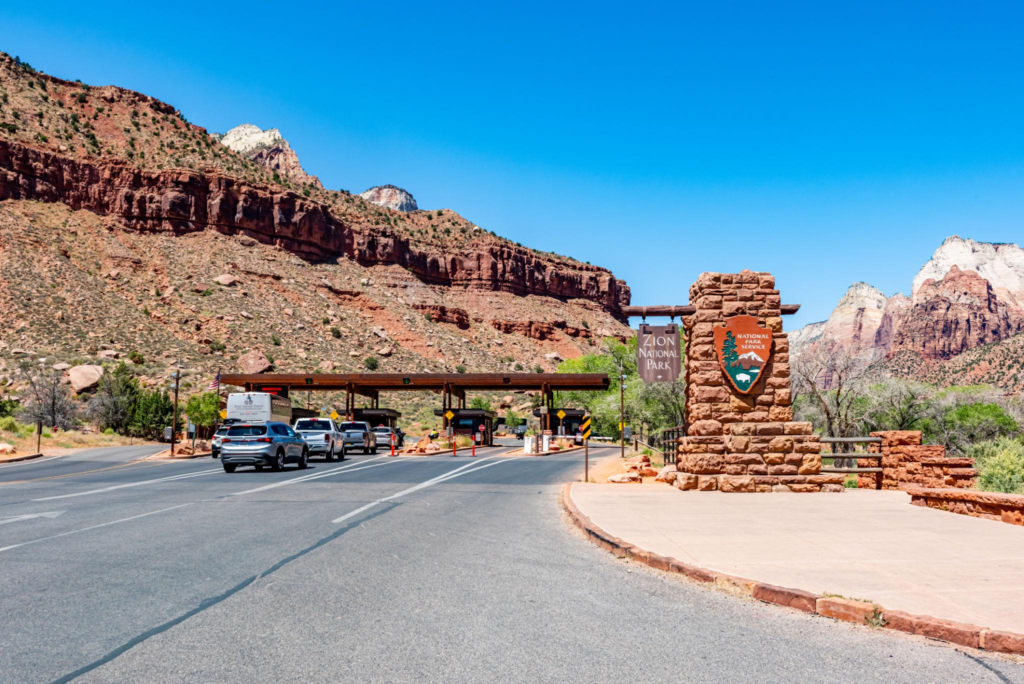
Families or groups traveling in a single vehicle see the same flat $80 regardless of how many people are in the car, which makes the Mighty 5 loop one of the highest-value uses of the pass in the entire national park system. If Zion is your first or last stop on the loop, our Zion National Park guide covers shuttle logistics and permit rules that go beyond the entrance fee.
Only Two Parks, No Others Planned
This is the genuine gray area, and the honest answer is that it depends on which two parks. At two parks charging $35 each ($70 total), the standard passes are cheaper than the $80 annual pass. At two parks where one charges a higher fee, or where you’re also stopping at a national forest or BLM day-use area that charges its own amenity fee, the pass can tip into being worth it even at just two stops, because it covers those additional federal sites too. If your two parks total $70 or less in gate fees and you have no other federal recreation site visits planned, skip the annual pass.
Where the Pass Does NOT Make Sense
The annual pass is not a default purchase, and buying it out of habit is one of the more common ways travelers overspend on a national park trip.
Visiting parks that don’t charge entrance fees. A large share of National Park Service sites — including Great Smoky Mountains, Channel Islands, Cuyahoga Valley, and most national seashores and monuments — charge no entrance fee at all. If your itinerary is built around free sites, the $80 pass buys you nothing beyond a bookmark for the trip; you’d effectively be donating $80 to the Park Service, which is a fine thing to do voluntarily but isn’t a break-even purchase.
Traveling around the fee-free calendar. The National Park Service designates several fee-free days each year. For 2026, those dates include February 16, May 25, June 14, July 3–5, August 25, September 17, October 27, and November 11. Beginning in 2026, these fee-free days apply only to U.S. citizens and residents. If your park visits happen to land on these dates, you’re not paying entrance fees regardless of whether you own a pass, so buying one specifically to cover those visits adds no value.
Qualifying for a cheaper specialty pass instead. If you or someone in your traveling party is 62 or older, the Senior Annual Pass is $20, or a lifetime version is $80 — a one-time payment that never expires and is almost always the better choice over repeatedly buying the standard annual pass. Active-duty military members and their dependents qualify for a free Military Annual Pass. Veterans and Gold Star Family members qualify for a free Military Lifetime Pass. U.S. citizens or residents with a permanent disability qualify for the free, lifetime Access Pass. A parent of a current fourth grader can get a free 4th Grade Pass covering the school year plus the following summer. None of these travelers need the $80 pass.
Single-park, single-visit trips. As covered above, if you’re confident this is a one-park year, the standard entrance pass for that park is cheaper.
For Photographers and Repeat Visitors to One Park

If your travel pattern is different from the standard road-trip model — say, a photographer who returns to the same park multiple times across a year chasing seasonal light, or someone who lives near a single park and visits often — a park-specific annual pass is often the better buy over the $80 all-parks pass. Grand Canyon and Yellowstone, for example, each offer a park-specific annual pass priced around $70, covering unlimited entry to that one park for 12 months. If you have no plans to visit other national parks this year, the park-specific pass saves a small amount over the all-parks version. If there’s any real chance you’ll add even one other park to the year, the $80 America the Beautiful Pass is the more flexible choice for a marginal cost difference.
For International Visitors Planning a U.S. Trip
Starting in 2026, the pass math looks different for travelers who are not U.S. citizens or residents. Non-residents pay a $250 Non-Resident Annual Pass instead of the $80 resident version. Beyond the pass itself, 11 of the most-visited national parks — Acadia, Bryce Canyon, Everglades, Glacier, Grand Canyon, Grand Teton, Rocky Mountain, Sequoia & Kings Canyon, Yellowstone, Yosemite, and Zion — now charge non-residents aged 16 and older an additional $100 per-person surcharge on top of the standard entrance fee, unless the visitor holds a valid Non-Resident Annual Pass, which covers that surcharge for the pass holder and their traveling party.
For a solo non-resident traveler visiting just one of these 11 parks, paying the standard entrance fee plus the $100 surcharge is usually cheaper than the $250 pass. For a couple or family visiting two or more of these parks, the surcharges alone can exceed $250 quickly — two adults at two surcharge parks already adds up to $400 in surcharges before entrance fees are even counted — making the pass the clear financial choice. Confirm current non-resident fee amounts and the list of surcharge parks directly on the National Park Service website before finalizing a trip budget, since this is a newly implemented system and details may be refined.
The Pass Doesn’t Cover Timed Entry — Here’s the Difference
This is the mix-up that catches even experienced park visitors off guard: the America the Beautiful Pass pays your entrance fee. It does not pay for a timed-entry reservation, and at a growing number of parks, you need both.
Entrance fees get you through the gate. Timed-entry reservations are a separate system, booked through Recreation.gov, that some parks use to cap how many vehicles enter during peak hours. Owning the annual pass doesn’t exempt you from booking a timed slot where one is required — you’ll still need to reserve a window, and you’ll still need your pass or entrance fee on top of that.
Arches National Park is the clearest example. During its busiest months, Arches requires a separate timed-entry reservation, typically priced at a few dollars per vehicle, in addition to the standard entrance fee or annual pass. Our Arches timed entry guide has the current booking windows. Rocky Mountain National Park runs a similar system for part of the year, with timed entry required to access certain corridors even if you’re waved through on your pass. Because reservation windows and required dates shift year to year, always check each park’s current reservation page before you finalize a trip, rather than assuming last year’s rules still apply.
The practical takeaway: budget for the pass and the reservation as two separate line items, and book the timed-entry slot well before you arrive — those windows fill up faster than most people expect during peak season.
Common Mistakes People Make When Buying the Pass
Assuming it covers everything inside a park. The pass covers entrance fees and standard amenity (day-use) fees. It does not cover camping fees, backcountry permits, timed-entry reservation fees, concessioner-run boat tours or shuttles, or parking fees at sites like Mount Rushmore that charge separately from park entrance.
Buying it for a trip that turns out to be mostly free parks. Check each park’s fee status before assuming the pass will be useful — roughly a third of National Park Service units charge an entrance fee at all, so it’s easy to build an itinerary that doesn’t need a pass.
Forgetting that Yellowstone and Grand Teton are billed separately. This trips up more travelers than any other fee question. Budget for both gate fees if you’re driving the South Entrance route, or account for it when deciding whether the annual pass makes sense.
Buying the pass in advance and letting it partially expire before the trip. The pass is valid for 12 months from the month of purchase, so buying it three months before a trip you’re not sure about locks in an earlier expiration date. If your travel dates are firm, this doesn’t matter. If they’re not, waiting until closer to departure preserves more of the 12-month window.
Not checking senior, military, or 4th-grade eligibility first. These free or heavily discounted passes cover the exact same benefits as the $80 pass. Skipping this check is the single most common way people overpay.
Should You Buy It? A Quick Checklist
Run through these before you check out, in the order that actually affects your decision:
- Will you visit three or more fee-charging federal recreation sites (national parks, national forests with day-use fees, wildlife refuges, or BLM/Army Corps sites) within the next 12 months? → Buy it.
- Are you touring Utah’s Mighty 5, or any regional cluster of three-plus parks? → Buy it.
- Are you visiting exactly two parks whose combined gate fees are under $80? → Skip it, pay standard fees.
- Is your trip built around one park only, with no other national park travel planned this year? → Skip it, buy the standard pass for that park.
- Are you 62 or older, active military, a veteran, permanently disabled, or the parent of a 4th grader? → Get the free or discounted specialty pass instead.
- Is your itinerary made up mostly of fee-free parks and monuments? → Skip it.
- Are you a non-U.S. resident visiting two or more of the 11 surcharge parks? → Buy the $250 Non-Resident Annual Pass.
Frequently Asked Questions
Can two people share one pass?
Not by both being named on it. Since 2024, every America the Beautiful Pass has a single signature line for one named pass holder, and that person must be present with photo ID each time the pass is used. That said, at parks charging a per-vehicle fee, everyone riding in the car with the pass holder is admitted free — they just can’t use the pass to enter a different vehicle without the holder present.
Can I buy it at the park entrance?
Yes. Entrance stations at fee-charging parks sell the physical pass on the spot, alongside standard single-park passes. You can also buy a digital version in advance through Recreation.gov and have it ready on your phone before you arrive, which avoids a line at the gate.
Can I upgrade a one-day entrance ticket to an annual pass?
Often, yes. Many national parks will apply the amount you already paid for a standard entrance pass toward an annual pass if you upgrade in person at that same park, typically within about seven days of your original purchase. This only works with National Park Service receipts — a day-use fee paid at a national forest or BLM site can’t be applied toward the National Park annual pass. Ask at the entrance station or visitor center before you leave.
Does it include parking?
No. The pass covers entrance and standard amenity fees, not separate parking charges. A handful of sites — Mount Rushmore is the standard example — charge for parking independently of the entrance fee, and the pass doesn’t touch that cost.
Does it cover motorcycles?
Yes. As of 2026, every America the Beautiful pass covers up to two motorcycles per pass, along with their riders and passengers.
Is the pass refundable?
No. America the Beautiful Passes are non-refundable and non-transferable, and a lost or stolen pass cannot be replaced — you’d need to buy a new one. This is worth remembering if you’re buying one speculatively for a trip that might not happen.
Can someone else use my pass?
Only if you’re with them. The pass is tied to the named holder, who must be present and show ID. It’s not something you can lend to a friend or family member for a separate trip without you.
Who Should Buy It — Quick Summary
Buy the Pass If: ✓ You’re visiting 3 or more fee-charging parks within 12 months ✓ You’re taking a western road trip (Mighty 5, Southwest loop, or similar) ✓ You’re planning more than one park trip this year, even if they’re months apart
Skip the Pass If: ✗ You’re visiting only one park this year ✗ You’re visiting only two parks with combined fees under $80 ✗ You qualify for a Senior, Military, Access, or 4th Grade pass instead ✗ Your trip is built around fee-free parks and monuments
The Bottom Line
Count your parks before you decide anything else. Three or more fee-charging stops in the next 12 months, and the $80 pass is simply cheaper than paying at each gate — that’s true whether you’re doing Utah’s Mighty 5, a Yellowstone-Grand Teton trip with one more park tacked on, or a monthlong loop through the West. Two parks or fewer, and paying standard entrance fees usually keeps more money in your pocket, especially once you factor in whether you qualify for a senior, military, disability, or 4th-grade pass that beats the $80 price outright. There’s no universal right answer here — there’s just your itinerary, and the math above applied to it.
Fees, surcharge rules, and fee-free dates are subject to change. Confirm current pricing and eligibility directly on the National Park Service website (nps.gov) or Recreation.gov before finalizing any pass purchase.