Zion National Park Weather: Monthly Temperatures, Rain & Best Time to Visit
Planning a trip to Zion National Park and wondering what the weather will be like? Zion experiences everything from freezing winter nights to summer temperatures above 100°F, and conditions can change quickly because of the park’s elevation differences.
The best time to visit Zion National Park depends on what you want to do. Spring and fall generally bring cooler hiking conditions, summer offers long daylight hours but significant heat, while winter can bring cold temperatures, snow and fewer visitors.
Below, you’ll find Zion National Park’s monthly temperatures, precipitation, seasonal weather, rain and snow information, and practical tips for choosing when to visit.
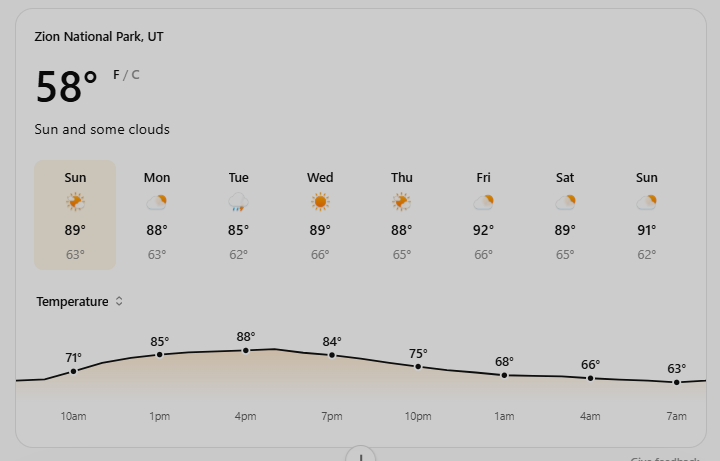
Quick answer: For comfortable hiking weather, April–May and October–early November are worth considering. Summer can be extremely hot, while December–February brings colder conditions and occasional snow. July through September also brings a greater risk of thunderstorms and flash floods.
Zion National Park Weather at a Glance
| Month | Avg. High | Avg. Low | Avg. Rain |
|---|---|---|---|
| January | 54°F | 30°F | 1.82 in |
| February | 58°F | 34°F | 1.98 in |
| March | 66°F | 38°F | 2.04 in |
| April | 74°F | 44°F | 1.31 in |
| May | 85°F | 53°F | 0.67 in |
| June | 96°F | 62°F | 0.31 in |
| July | 101°F | 69°F | 1.22 in |
| August | 98°F | 68°F | 1.45 in |
| September | 91°F | 60°F | 1.04 in |
| October | 78°F | 49°F | 1.30 in |
| November | 64°F | 37°F | 1.42 in |
| December | 53°F | 30°F | 1.63 in |
Climate figures are from the National Park Service’s Zion National Park Profile. The precipitation normals use a 1981–2010 reference period.
Zion National Park Weather by Month
January
January is one of the coldest months in Zion. The average high is about 54°F, while the average low is around 30°F.
Zion Canyon can receive snow during winter, although snow at the lower elevations can disappear relatively quickly after storms. Higher elevations are more likely to retain snow and ice.
January receives about 1.82 inches of normal precipitation.
What to expect:
- Cold mornings and nights
- Mild afternoons compared with many other mountain parks
- Possible snow and ice
- Shorter daylight hours
- Good conditions for visitors prepared for winter
February
February begins the transition toward spring, but winter conditions are still possible.
Average temperatures range from approximately 34°F at night to 58°F during the day, with about 1.98 inches of precipitation.
Higher-elevation trails can remain snowy or icy, so check current conditions before hiking.
March
March is a major transition month in Zion. Average highs reach about 66°F, while average lows are around 38°F.
March is also one of Zion’s wetter months, with approximately 2.04 inches of normal precipitation.
The National Park Service notes that spring snowmelt can raise river levels, and the Narrows may be closed for extended periods depending on conditions.
March can bring:
- Pleasant afternoons
- Cold mornings
- Snowmelt
- Higher river levels
- Changing trail conditions
April
April usually brings much more comfortable daytime temperatures.
The average high is about 74°F, while the average low is approximately 44°F. Normal precipitation is around 1.31 inches.
Spring flowers begin appearing, trees start developing leaves and hiking conditions generally become more comfortable.
However, temperatures can still change significantly between morning and afternoon.
May
May is considerably warmer, with an average high of about 85°F and a low around 53°F.
It is also one of Zion’s drier months, with approximately 0.67 inches of normal precipitation.
For hikers, early mornings can be particularly useful because temperatures are cooler before the afternoon heat builds.
June
June marks the beginning of Zion’s hottest period.
The average high is approximately 96°F, while the average low is about 62°F. Normal precipitation falls to only 0.31 inches, making June the driest month in the NPS climate table.
Despite relatively little average precipitation, the heat can make strenuous hikes much harder.
The National Park Service advises visitors to carry plenty of water and take precautions against heat illness during summer.
July
July is typically Zion’s hottest month.
The normal high is about 101°F, with an average low near 69°F. The park’s climate profile records about 16 days per year with highs over 100°F during July in its reference data.
July also marks the beginning of Zion’s summer monsoon period.
Thunderstorms can develop rapidly, and heavy rain can create dangerous flash-flood conditions, particularly in narrow canyons.
If visiting in July, check the weather and flash-flood forecast before entering canyon areas.
August
August remains extremely hot.
The average high is about 98°F, while the average low is approximately 68°F. Normal precipitation is around 1.45 inches.
Although August is hot, afternoon thunderstorms can become an important consideration because of the monsoon season.
Tip: Start strenuous hikes early, carry sufficient water and pay attention to changing clouds and storm forecasts.
September
September begins the transition toward cooler conditions, although it can still be hot.
The average high is around 91°F, with an average low of about 60°F. Normal precipitation is approximately 1.04 inches.
September is also within the period when Zion can experience monsoon thunderstorms and flash-flood hazards. The National Park Service specifically warns that weather can change rapidly between July and September.
October
October brings a noticeable change in Zion’s weather.
Average highs fall to approximately 78°F, while average lows are around 49°F. Normal precipitation is about 1.30 inches.
The National Park Service describes October and November as fall conditions, with cooler temperatures that can make hiking more comfortable. Fall colors begin appearing at higher elevations before moving toward Zion Canyon later in the season.
November
November is considerably cooler than October.
The average high is around 64°F, while the average low is approximately 37°F. Normal precipitation is about 1.42 inches.
Visitation generally starts declining in November, while daytime temperatures can still be comfortable for hiking when compared with winter.
Bring layers because temperatures can change substantially throughout the day.
December
December marks the beginning of winter in Zion.
Average highs are around 53°F, while average lows fall to approximately 30°F. Normal precipitation is about 1.63 inches.
The National Park Service notes that winter temperatures can range from roughly 50–60°F during the day to below freezing at night, and snow and ice can affect trails.

Zion National Park Weather by Season
Spring: March to May
Spring brings gradually warming temperatures and changing trail conditions.
March and April can still have cold mornings, snow at higher elevations and increased river flows from snowmelt. By May, temperatures become substantially warmer.
Typical spring conditions:
- March: cool and sometimes wet
- April: mild afternoons and cool mornings
- May: warm and relatively dry
Spring can be a good period for visitors who want warmer weather without the extreme summer heat, but always check trail and river conditions before entering the Narrows.
Summer: June to September
Summer is the hottest period in Zion.
Temperatures regularly reach or exceed 100°F, particularly in July and August. The National Park Service recommends carrying plenty of water and taking precautions against heat illness.
Another important consideration is the summer monsoon season. From July through September, thunderstorms can develop quickly and produce heavy rain and flash floods.
If hiking during summer:
- Start early
- Carry plenty of water
- Wear sun protection
- Take breaks in shade
- Check the forecast before entering narrow canyons
- Never ignore flash-flood warnings
Fall: October to November
Fall brings cooler temperatures and changing foliage.
October’s average high is about 78°F, making it substantially cooler than the summer months. November is cooler still, with an average high around 64°F.
The National Park Service notes that fall colors begin at higher elevations before gradually moving down into Zion Canyon.
Pack layers because mornings and evenings can be chilly.
Winter: December to February
Winter is the coldest period in Zion, but the park remains open year-round.
Daytime temperatures can still be relatively mild, while nighttime temperatures frequently drop below freezing. Snow and ice are possible, especially at higher elevations.
The NPS states that nearly half of Zion Canyon’s annual precipitation occurs between December and March.
Does It Rain a Lot in Zion National Park?
Zion is not a consistently rainy destination, but precipitation varies considerably by season.
The NPS climate data shows the highest normal monthly precipitation in March, February and January, while June has the lowest normal precipitation.
However, summer rainfall deserves special attention because monsoon thunderstorms can produce sudden heavy rain and flash floods, even though the overall monthly rainfall totals aren’t extremely high.
This is especially important when hiking in narrow canyons.
Does It Snow in Zion National Park?
Yes, Zion can receive snow during winter.
Snow is more common and persistent at higher elevations. In Zion Canyon, snow can sometimes melt quickly after a storm, while ice and snow can remain on higher trails for longer periods.
The National Park Service warns that snow and ice can make trails hazardous and that some trails may close when conditions are unsafe.
If you’re visiting after a winter storm, check current trail and road conditions before setting out.
What Is the Best Time to Visit Zion National Park for Weather?
There isn’t one universally best month because it depends on your priorities.
For comfortable hiking temperatures
April, May and October generally offer a useful balance between warm daytime temperatures and avoiding the peak summer heat.
For cooler fall weather
October and November bring progressively cooler temperatures and fall colors.
For warm weather and long daylight
June through September provide long summer days, but heat can be intense.
For winter scenery and colder conditions
December through February can provide a different Zion experience, including occasional snow and quieter winter conditions.
The National Park Service emphasizes that each season has different advantages rather than identifying one single best season for everyone.
Zion Weather and Hiking: What Should You Pack?
Your packing list should change according to the season.
Spring and fall
- Lightweight layers
- Fleece or light jacket
- Comfortable hiking shoes
- Sun protection
- Rain shell
Summer
- Refillable water bottle or hydration system
- Sun hat
- Sunscreen
- Lightweight clothing
- Sunglasses
- Extra water
Winter
- Warm layers
- Insulated jacket
- Gloves
- Warm hat
- Waterproof footwear
- Traction equipment when conditions require it
Because temperatures can change by more than 30°F between day and night, layers are useful throughout the year.
Important Weather Safety Tips at Zion
Zion’s weather can change quickly, particularly around thunderstorms.
Before hiking, check the National Park Service’s current conditions and weather information.
Be especially cautious during summer monsoon season. A storm occurring outside the immediate area can still send water into a canyon, creating flash-flood danger.
If you see signs of changing weather while in a canyon, don’t assume the weather directly overhead is the only factor that matters.
For hikes such as The Narrows, water temperature and canyon conditions are also important. The NPS notes that even in summer, river temperatures can remain cool, and additional warm clothing should be carried in a dry bag.
Zion National Park Weather FAQs
What is the hottest month in Zion National Park?
July is normally the hottest month, with a normal high temperature of approximately 101°F in the NPS Zion climate profile. August is also very hot, with a normal high of about 98°F.
What is the coldest month in Zion?
January and December have some of the lowest average temperatures. January’s normal low is about 30°F, while December’s is approximately 29.5°F.
What month gets the most rain in Zion?
March has the highest normal precipitation in the NPS climate profile at approximately 2.04 inches, followed by February at about 1.98 inches.
Can you visit Zion National Park in winter?
Yes. Zion National Park is open year-round. Winter can bring cold temperatures, snow and ice, and some trails may close because of unsafe conditions.
Is Zion too hot in summer?
Summer can be very hot. The National Park Service says temperatures in Zion regularly exceed 100°F during summer. Visitors should carry plenty of water and take precautions against heat illness.
When is the best weather for hiking in Zion?
For visitors primarily interested in comfortable hiking temperatures, spring and fall provide cooler conditions than the peak summer months. October, for example, has a normal high of about 78°F compared with approximately 101°F in July.
Is Zion rainy in July and August?
July and August can receive more precipitation than June because of the Southwest monsoon. More importantly, thunderstorms during this period can produce sudden heavy rain and flash floods.
Final Thoughts
Zion National Park’s weather changes dramatically throughout the year. Spring and fall bring more moderate temperatures, summer can be extremely hot, and winter brings cold nights with occasional snow and ice.
If you’re planning a hiking-focused trip, look beyond the monthly average temperature. Check the current forecast, trail conditions, river conditions and flash-flood potential shortly before your hike. Weather can vary with elevation and time of day, and conditions inside Zion’s canyons can be different from what you see elsewhere in the park.
For official updates, use the National Park Service Zion weather and climate page before heading into the park.
Check also: Zion National Park Hiking Trails: Complete Guide to the Best Hikes (2026)