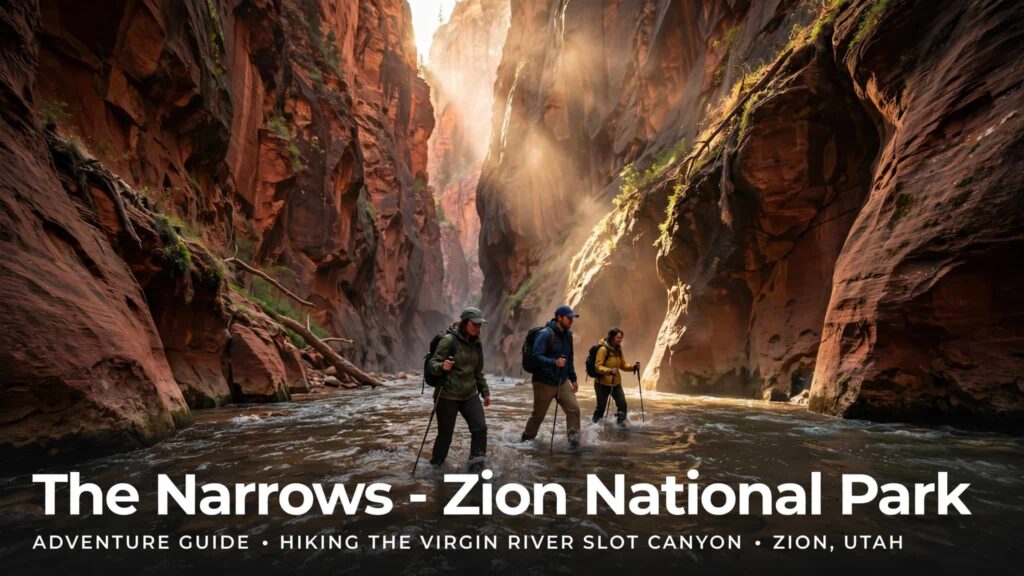
The Narrows Zion National Park: Complete Hiking Guide for 2026
The Narrows Zion National Park is one of the most distinctive hikes in Utah, taking hikers directly into the Virgin River between towering sandstone walls. Instead of following a conventional trail, you spend much of the hike walking through the river, stepping across slippery rocks, and navigating changing water depths.
For 2026, the National Park Service continues to describe The Narrows as a strenuous hike requiring careful preparation. The canyon can reach roughly 1,000 feet deep while narrowing to only 20–30 feet wide in places.

The Narrows Zion National Park at a Glance
| Information | 2026 Details |
|---|---|
| Location | Zion National Park, Utah |
| River | Virgin River |
| Main trailhead | Temple of Sinawava |
| Bottom-up distance | Up to 9.4 miles round trip |
| Bottom-up time | About 1–8 hours |
| Top-down distance | 16 miles one way |
| Top-down time | About 10–14 hours |
| Difficulty | Strenuous |
| Permit for bottom-up | Not required |
| Permit for top-down | Required |
| Main challenge | Walking in the river |
| Elevation gain, bottom-up | About 334 feet |
| Pets | Not allowed |
The bottom-up route starts at the Temple of Sinawava, while the longer top-down route begins at Chamberlain’s Ranch.
What Is The Narrows in Zion National Park?
The Narrows is the narrowest section of Zion Canyon. The Virgin River flows through the canyon, creating a hiking route surrounded by massive sandstone walls.
The experience is very different from a normal Zion hiking trail. After walking the paved Riverside Walk, you eventually enter the river itself.
The National Park Service describes the riverbed as rocky and uneven, with slippery footing and changing water depths. Depending on conditions, hikers may encounter water from ankle depth to much deeper sections.
The canyon’s combination of:
- Tall sandstone walls
- Virgin River
- Hanging gardens
- Water-carved rock formations
- Narrow canyon sections
- Natural pools and springs
makes the hike visually impressive from beginning to end.
The Narrows Bottom-Up Hike
For most first-time visitors, the bottom-up route from Temple of Sinawava is the simplest way to experience The Narrows.
You don’t need a Wilderness Permit for this route, although the hike can still be physically demanding.
Step 1: Take the Shuttle to Temple of Sinawava
During the shuttle season, Zion Canyon Scenic Drive is generally accessed using the park’s free shuttle system.
Temple of Sinawava is Shuttle Stop #9, and the Riverside Walk begins there. The National Park Service says no reservation or ticket is required to ride the park shuttle, but visitors should check the seasonal schedule before their trip.
Step 2: Walk the Riverside Walk
From Temple of Sinawava, follow the paved Riverside Walk for approximately 1 mile.
This portion is considerably easier than the river section and gives you an introduction to the canyon before you enter the water.
At the end of Riverside Walk, the trail changes dramatically.
Step 3: Enter the Virgin River
The paved trail ends and you enter the Virgin River.
From this point, the river is essentially the trail.
You’ll be walking upstream over rocks and through water. Some sections are shallow, while others can be much deeper.

How Far Is The Narrows Hike?
The bottom-up route can be as long as 9.4 miles round trip if you travel all the way to Big Spring and return.
However, you don’t have to hike the entire distance.
One of the advantages of the bottom-up route is that you can turn around whenever conditions, time, weather, or your energy level make it appropriate. The National Park Service specifically notes that there is no single destination or viewpoint that you have to reach.
For a first visit, you can experience the canyon for a few hours and return without attempting the maximum distance.
Bottom-Up Route
Temple of Sinawava → Riverside Walk → Virgin River → Big Spring → return
Big Spring is the official upstream limit for bottom-up hikers in the Virgin River Narrows.
How Difficult Is The Narrows?
The Narrows is considered a strenuous hike.
The difficulty isn’t primarily about elevation gain. Instead, the challenge comes from:
- Walking on slippery rocks
- Constantly changing footing
- Walking against the current
- Cold water
- Uneven riverbed
- Potentially deep water
- Long periods of wading
- Maintaining balance
The National Park Service recommends closed-toe shoes and a sturdy walking stick because the rocks can be extremely slippery.
If you’re uncomfortable walking in moving water or have difficulty maintaining balance on uneven surfaces, don’t assume you need to complete the entire route.
The Narrows Water Levels in 2026
Water conditions are one of the most important things to check before hiking.
The Virgin River’s flow can change significantly because of rainfall and snowmelt.
The NPS provides these general flow guidelines:
Below 70 CFS
Walking is considered moderately difficult. Knee-deep crossings and pools reaching approximately waist depth can occur.
70–150 CFS
Conditions become more challenging. Thigh-deep crossings can occur, with some pools reaching chest depth.
Above 150 CFS
The Narrows is closed to travel according to the NPS current conditions guidance.
Important: Don’t rely on an old blog post or a previous visitor’s experience to determine whether conditions are safe. Check the current river flow, weather and park alerts immediately before your hike.
Flash Flood Safety in The Narrows
Flash flooding is one of the biggest hazards in The Narrows.
A storm doesn’t necessarily have to be directly above you. Rain elsewhere in the drainage can cause the Virgin River to rise quickly.
The National Park Service warns that flash floods can rapidly increase the volume and power of the river. The Narrows closes when a National Weather Service Flash Flood Warning is issued, and the closure remains in effect for at least two hours after the warning is lifted.
Never enter The Narrows when:
- A flash flood warning is active
- The park has closed the route
- River flow exceeds the closure threshold
- Heavy rain is expected in the relevant drainage
- Rangers advise against entering
- Water conditions are changing rapidly
Before hiking, check the official Zion conditions page and the weather/flash-flood forecast.
What to Wear for The Narrows
Choosing the right clothing can make a huge difference.
Recommended clothing
Quick-drying layers:
Avoid cotton when possible. Quick-drying synthetic or wool layers can provide better insulation when wet.
Closed-toe footwear:
Wear shoes that provide protection and grip. The NPS specifically recommends closed-toed shoes.
Walking stick:
A sturdy hiking stick can help with balance on slippery rocks.
Extra layer:
The canyon can remain considerably cooler than exposed areas of Zion Canyon because of the water and limited sunlight.

What to Pack for The Narrows
Here’s a practical 2026 packing checklist:
- Closed-toe hiking shoes
- Sturdy walking stick
- Quick-drying clothing
- Water
- Food/snacks
- Waterproof or water-resistant phone protection
- Dry bag for sensitive electronics
- Extra layer
- First-aid supplies
- Sunscreen
- Headlamp if hiking late
- Human-waste disposal bags if needed
- Park map/navigation tools
There are no bathrooms along the Narrows hike, so use the facilities at the trailhead before entering the river. The NPS also advises hikers to pack out waste.
Can You Hike The Narrows in Regular Hiking Shoes?
Yes, but they should be closed-toe shoes with good stability and traction.
The NPS specifically warns against sandals, Crocs and barefoot hiking because the riverbed contains slippery and uneven rocks.
The important thing isn’t simply finding a shoe marketed as a “water shoe.” You want footwear that protects your feet and provides reasonable stability while walking on wet rocks.
Do You Need a Permit for The Narrows?
This depends on which route you take.
Bottom-Up
If you start at Temple of Sinawava and hike upstream, you do not need a Wilderness Permit to hike as far as Big Spring.
Top-Down
If you hike the full 16-mile route from Chamberlain’s Ranch to Temple of Sinawava, a Wilderness Permit is required.
So don’t confuse the two routes when planning your trip.
The Narrows Top-Down Hike
The top-down route is a completely different undertaking.
It starts at Chamberlain’s Ranch, outside the main Zion Canyon area, and continues downstream through the Virgin River Narrows until Temple of Sinawava.
Top-down facts
- Distance: 16 miles one way
- Elevation change: about 1,300 feet
- Hiking time: approximately 10–14 hours
- Wilderness Permit: required
- Can be completed as a very long day hike or a one-night backpacking trip
- Transportation to Chamberlain’s Ranch must be arranged by the hiker
The NPS notes that at least 80% of the top-down route involves wading, walking or swimming in the river.
For someone visiting Zion for the first time, the bottom-up route provides a much simpler introduction to The Narrows.
Best Time to Hike The Narrows in 2026
There isn’t one date that guarantees perfect conditions.
The Narrows is affected by:
- Snowmelt
- Rain
- Flash-flood potential
- River flow
- Air temperature
- Water temperature
- Seasonal closures
The NPS notes that spring snowmelt can cause closures, while summer monsoon storms can create flash-flood hazards.
Summer
The canyon can provide relief from Zion’s heat, but summer also brings the possibility of thunderstorms and flash floods.
Fall
Fall can offer cooler conditions, but you still need to check river levels and weather forecasts.
Spring
Snowmelt can raise river levels and cause closures, so conditions should be checked immediately before hiking.
Winter
Cold water and cold canyon temperatures make appropriate clothing and preparation particularly important.
The best day to hike The Narrows is ultimately a day when the route is open and current river and weather conditions are suitable.
Is The Narrows Open Right Now?
The answer can change quickly.
As of the latest 2026 National Park Service conditions information, Zion National Park is open, but The Narrows can close because of river flow, flash-flood warnings or other conditions.
Before leaving for the trailhead, check:
- Zion National Park Current Conditions
- Virgin River flow
- National Weather Service flash-flood potential
- Zion shuttle schedule
- Any active trail closures
Don’t rely solely on information from an article published months earlier.
The Narrows vs Riverside Walk
These two hikes are connected but very different.
| Feature | Riverside Walk | The Narrows |
|---|---|---|
| Surface | Paved trail | Riverbed |
| Water hiking | No | Yes |
| Difficulty | Easy | Strenuous |
| Location | Temple of Sinawava | Beyond Riverside Walk |
| Permit | No | No for bottom-up |
| Distance | About 1 mile each way | Up to 9.4 miles round trip |
| Suitable for casual visitors | Generally easier | Requires preparation |
You can enjoy the Riverside Walk without entering the river.
If you continue beyond the end of Riverside Walk, however, you are beginning the much more demanding Narrows experience.
Photography Tips for The Narrows
The Narrows is one of the most photogenic places in Zion.
The combination of reflective water and towering sandstone walls creates excellent photographic opportunities.
Bring protection for your camera
Water is unavoidable, so protect your phone or camera before entering the river.
Shoot upward
Some of the most impressive compositions include the canyon walls rising above the river.
Use reflections
Calmer sections of the Virgin River can create reflections of the sandstone walls.
Watch the light
Because of the depth and narrowness of the canyon, lighting can change dramatically throughout the hike.
Don’t sacrifice safety for a photo
The riverbed is uneven. Stop in a secure location before taking photographs rather than walking while looking through your camera.
Important Narrows Rules
The Narrows is partly designated Wilderness, so visitors need to protect the canyon and follow park regulations.
For bottom-up hikers:
- Do not travel beyond Big Spring
- Do not travel more than ¼ mile into Orderville Canyon
- Pack out trash
- Follow active closures
- Stay alert for changing conditions
- Do not drink river water
The National Park Service also warns visitors not to submerge their heads in or drink water from Zion’s rivers because of the risk associated with toxic cyanobacteria.
Tips for First-Time Narrows Hikers
If this is your first time hiking The Narrows, keep these tips in mind:
1. Don’t feel pressured to reach Big Spring
The full 9.4-mile round trip is optional.
2. Start early enough to have plenty of time
The hike is slower than a normal trail because you’re navigating rocks and water.
3. Check conditions immediately before hiking
River conditions can change rapidly.
4. Protect electronics
Your phone doesn’t need to become part of the Virgin River ecosystem.
5. Bring a walking stick
Balance is one of the biggest challenges.
6. Turn around while you still have energy
Remember that every mile you travel upstream is another mile you have to walk back.
7. Don’t ignore weather changes
Darkening skies, increasing water flow or changing water clarity should be taken seriously.
Frequently Asked Questions
How long is The Narrows in Zion National Park?
The bottom-up route can be up to 9.4 miles round trip to Big Spring. The top-down route from Chamberlain’s Ranch is 16 miles one way.
Do you need a permit for The Narrows?
A permit is not required for the bottom-up hike from Temple of Sinawava to Big Spring. A Wilderness Permit is required for the 16-mile top-down route from Chamberlain’s Ranch.
Can beginners hike The Narrows?
Some beginners can experience the lower portion, but The Narrows is officially considered strenuous. The river’s slippery rocks, current and changing water depth make it more demanding than an ordinary walking trail.
How deep is the water in The Narrows?
Water depth changes throughout the route and from day to day. The NPS says hikers can encounter anything from ankle-deep water to sections requiring swimming, particularly on the top-down route.
Is The Narrows dangerous?
There are significant hazards, including flash floods, cold water, slippery rocks and changing river conditions. Check current conditions and weather before entering.
Can you hike The Narrows without getting wet?
Not if you continue beyond the Riverside Walk into the actual Narrows. The bottom-up route requires walking through the Virgin River.
Where does The Narrows hike start?
The popular bottom-up hike starts at Temple of Sinawava, Shuttle Stop #9, followed by approximately one mile on Riverside Walk before entering the river.
Can you hike The Narrows year-round?
The park is open year-round, but The Narrows can close because of high water, flash floods and other conditions. Always check current conditions before your trip.
Final Thoughts
The Narrows Zion National Park is unlike a typical hiking trail. Instead of simply following a path through the landscape, you become part of the canyon itself, walking through the Virgin River beneath enormous sandstone walls.
For most visitors, the bottom-up route from Temple of Sinawava is the most straightforward way to experience The Narrows. You don’t need to reach Big Spring to have a memorable hike; you can turn around based on your time, energy and river conditions.
The most important part of planning a 2026 Narrows hike is checking current conditions immediately before entering the river. Water levels, weather and flash-flood conditions can change quickly, so treat the official Zion National Park information as the final word before your hike.
Official Resources
- Zion National Park – The Narrows
- Zion National Park – Current Conditions
- Zion National Park – Narrows Permits
- Zion National Park – Bottom-Up Narrows Guide
Read Also: Zion National Park Weather: Monthly Temperatures, Rain & Best Time to Visit