What National Parks Are in Colorado? (Complete 2026 Guide)
If you’ve ever asked yourself, “What national parks are in Colorado?” — you’re about to get the most complete answer on the internet. Colorado is home to four official National Parks: Rocky Mountain, Great Sand Dunes, Mesa Verde, and Black Canyon of the Gunnison. Together, these four parks protect over 500,000 acres of some of the most breathtaking and geologically diverse landscapes in the entire United States.
In a single Colorado road trip, you can summit peaks above 14,000 feet, wade through the tallest sand dunes in North America, stand inside ancient cliff dwellings built over 700 years ago, and peer into one of the deepest and narrowest canyons on the continent. No other state packs this much variety into its national parks system.
Whether you’re planning a two-week road trip or trying to figure out which park to visit first, this guide covers everything you need to know — from entrance fees and permit requirements to the best hikes, wildlife, and insider tips for 2026.
The 4 National Parks in Colorado
| Park | Location | Best For | 7-Day Vehicle Pass |
|---|---|---|---|
| Rocky Mountain NP | Central Colorado (Estes Park) | Hiking, alpine scenery, wildlife | $35 |
| Great Sand Dunes NP | Southern Colorado (San Luis Valley) | Sandboarding, stargazing, unique landscapes | $25 |
| Mesa Verde NP | Southwestern Colorado (Cortez) | Ancient cliff dwellings, archaeology, history | $30 (peak season) |
| Black Canyon of the Gunnison NP | Western Colorado (Montrose) | Dramatic canyon views, geology, solitude | Standard NPS fee |
Pro Tip: If you plan to visit more than two or three national parks in a year, the America the Beautiful Pass ($80/year) pays for itself quickly and covers all four Colorado parks.
1. Rocky Mountain National Park
Overview & Location
Rocky Mountain National Park (RMNP) is the crown jewel of Colorado’s national parks — and one of the most visited national parks in the entire country. Located in central Colorado near the town of Estes Park, roughly 90 minutes northwest of Denver, it received approximately 4.2 million visitors in 2024, making it the fifth most visited national park in the United States.
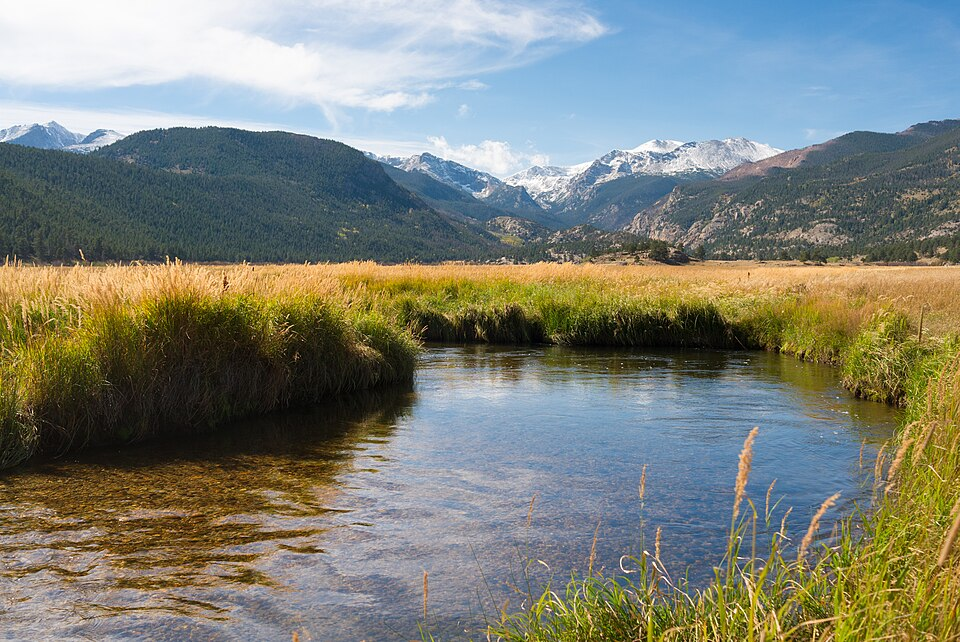
The park covers 415 square miles and contains 76 mountains that each rise above 10,000 feet. It spans four distinct ecosystems — montane, subalpine, alpine tundra, and riparian — which means the scenery and wildlife change dramatically as you gain elevation. It’s also bisected by the Continental Divide, which you can actually cross by car via the legendary Trail Ridge Road.
Top Things to Do
Trail Ridge Road is the park’s most iconic feature and one of the highest paved roads in the United States. Stretching 48 miles from Estes Park to Grand Lake, this road climbs above 12,000 feet, crossing the Continental Divide and offering sweeping views of the alpine tundra. The road is typically open from Memorial Day through mid-October, weather permitting.
Hiking is the real draw for most visitors. The park contains over 350 miles of trails ranging from easy paved walks to strenuous summit climbs. Some of the most beloved routes include:
- Emerald Lake Trail (3.6 miles round trip, 650 ft elevation gain): This is the park’s most popular hike for good reason. Starting from Bear Lake, you pass Nymph Lake (covered in lily pads in summer), Dream Lake (famous for its perfect mountain reflections), and finally Emerald Lake, tucked beneath the dramatic face of Hallett Peak. It’s accessible, stunning, and unforgettable.
- Sky Pond Trail (9 miles round trip): A step up in difficulty, this trail takes you past Alberta Falls and Loch Vale to the stunning Sky Pond, a hidden alpine lake surrounded by sheer granite cliffs.
- Longs Peak (14.25 miles round trip, 5,100 ft elevation gain): For the serious hiker. Longs Peak is a Class 3 scramble and Colorado’s northernmost fourteener. Start no later than 3 AM to summit safely.
- Alberta Falls (1.7 miles round trip): A beautiful, accessible option for families. The trail leads to a 30-foot waterfall cascading over granite with best flow during snowmelt in May through July.
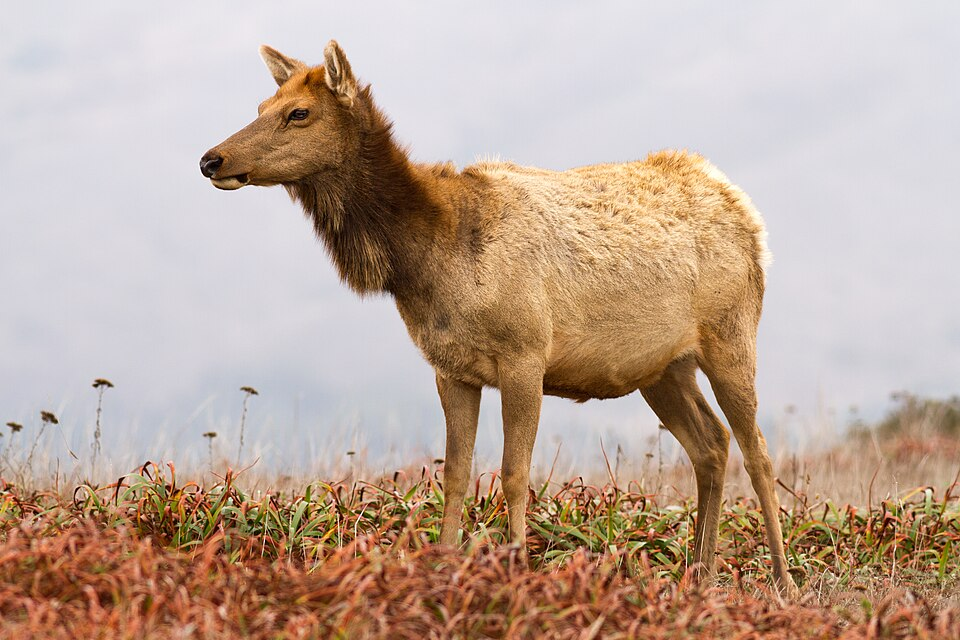
Wildlife watching is exceptional throughout the park. Elk are the big attraction — enormous herds can frequently be seen grazing in Moraine Park and Horseshoe Park, especially at dawn and dusk. The park is also home to moose, mule deer, bighorn sheep, black bears, mountain lions, marmots, and pikas. Never feed or approach wildlife; it is dangerous for both the animal and for you.
2026 Timed Entry Permit System
This is the most critical planning detail for visiting RMNP in 2026. From May 22 to October 12, 2026, a timed entry permit is required to enter the park. There are two types:
- Timed Entry + Bear Lake Road Permit: Gives you access to the entire park, including the highly trafficked Bear Lake Road corridor and its trailheads (Bear Lake, Emerald Lake, Dream Lake, Alberta Falls, Sky Pond). This permit is required from 5 AM to 6 PM.
- Timed Entry Permit (without Bear Lake Road): Gives you access to everything except Bear Lake Road. You can drive Trail Ridge Road, visit the Alpine Visitor Center, hike Longs Peak, and explore the west side of the park. This permit is required from 9 AM to 2 PM.
Permits cost $2 per vehicle in addition to the park entrance fee ($35 for a 7-day vehicle pass or $30 for a 1-day pass). Reserve your permit at recreation.gov as soon as dates open — they fill up extremely fast.
Pro Tip: To skip the timed entry permit entirely, park at the Estes Park Visitor Center outside the park and take the free Hiker Shuttle into the park. Since you’re not entering in your own vehicle, no permit is needed.
Best Time to Visit
Summer (June–August) offers the widest trail access and warmest weather, but it’s also the most crowded. Fall (September–October) brings spectacular foliage and fewer crowds — arguably the best time to visit. Winter and early spring allow snowshoeing and cross-country skiing, but many trails and roads close due to snow. Plan on spending at least three to five days to fully experience the park.
Tips for First-Time Visitors
Altitude sickness is a real concern at RMNP. The park’s elevation ranges from roughly 7,500 feet at the park entrance to over 12,000 feet on Trail Ridge Road. Spend at least one night in the area before hiking to help your body acclimatize, drink plenty of water, and descend immediately if you feel lightheaded or short of breath. Always check trail conditions on the official NPS website before heading out, as snow can linger on high-elevation trails well into June.
2. Great Sand Dunes National Park
Overview & Location
Great Sand Dunes National Park and Preserve is, without question, one of the strangest and most surreal landscapes in the entire national parks system. Located in the San Luis Valley in southern Colorado, near the small town of Mosca, the park is home to the tallest sand dunes in North America — a massive field of golden sand rising up to 750 feet above the valley floor, set against the dramatic backdrop of the snow-capped Sangre de Cristo Mountains.
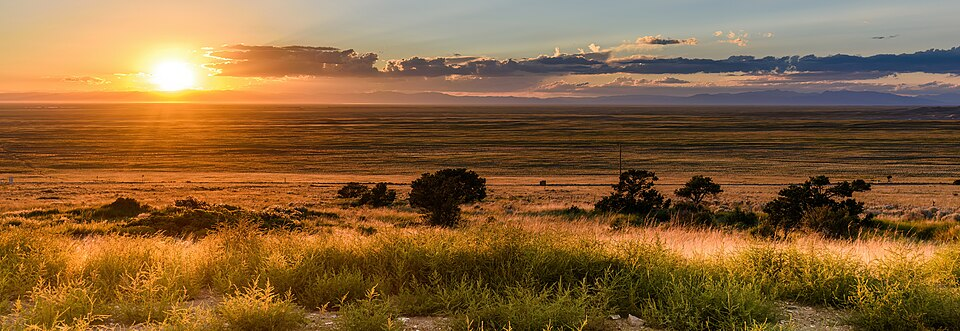
The park covers 30 square miles of dunes, alpine forests, and wetlands. The dunes themselves are the product of over 440,000 years of geologic work — sand from ancient lakebeds was carried by southwesterly winds toward the mountain range and, as the wind lost momentum crossing the peaks, dropped its load here, creating these towering giants. The park is home to five distinct types of dunes, with the Star Dune being the tallest at 750 feet.
Top Things to Do
Hiking the Dunes is the park’s signature activity and there is truly nothing quite like it anywhere else in the world. There are no marked trails on the dunes themselves — you simply walk out across the sand in whatever direction you choose. The main dune field is accessible directly from the main parking area. Hiking to the High Dune (the first prominent summit visible from the trailhead) is a 2.5-mile round trip with 699 feet of elevation gain. It’s harder than it looks — the sand shifts underfoot with every step — but the views from the top are absolutely spectacular.
Sandboarding and Sand Sledding are enormously popular, especially with kids and families. You can rent sand boards and sleds from Great Sand Dunes Oasis, located just four miles from the park visitor center. This is one of the few national parks in the country where you can actually play on the landscape in this way.
Medano Creek is a magical seasonal phenomenon that makes Great Sand Dunes feel like a beach in the middle of the Colorado mountains. The creek runs along the base of the dunes each spring, fed by mountain snowmelt, and can be up to 100 feet wide and a few feet deep. Children wade, splash, and play in it while the dunes tower overhead. This typically happens in May and early June and is one of the most uniquely joyful experiences any national park has to offer.
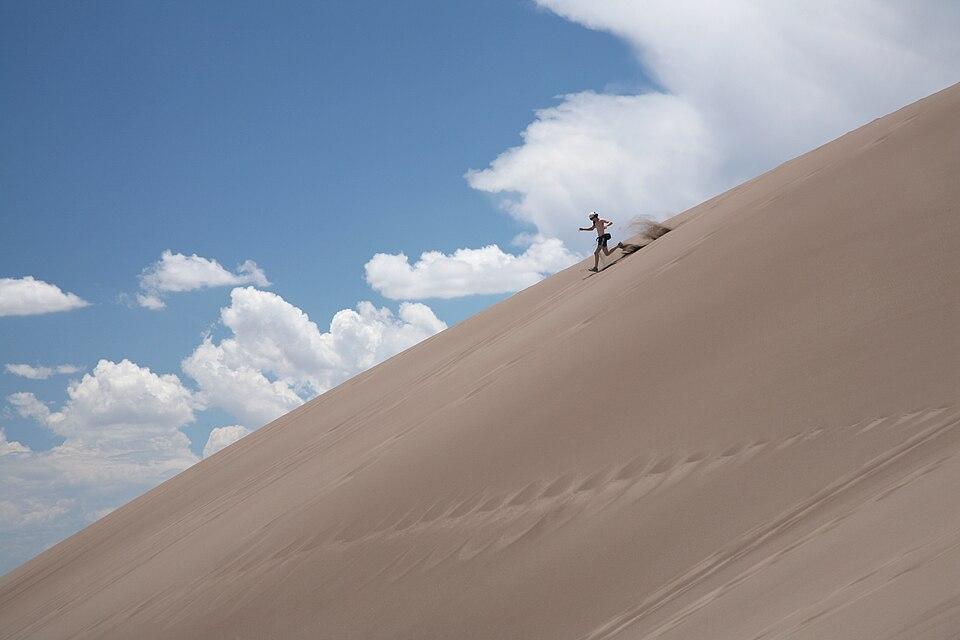
Stargazing is world-class here. Great Sand Dunes is a certified International Dark Sky Park, and the remote San Luis Valley location means minimal light pollution. On a clear night, the Milky Way blazes overhead while the silhouettes of the dunes create an otherworldly foreground. Plan a night at Piñon Flats Campground inside the park for the full experience.
Zapata Falls is a hidden gem just south of the park boundary. A short 1.8-mile round-trip hike leads to a dramatic waterfall tucked inside a narrow slot canyon — completely worth the detour.
What to Know Before You Go
The dune surface can reach temperatures of 150°F in summer afternoons. Seriously. Visiting the dunes in the middle of a July afternoon is not just uncomfortable — it can be genuinely dangerous. Always visit in the early morning or late afternoon during summer months. Wear closed-toe shoes (sandals will fill with burning sand), bring more water than you think you need, and wear long sleeves and sunglasses to protect against blowing sand on windy days.
The park’s elevation ranges from 8,000 to 13,604 feet, so altitude awareness matters here too.
Best Time to Visit
Late spring (May–early June) is the most iconic time to visit because Medano Creek is flowing, wildflowers are blooming, and temperatures are comfortable. Fall (September–October) is the best time for hikers who want stable weather and smaller crowds. Winter is a unique and magical option — snow occasionally falls on the dunes, creating an extraordinary black-and-white landscape, and you’ll have the park nearly to yourself. Summer is busy and can be brutally hot in the afternoons.
3. Mesa Verde National Park
Overview & Location
Mesa Verde National Park is unlike any other park in the United States. Located in the Four Corners region of southwestern Colorado, near the town of Cortez, it was established in 1906 to preserve and interpret the archaeological heritage of the Ancestral Pueblo people — and it is a UNESCO World Heritage Site.
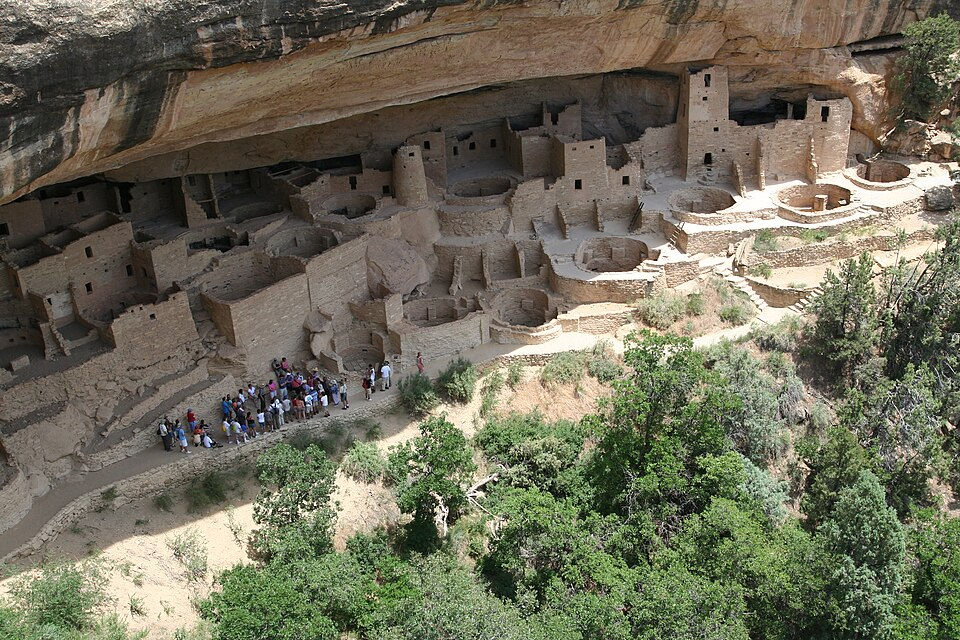
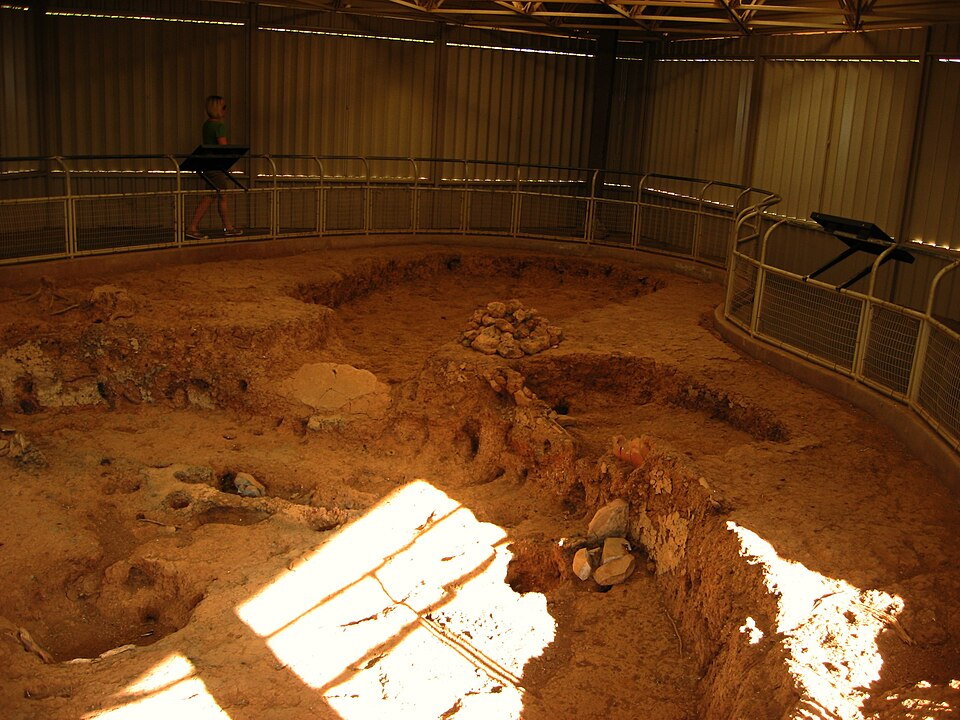
The park protects nearly 5,000 known archaeological sites, including an extraordinary 600 cliff dwellings built directly into the sheer canyon walls. The Ancestral Pueblo people lived in this region from roughly 600 to 1300 CE, developing from pit-house dwelling farmers into sophisticated architects who constructed multi-story stone structures inside natural alcoves in the canyon rock. And then, around 1300 CE, they left — a mystery that still captivates archaeologists and visitors alike.
Top Things to Do
Cliff Palace is the crown jewel of Mesa Verde and the largest cliff dwelling in North America. Built between 1190 and 1280 CE, Cliff Palace contains more than 150 rooms and over 20 kivas (circular ceremonial chambers), and was home to around 100 people. Standing at the base of this extraordinary structure — touching the same stones that Ancestral Pueblo hands placed 700 years ago — is one of the most profound experiences any national park offers. Access to Cliff Palace is by ranger-led tour only and tickets must be reserved in advance through recreation.gov.
Balcony House is for the adventurous. This ranger-led tour includes a 32-foot ladder climb, a narrow tunnel you must crawl through on hands and knees, and steep steps carved into the rock. It’s thrilling, completely unlike anything else in the park system, and highly recommended for those who are physically able.
Chapin Mesa Archaeological Museum provides excellent context for everything you’re about to see. Spend 30–45 minutes here before heading out to the dwellings and the entire experience becomes much richer.
Wetherill Mesa is the quieter side of the park with far fewer visitors. Step House here is the only self-guided cliff dwelling in the park and includes both a pithouse and a masonry dwelling from two different time periods — a fascinating comparison.
Mesa Top Loop Road is a 6-mile scenic drive with multiple pullouts and short walks to pit house ruins, surface-level pueblos, and spectacular canyon overlooks. This is a great option even for visitors who can’t or don’t want to do the ranger-led cliff dwelling tours.
2026 Tour Reservations: What You Must Know
This is the most important planning detail for Mesa Verde. All ranger-led tours of major cliff dwellings require advance reservations through recreation.gov. Cliff Palace, Balcony House, Square Tower House, Long House, and Mug House tickets become available exactly 14 days before the tour date at 8:00 AM Mountain Time — and they sell out within minutes, especially for summer weekends and holidays.
Tour capacities are limited: Cliff Palace allows up to 50 visitors per tour, Balcony House up to 35, Long House up to 30, Square Tower House just 10, and Mug House just 10. Create your recreation.gov account in advance and be ready at 8 AM sharp on your booking window. Missing this reservation is the biggest mistake visitors make at Mesa Verde.
The good news: Mesa Verde does not require a timed entry permit to enter the park itself. You can drive, hike, and visit overlooks at will — tours are the only thing that need advance booking.
Best Time to Visit
The cliff dwelling tour season runs from May to October. Summer is the busiest time with the most tours available, but book well in advance. Late May and September are sweet spots — tours are running, crowds are manageable, and temperatures are ideal for exploring. November through April sees limited tours, but the park itself remains open and the winter solitude adds a haunting beauty to the ancient ruins.
Tips for Visiting with Kids
Mesa Verde is fantastic for families with older children (8+). The cliff dwellings are awe-inspiring and genuinely educational. For younger children, the Wetherill Mesa self-guided tour and the scenic drives are more manageable than the ladder-climbing ranger tours. Bring water, sunscreen, and comfortable hiking shoes — the terrain is rocky and sun-exposed.
4. Black Canyon of the Gunnison National Park
Overview & Location
Black Canyon of the Gunnison is Colorado’s most underrated national park — and arguably its most jaw-dropping. Located in western Colorado near the town of Montrose, the park protects one of the most dramatic geologic formations on the continent: a steep, narrow gorge up to 2,722 feet deep, where sunlight reaches the canyon floor for only 30 to 90 minutes per day.
To put that depth in perspective: the canyon’s deepest point is taller than the Burj Khalifa in Dubai — the world’s tallest building. At its narrowest, the canyon is just 40 feet wide at the bottom and 1,100 feet wide at the top. The Gunnison River, which carved this canyon over millions of years, descends at an average rate of 43 feet per mile — six times steeper than the Colorado River in the Grand Canyon.
The canyon walls are composed of ancient Precambrian gneiss and schist — some of the oldest exposed rock on Earth — streaked with pink and white bands of pegmatite that glow in the right light. This is geology on a scale that is visceral and humbling in a way that photographs simply cannot capture. You have to stand at the rim and look down.
Why It’s Underrated
Most visitors to Colorado skip Black Canyon in favor of Rocky Mountain or Mesa Verde, which means this extraordinary place sees a fraction of the crowds. You can pull up to a rim overlook in the middle of summer and have it nearly to yourself — an increasingly rare experience in the national parks system. The park received roughly 400,000 visitors in recent years compared to Rocky Mountain’s 4+ million. That ratio makes no sense given what Black Canyon has to offer, and it’s precisely why those in the know treasure it.
Top Things to Do
South Rim Drive is the most accessible way to experience the park. The 7-mile paved road runs along the South Rim and stops at more than 12 named overlooks, each offering a different perspective on the canyon’s staggering depth and dark, sculpted walls. Chasm View, Painted Wall View, and Warner Point are among the highlights. This is great for all ages and fitness levels.
Painted Wall is the park’s most photographed feature and one of its most astonishing facts. Standing 2,250 feet from rim to river, it is the tallest cliff face in Colorado and the third tallest in the lower 48 states. It’s over 1,000 feet taller than the Empire State Building. The view from Painted Wall View overlook will stop you cold.
Warner Point Nature Trail (1.5 miles round trip) is the South Rim’s most rewarding short hike. A well-traveled trail through mountain mahogany, serviceberry, and pinyon pine leads to a stunning panoramic view of the canyon and the river below. You can also look south to the San Juan Mountain Range. It’s moderate, accessible, and absolutely worth it.
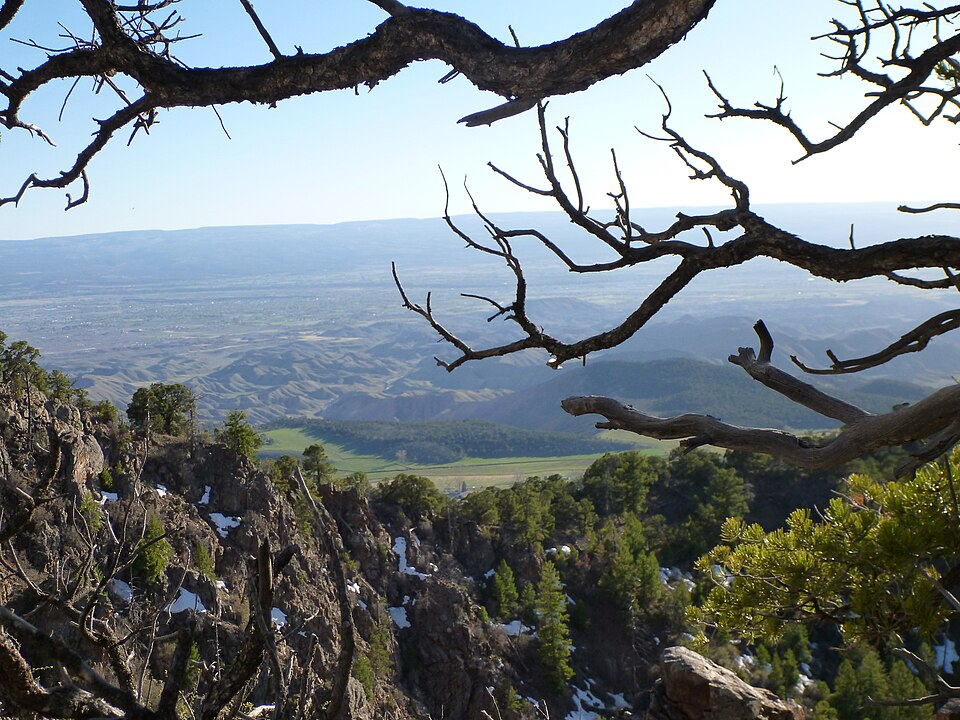
Exclamation Point (North Vista Trail, 3 miles round trip) on the North Rim offers what many consider the park’s single most dramatic view: a straight-down shot into the canyon’s deepest section, where you can hear — but barely see — the Gunnison River roaring nearly 2,000 feet below. The North Rim has 90% fewer crowds than the South Rim and is well worth the extra effort to reach.
Inner Canyon Routes exist for experienced adventurers and require a free wilderness permit from the South Rim Visitor Center. These are not maintained trails — they are steep, unmaintained routes descending 1,500 to 1,800 feet through loose rock and scree into the canyon floor, where you can reach the Gunnison River for world-class fly fishing. In 2026, some inner canyon routes remain affected by a major 2025 wildfire, so check current conditions at the visitor center before attempting any descent.
Best Time to Visit
Spring (April–May) and fall (September–October) offer the best combination of comfortable temperatures, good lighting for photography, and minimal crowds. Summer is warm but manageable at the rim elevations of around 8,000 feet. Winter brings snow and cold but also a stunning, austere beauty — and the South Rim road and visitor center remain open year-round, making this a viable four-season destination.
Essential Tips
Both the South and North Rims sit at around 8,000 feet elevation, so bring water and take altitude seriously. Rim trails have steep drop-offs in places — wear sturdy footwear and stay on marked paths. There is little shade along most overlooks, so sun protection is essential. Cell service is nonexistent in the park, so download offline maps before you arrive.
Colorado National Parks vs. National Monuments & Other NPS Units
One source of common confusion: Colorado has four National Parks, but it has many more units managed by the National Park Service (NPS). When people search for “national parks in Colorado” and see lists of 12 or 13 parks, those lists typically include:
- National Monuments (e.g., Colorado National Monument, Dinosaur National Monument, Florissant Fossil Beds)
- National Recreation Areas (e.g., Curecanti National Recreation Area, which surrounds Black Canyon)
- National Historic Sites and Trails (e.g., Sand Creek Massacre National Historic Site, Bent’s Old Fort)
These are all genuinely worth visiting, but they are distinct from the four official National Parks. If you’re planning around the America the Beautiful Pass, the good news is it covers entry to all of them.
How to Visit All 4 Colorado National Parks in One Trip
Colorado’s four national parks are spread across the western half of the state and connect beautifully as a road trip loop. Here’s the most logical route, starting and ending near Denver:
Recommended Order (Clockwise Loop)
Day 1–2: Denver → Rocky Mountain National Park (2 hours northwest of Denver). Spend two days hiking Bear Lake corridor trails, driving Trail Ridge Road, and watching elk in Moraine Park.
Day 3–4: Rocky Mountain → Great Sand Dunes National Park (4.5 hours south). Head south through the mountains. Spend your first afternoon exploring the dunes and your second morning at Medano Creek before heading west.
Day 5–6: Great Sand Dunes → Mesa Verde National Park (3.5 hours west). Allow two days for Mesa Verde — one for the ranger-led cliff dwelling tours (book 14 days in advance!) and one for the scenic drives and mesa-top archaeology.
Day 7–8: Mesa Verde → Black Canyon of the Gunnison NP (2.5 hours northeast). Spend a day on the South Rim, do the Warner Point hike, and if you’re feeling adventurous, cross to the North Rim for Exclamation Point views.
Day 9–10: Black Canyon → Denver (3.5 hours back east). Stop in Gunnison or Salida for a night if you have time.
Money-Saving Tip: The America the Beautiful Annual Pass ($80) covers all four park entrance fees. A single visit to Rocky Mountain alone costs $35 — buy the pass at your first park and it pays for itself by the second.
Colorado National Parks Map
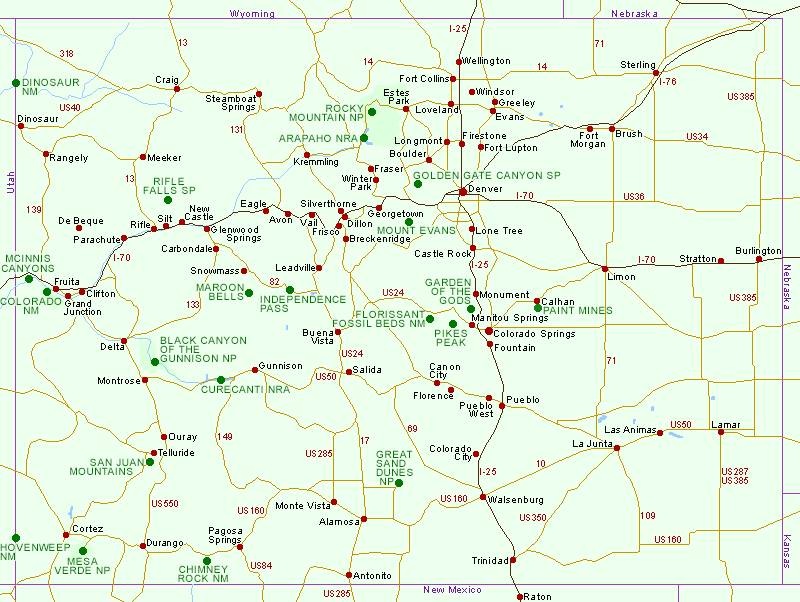
All four of Colorado’s national parks are located in the western half of the state. Rocky Mountain sits in the north-central mountains, Great Sand Dunes lies in the south near the New Mexico border, Mesa Verde anchors the southwestern corner, and Black Canyon of the Gunnison sits in the center-west region near Montrose.
Practical Tips for Visiting Colorado National Parks
Best Time of Year to Visit
Each park has its own ideal season, but as a general rule:
- Rocky Mountain: Late June to September for full trail access; September for fall color and thinner crowds.
- Great Sand Dunes: May to early June for Medano Creek; September–October for comfortable temperatures.
- Mesa Verde: May to October for ranger-led cliff dwelling tours; late May and September are sweet spots.
- Black Canyon: April–May and September–October for ideal weather and low crowds; year-round possible.
Avoid peak summer holiday weekends (Fourth of July, Memorial Day, Labor Day) at all parks if crowds concern you.
Entrance Fees & Passes (2026)
- Rocky Mountain NP: $35 (7-day vehicle), $30 (1-day vehicle)
- Great Sand Dunes NP: $25 (7-day vehicle)
- Mesa Verde NP: $30 (7-day vehicle, peak season May–October); $20 off-season
- Black Canyon of the Gunnison NP: Standard NPS entry fees apply
- America the Beautiful Annual Pass: $80 — covers all four parks and most other federal recreation areas
Camping & Lodging Options
All four parks offer developed campgrounds that require advance reservations through recreation.gov, often months in advance for summer visits.
- Rocky Mountain: Glacier Basin Campground (best for Bear Lake hikes), Timber Creek Campground (quieter, west side)
- Great Sand Dunes: Piñon Flats Campground inside the park (book 3 months in advance as of 2026)
- Mesa Verde: Morefield Campground, located just 4 miles from the park entrance
- Black Canyon: South Rim Campground; sites range from $18–$30/night; backcountry permits cost $10 + $5 per person
Gateway towns with full hotel options: Estes Park (Rocky Mountain), Alamosa (Great Sand Dunes), Cortez or Mancos (Mesa Verde), Montrose (Black Canyon).
Wildlife Safety
Colorado’s parks are home to elk, moose, black bears, mountain lions, bighorn sheep, peregrine falcons, and dozens of other species. Key rules:
- Never feed wildlife — not even chipmunks or marmots. Human food can harm animals and make them dangerously habituated to people.
- Keep a distance of at least 75 feet from most wildlife and 100 yards from bears and mountain lions.
- Store food properly in bear canisters or bear boxes at designated campsites.
- Be especially alert around elk during the fall rut (late September–October) when bulls can be unpredictable and aggressive.
Altitude & Health
Three of Colorado’s four national parks have significant elevation — Rocky Mountain reaches above 12,000 feet, Great Sand Dunes sits at 8,200 feet, and Black Canyon’s rims are around 8,000 feet. Mesa Verde’s visitor center is at approximately 7,000 feet. Common symptoms of altitude sickness include headache, fatigue, nausea, and shortness of breath. Hydrate aggressively, ascend gradually, and descend at the first sign of serious symptoms.
Leave No Trace
All four parks ask visitors to follow Leave No Trace principles. Stay on designated trails, pack out all trash, leave natural objects where you find them, minimize campfire impacts, and respect other visitors. These aren’t just rules — they’re what keeps these places extraordinary for the next generation of visitors.
Read Also: 7 Southeast National Parks Almost Nobody Visits (But Absolutely Should)
Frequently Asked Questions
How many national parks are in Colorado?
Colorado has exactly four official National Parks designated by Congress: Rocky Mountain, Great Sand Dunes, Mesa Verde, and Black Canyon of the Gunnison. Colorado also has numerous other NPS-managed units including national monuments, recreation areas, and historic sites — over 50 total public lands units in the state — but only four carry the official “National Park” designation.
What is the most popular national park in Colorado?
Rocky Mountain National Park is by far the most visited, receiving approximately 4.2 million visitors in 2024. It’s the fifth most visited national park in the United States and offers the easiest access from Denver.
Which Colorado national park is easiest to visit?
Rocky Mountain National Park is the easiest, being only 90 minutes from Denver with excellent infrastructure, shuttle services, and a wide range of trails for all fitness levels. Great Sand Dunes is the most unique and beginner-friendly in terms of the main activity — you literally just walk on the dunes.
Is there an entrance fee for Colorado national parks?
Yes, all four charge an entrance fee ranging from $25 to $35 for a 7-day vehicle pass. The America the Beautiful Annual Pass ($80) covers all four parks and is excellent value for visitors planning to hit more than two parks.
Do you need permits to visit Colorado national parks?
Rocky Mountain requires a timed entry permit from May 22 to October 12, 2026 (reserved at recreation.gov for $2/vehicle). Mesa Verde requires advance reservations for ranger-led cliff dwelling tours. Great Sand Dunes and Black Canyon of the Gunnison do not require advance permits for general entry, though Black Canyon’s inner canyon routes require a free wilderness permit.
Can you visit multiple Colorado national parks in one trip?
Absolutely — and it’s one of the great American road trips. All four parks can be visited in a 10-day loop starting and ending in Denver, with each park conveniently located in the western half of the state.
What is the best Colorado national park for families with kids?
Great Sand Dunes is arguably the most universally fun for all ages — sandboarding, wading in Medano Creek, and exploring the dunes require no technical skill and are pure joy. Rocky Mountain offers excellent wildlife viewing that captivates children. Mesa Verde is wonderful for curious older kids.
Final Thoughts: Which Colorado National Park Should You Visit First?
There’s no wrong answer here — each of Colorado’s four national parks is genuinely extraordinary in its own way. But here’s a simple guide based on what matters most to you:
Visit Rocky Mountain first if you love hiking, alpine scenery, and wildlife and you’re based near Denver. It’s the easiest to reach, the most accessible, and rewards visitors of every fitness level. Come ready for the crowds and book your timed entry permit well in advance.
Visit Great Sand Dunes first if you’re traveling with kids or want an experience completely unlike any other park in America. There is nothing like standing in a vast ocean of sand with 14,000-foot peaks behind you. It’s joyful, weird, and unforgettable.
Visit Mesa Verde first if you’re drawn to history, archaeology, or ancient cultures. The cliff dwellings will stop you in your tracks. Book your ranger-led tour 14 days out to the day — these tickets vanish in minutes.
Visit Black Canyon first if you love geology, solitude, and jaw-dropping canyon views without the crowds. This is Colorado’s best-kept national park secret, and it deserves far more recognition than it gets.
Better yet? Visit all four. This is Colorado — you’re going to want to come back anyway.
Last updated: June 2026