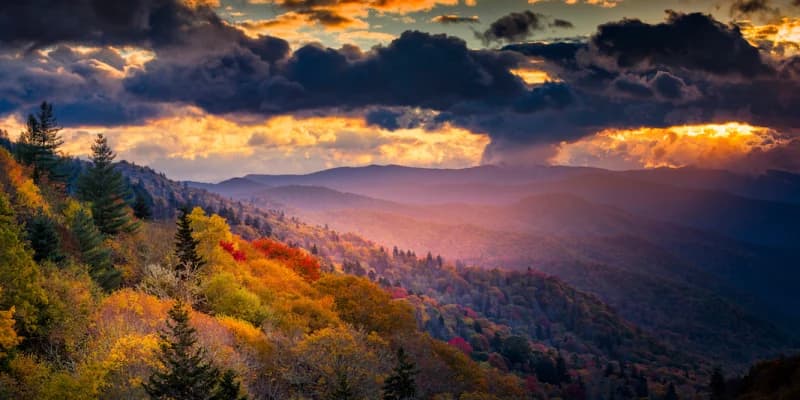
Best Time to Visit Great Smoky Mountains National Park (2026): Weather, Fall Colors, Crowds & Things to Do
If you’re wondering about the best time to visit Great Smoky Mountains National Park, the answer depends on what you want to see and do. For most travelers, late April through May and mid-October through early November are the best overall periods. Spring brings comfortable hiking weather, wildflowers, and waterfalls, while fall offers spectacular foliage and cooler temperatures.
That said, every season has something different to offer. Summer is great for long days and higher-elevation hikes, while winter provides quieter trails and occasional mountain snow.
Great Smoky Mountains National Park is open 24 hours a day, 365 days a year, although some roads, campgrounds, visitor centers, and other facilities operate seasonally.
Quick Answer: When Is the Best Time to Visit the Smokies?
The best overall time to visit Great Smoky Mountains National Park is late April to May or mid-October to early November.
- Best for fall colors: Mid-October to early November
- Best for wildflowers: Mid- to late April
- Best for hiking: Late April–May and September–October
- Best for fewer crowds: Winter and selected weekdays outside peak fall periods
- Best for warm-weather activities: June through August
- Best for synchronous fireflies: Usually late May to early June
- Best overall weather: Spring and fall
The park’s elevation ranges from about 875 feet to 6,643 feet, so conditions can vary considerably between valleys and mountain summits. Temperatures may differ by 10–20°F depending on elevation.
Great Smoky Mountains National Park by Season
Spring: March Through May
Spring is one of the best times to visit Great Smoky Mountains National Park, especially if you enjoy hiking, waterfalls, and wildflowers.
March can still feel like winter at higher elevations. Snow is possible, and weather can change rapidly. By mid-April, lower elevations generally become much milder, with daytime temperatures commonly reaching the 70s and occasionally the 80s.
April and May are particularly attractive because the forest begins coming alive with flowering plants. The park contains more than 1,500 species of flowering plants, and spring wildflowers are one of its biggest attractions.
Why visit in spring?
- Excellent wildflower displays
- Comfortable hiking temperatures
- Flowing waterfalls and streams
- Green forests
- Fewer fall-season crowds
- Good conditions for scenic drives and photography
The main downside is rain. April averages more than 4 inches of precipitation, while May averages about 4.5 inches. Weather can also change quickly in the mountains.
Best spring month: April or May
Summer: June Through August
Summer is a popular time to visit because of long daylight hours, lush greenery, and warm temperatures. It is also a good season for families who want to spend several days exploring the park.
However, summer in the lower elevations can be hot, humid, and hazy. July and August can have afternoon temperatures in the 90s at lower elevations, while afternoon showers and thunderstorms are common. Higher elevations are considerably cooler.
Why visit in summer?
- Long days for hiking
- Lush green scenery
- Warm weather
- Good season for camping
- Cooler temperatures at higher elevations
- Opportunity to see summer wildflowers
Summer can also be busy, particularly around popular destinations and weekends. If you’re visiting during this season, starting your day early is a smart strategy.
Best summer months: June and early July
Fall: September Through Early November
For many visitors, fall is the best time to visit Great Smoky Mountains National Park.
The combination of cool weather, colorful forests, and scenic mountain roads makes autumn extremely popular. The park’s wide elevation range means fall colors don’t appear everywhere at the same time. Color generally begins at higher elevations and gradually moves down toward the valleys.
According to the National Park Service, the last three weeks of October are typically the best time to view fall colors, although the exact timing changes from year to year.
Higher elevations can begin changing as early as mid-September. From early to mid-October, foliage typically develops above 4,000 feet. At lower and middle elevations, the most spectacular colors commonly occur from mid-October into early November.
Why visit in fall?
- Spectacular fall foliage
- Cooler hiking temperatures
- Excellent photography
- Comfortable scenic drives
- Less summer humidity
- Beautiful mountain views
The downside: crowds
October is the busiest month of the year in Great Smoky Mountains National Park. Popular roads and destinations can experience significant congestion, and parking areas can fill quickly.
If you’re visiting during peak fall foliage, consider entering the park before 8 a.m. or later in the afternoon. The National Park Service also recommends using its congestion forecasting calendar when choosing your dates.
Best fall month: October for peak foliage, although late September and early November can offer a better balance between scenery and crowds.
Winter: November Through February
Winter is often overlooked, but it can be an excellent choice if you prefer quieter surroundings.
Lower elevations can have relatively mild winter days, while higher elevations may receive snow and significantly colder temperatures. January and February are generally the most likely months for finding snow in the mountains.
Why visit in winter?
- Fewer visitors in many areas
- Peaceful hiking conditions
- Occasional snow-covered mountains
- Better chances of finding parking
- Dramatic winter photography
- Quieter scenic drives
The tradeoff is that some secondary roads and facilities may be affected by seasonal closures or winter weather. Always check current road and trail conditions before your trip.
Best winter months: December through February for solitude; January and February for the best chance of mountain snow.
Best Time to Visit Great Smoky Mountains for Fall Colors
If your main goal is seeing colorful leaves, plan for mid-October through early November, with the exact peak depending on elevation and yearly weather.
A useful way to think about the season is:
| Time | What to Expect |
|---|---|
| Mid-September | Early color at the highest elevations |
| Late September | More color at high elevations |
| Early October | Strong color at higher elevations |
| Mid-October | Color spreads into middle elevations |
| Late October | Excellent foliage across many areas |
| Early November | Lower elevations can still have impressive color |
The National Park Service notes that predicting exact peak dates is difficult because weather conditions affect the timing.
If you want the best combination of foliage and manageable crowds, consider visiting in late September or early November rather than targeting the busiest October weekends.
Best Time to Visit for Wildflowers
Spring is the clear winner for wildflowers.
The park’s famous spring ephemeral flowers begin appearing from February through April. The main spring wildflower display usually peaks around mid- to late April at lower elevations, with blooms appearing a few weeks later at the highest elevations.
April is therefore an excellent month for visitors interested in photography, botany, nature walks, and easy-to-moderate hikes.
Best Time to See Synchronous Fireflies
If seeing synchronous fireflies is on your bucket list, plan a trip around late May or early June.
The famous Photinus carolinus fireflies synchronize their flashes during their short annual mating season. The exact timing changes each year depending on environmental conditions.
For 2026, the National Park Service scheduled the annual Elkmont synchronous firefly viewing opportunity for May 20–27, with access managed through a vehicle-reservation lottery.
Because this is an extremely popular event, don’t simply arrive at Elkmont expecting to participate. Check the National Park Service’s current firefly information and reservation requirements before planning your trip.
Best Time to Visit for Hiking
The best hiking weather is generally found during spring and fall.
Best hiking months
April–May: Mild temperatures, abundant greenery, wildflowers, and flowing streams.
September–October: Cooler temperatures, lower humidity, and beautiful fall scenery.
Summer hiking is still possible, but lower elevations can become hot and humid. If hiking in July or August, start early and consider trails at higher elevations.
Winter hiking can be rewarding but requires more preparation because temperatures and trail conditions can change dramatically with elevation.
Best Time to Visit for Fewer Crowds
Great Smoky Mountains National Park is one of the busiest national parks in the United States, so choosing the right date and time can make a major difference.
The park generally experiences its heaviest daily visitation between 9 a.m. and 2 p.m. The National Park Service recommends arriving by 8 a.m. during busy periods, while entering around 3 p.m. can also be a good option.
For the best chance of avoiding congestion:
- Visit on weekdays
- Avoid peak October weekends
- Start hikes early
- Enter the park before 8 a.m.
- Consider less-visited areas
- Check the park’s congestion forecast before your trip
The NPS congestion calendar categorizes days according to predicted traffic levels, which can help you choose less-busy dates.
What Is the Best Month to Visit Great Smoky Mountains?
If you want a simple month-by-month answer:
April: Best for spring wildflowers and waterfalls.
May: One of the best overall months for pleasant weather, greenery, hiking, and wildflowers.
June: Great for lush scenery and summer activities, with the possibility of synchronous fireflies.
July–August: Best for warm-weather trips and higher-elevation escapes, but expect heat, humidity, and afternoon storms at lower elevations.
September: A good shoulder-season choice with cooler weather and the beginning of fall color at higher elevations.
October: Best for fall foliage, but also the busiest month.
November: Good for late fall scenery, cooler temperatures, and fewer crowds after peak foliage.
December–February: Best for a quieter experience and occasional snow at higher elevations.
What Time of Day Is Best to Visit?
Choosing the right time of day can be just as important as choosing the right month.
For popular areas, early morning is usually the best time. Arriving before 8 a.m. gives you a better chance of finding parking and avoiding the heaviest traffic.
Late afternoon can also work, especially around 3–4 p.m., but make sure you have enough daylight for your planned hike or drive.
The park’s peak visitation hours are generally between 9 a.m. and 2 p.m.
How Long Should You Spend in Great Smoky Mountains National Park?
For a first visit, 2–3 days is a good starting point.
A one-day trip can cover several highlights, but you’ll have to prioritize. With two or three days, you can combine scenic drives, hiking, waterfalls, historic areas, and overlooks without rushing as much.
If you’re visiting during October, allow additional time for traffic because popular routes can take substantially longer than expected.
Tips for Planning Your Visit
Check weather by elevation
Weather in the Smokies can change quickly. A clear morning in the valleys does not necessarily mean conditions will be comfortable at the summit.
Start early
Early starts are particularly important during spring, summer weekends, and fall foliage season.
Have a backup plan
Popular parking areas may fill up, especially in October. Keep an alternative trail, viewpoint, or destination in mind.
Check road and trail conditions
Seasonal closures, construction, storms, and other conditions can affect access.
Bring layers
Even during warmer months, temperatures can be significantly cooler at higher elevations.
Don’t rely on cell service
Cell coverage is extremely limited in much of the park. Download maps and trip information before entering the mountains.
Frequently Asked Questions
What is the absolute best time to visit Great Smoky Mountains National Park?
For most travelers, late April through May and mid-October through early November offer the best combination of scenery and comfortable weather. Choose spring for wildflowers and fall for foliage.
Is October a good time to visit the Smokies?
Yes. October is arguably the best month for fall colors, but it is also the busiest month. Expect heavier traffic and crowded parking areas, especially on popular roads and weekends.
What month has the best fall colors in the Smoky Mountains?
October is generally the best month, particularly from mid-October onward. However, peak color varies by elevation and weather each year.
Is spring a good time to visit Great Smoky Mountains?
Yes. April and May are excellent for wildflowers, waterfalls, green forests, and hiking. Keep in mind that spring weather can be unpredictable and rainy.
What is the least crowded time to visit the Smokies?
Winter generally offers a quieter experience, while weekdays during shoulder seasons can also be less crowded. Even during less-busy periods, popular destinations can become congested.
Can you visit Great Smoky Mountains in winter?
Absolutely. The park remains open year-round. Winter can provide peaceful trails and snow-covered mountain scenery, although higher elevations can become very cold and some roads or facilities may have seasonal restrictions.
What is the best time to see wildflowers in the Smokies?
The main spring wildflower peak generally occurs in mid- to late April at lower elevations, with the peak arriving later at higher elevations.
When can you see synchronous fireflies?
Synchronous fireflies typically appear during late May or early June, but the exact dates change each year. The National Park Service uses environmental conditions to determine the annual viewing period.
Final Verdict
So, what is the best time to visit Great Smoky Mountains National Park?
For the best overall experience, choose late April through May if you want comfortable hiking weather, wildflowers, waterfalls, and fresh spring scenery. Choose mid-October through early November if your priority is spectacular fall foliage.
If avoiding crowds is more important than seeing peak seasonal attractions, consider late spring, early November, or winter weekdays.
Whatever season you choose, check the National Park Service’s current weather, road conditions, closures, and congestion forecast before leaving. The Smokies’ dramatic elevation changes mean that conditions can be very different from one part of the park to another.
Best overall: Late April–May and mid-October–early November
Best for fall foliage: Mid-October–early November
Best for wildflowers: Mid- to late April
Best for hiking: April–May and September–October
Best for fewer crowds: Winter and selected shoulder-season weekdays
Best for fireflies: Late May–early June
Read Also: Is Great Smoky Mountains National Park Open? 2026 Hours, Closures & What to Know Before You Visit
Great Smoky Mountains National Park Camping: Best Campgrounds, Reservations, Fees & Complete Guide (2026)