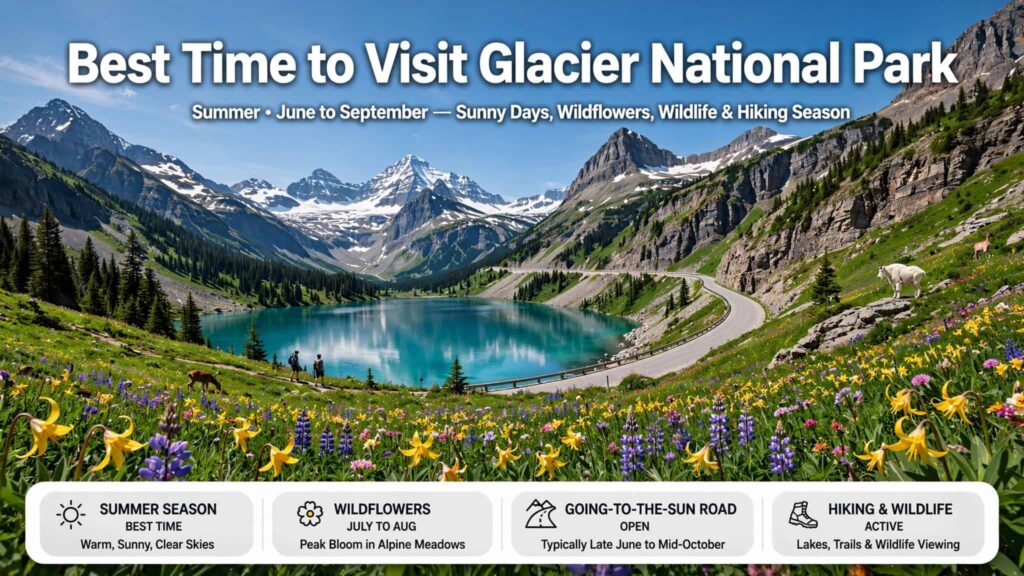
Best Time to Visit Glacier National Park: Weather, Crowds & Things to Know (2026)
Planning a trip to Glacier National Park can be tricky because the park changes dramatically throughout the year. Snow can remain at high elevations well into summer, while popular roads and trails become very busy during the peak season.
For most travelers, July through September offers the best combination of road access, hiking opportunities, and favorable weather. However, the ideal month depends on whether you care most about hiking, fewer crowds, fall scenery, or winter experiences.

Quick Answer: When Is the Best Time to Visit Glacier National Park?
July and August are generally the most convenient months for a classic Glacier National Park trip. By this period, the high-elevation portions of Going-to-the-Sun Road are typically accessible, and many hiking routes are available.
However:
- June: Good for waterfalls, lower-elevation hiking and fewer visitors, but snow can still affect high elevations.
- July: Excellent for hiking, scenic drives and wildflowers, but very busy.
- August: Warm weather and extensive access, but also one of the busiest periods.
- September: Cooler temperatures, fewer visitors and early fall colors.
- October: Beautiful fall scenery is possible, but seasonal closures become increasingly likely.
- November–April: Best suited to winter scenery, snowshoeing and a quieter experience rather than a traditional sightseeing trip.
The National Park Service notes that Glacier’s weather is highly variable, with hot days and cool nights common in July and August, while snow can return to lower elevations as early as September.
Glacier National Park Weather by Season
Summer: June Through August
Summer is the most popular period to visit Glacier National Park.
July and August usually provide the most reliable conditions for visitors who want to combine scenic drives with hiking. However, temperatures and weather can change quickly, particularly at higher elevations.
The National Park Service recommends bringing rain gear and extra layers even during summer because conditions can change rapidly.
June
June can be a good month for travelers who want to avoid the heaviest summer crowds, but there is an important trade-off.
High-elevation areas can still have substantial snow, and Going-to-the-Sun Road may not yet be completely open.
The alpine portion of the road does not have a fixed annual opening date. Opening depends on snow removal, weather and road conditions, and the entire route typically opens around late June or early July.
June is best for:
- Waterfalls
- Lower-elevation hikes
- Green landscapes
- Fewer visitors than July and August
- Travelers who don’t mind changing plans
July
July is one of the most popular months to visit Glacier National Park.
By early July, Going-to-the-Sun Road is often fully open, although the exact opening date varies every year.

This is an excellent time for:
- Hiking
- Scenic drives
- Photography
- Wildflowers
- Logan Pass
- Lake McDonald
- High-elevation trails
The disadvantage is crowding. The National Park Service says May through September is the busiest period, with parking areas at popular destinations such as Logan Pass and Avalanche Creek often filling before sunrise.
August
August is another excellent month for accessing Glacier’s major attractions.
The weather can be warm at lower elevations, while evenings and higher elevations can remain cool. Thunderstorms and sudden weather changes are also possible.
August works particularly well for travelers who want to:
- Hike longer trails
- Explore Logan Pass
- Drive Going-to-the-Sun Road
- Photograph mountain landscapes
- Spend several days exploring different areas of the park
The main drawback is that August can be extremely busy.
If you’re visiting during this month, consider starting your day early and having alternative trails or destinations ready.
September: A Great Shoulder-Season Option
September is an interesting month because it can offer a different experience from the height of summer.
The National Park Service says fall generally brings fewer visitors, more active wildlife and changing foliage. Trees can begin changing color by mid-September.

Why Visit in September?
You may experience:
- Fewer crowds
- Cooler hiking temperatures
- Early fall colors
- Beautiful mountain scenery
- More peaceful trails
- Potentially easier parking
But September also comes with uncertainty.
Snow can occur at lower elevations as early as mid-September, and road or facility schedules begin changing as the season progresses.
For travelers who don’t need guaranteed summer conditions, September can be an appealing compromise between summer access and fall atmosphere.
October: Fall Scenery and Changing Conditions
October can be beautiful, particularly around the lower elevations and surrounding areas.
However, this is no longer a month when you should assume all of Glacier’s attractions will be operating normally.
Going-to-the-Sun Road typically remains fully open until around the third Monday of October when conditions permit, but winter weather can cause earlier closures.
October is better suited to travelers who are comfortable checking road conditions frequently and adjusting their itinerary.
Winter: November Through April
Winter transforms Glacier National Park into a very different destination.
Snow covers much of the park, and most roads close because of winter conditions. The western portion of Going-to-the-Sun Road between the West Glacier area and Lake McDonald Lodge is generally maintained during winter, weather permitting.

Winter can be suitable for:
- Snowshoeing
- Cross-country skiing
- Winter photography
- Snow-covered mountain scenery
- A quieter park experience
However, many visitor services and roads are seasonal, so winter visitors need to plan much more carefully.
Best Time to Visit Glacier National Park for Hiking
If hiking is your main reason for visiting, July through early September is generally the most practical window.
Many of Glacier’s famous high-elevation trails depend on snow conditions and access to higher parts of the park.
Popular destinations include:
- Highline Trail
- Hidden Lake
- Grinnell Glacier
- Avalanche Lake
- Many Glacier area trails
Logan Pass is particularly important because it provides access to trails such as Hidden Lake Overlook and the Highline. It sits at approximately 6,646 feet (2,025 meters) and is the highest point on Going-to-the-Sun Road.
Best Time for Going-to-the-Sun Road
If driving Going-to-the-Sun Road is one of your main goals, timing matters.
The road crosses the park for roughly 50 miles and reaches Logan Pass at the Continental Divide.

The high-elevation section is closed during the winter and opens only after substantial snow removal. There is no fixed annual opening date. NPS says it is typically fully open by early July, although weather and snow conditions can change that schedule.
The road is approximately 50 miles long, and driving the entire route without stops takes about two hours.
Important:
Don’t plan your entire trip around a historical opening date. Always check the current road status before traveling.
Best Time to Avoid Crowds
If avoiding crowds is your priority, September and early October generally offer a better chance of a quieter experience than July and August.
Glacier’s busiest period runs roughly from May through September, according to the National Park Service. Popular parking areas and trails can become crowded during the middle of the day.
Another useful strategy is simply starting early.
Popular locations such as Logan Pass can become busy very early in the morning, and parking may fill around sunrise during busy periods.
Best Time for Wildlife
Glacier National Park is home to a wide range of wildlife, including bears, mountain goats, bighorn sheep and other mountain species.
Fall can be particularly interesting because the National Park Service notes that wildlife is more active during the fall season.
Regardless of when you visit, maintain a safe distance from wildlife and follow current park guidance.
Best Time for Photography
There isn’t one perfect photography season because Glacier looks dramatically different throughout the year.
Summer Photography
Best for:
- Green valleys
- Wildflowers
- Blue lakes
- Mountain landscapes
- Going-to-the-Sun Road
Fall Photography
Best for:
- Autumn foliage
- Golden colors
- Cooler atmospheric conditions
- Fewer people in some locations
Winter Photography
Best for:
- Snow-covered mountains
- Frozen landscapes
- Lake McDonald winter scenes
- Dramatic alpine scenery
Glacier National Park Crowds: What to Expect
Don’t assume that visiting outside July and August automatically means having the park to yourself.
The National Park Service describes Glacier as a very busy park and warns visitors to expect crowds on roads, at visitor centers, on popular trails and on shuttle services.
Popular areas can become congested because Glacier has limited parking.
If a parking lot is full, NPS recommends moving on rather than waiting for another vehicle to leave.
Ways to Avoid the Worst Crowds
- Start hikes early.
- Avoid arriving at popular trailheads around midday.
- Have a backup trail.
- Consider less-popular areas.
- Use shuttle transportation when appropriate.
- Check current road conditions before leaving.
Glacier has more than 700 miles of trails, so visitors can sometimes escape the busiest areas by choosing less-popular routes.
What to Pack for Glacier National Park
Even if you’re visiting in July or August, don’t pack only summer clothing.
The National Park Service specifically recommends being prepared for changing weather and carrying rain gear and extra layers.
Basic Packing List
- Waterproof jacket
- Warm layer or fleece
- Comfortable hiking shoes
- Water bottle
- Sunscreen
- Sunglasses
- Hat
- Small backpack
- Insect repellent
- Bear-safety equipment as recommended by the park
- Offline maps
- Camera
- Extra food for longer hikes
Weather can vary considerably between the east and west sides of the park, so check a location-specific forecast before heading out.
Is Glacier National Park Open Year-Round?
Yes. Glacier National Park is open 24 hours a day, 365 days a year, but that doesn’t mean every road, facility or trail is open year-round.
This distinction is important.
You can visit the park in winter, but many roads and visitor services operate seasonally.
For a traditional Glacier experience involving Going-to-the-Sun Road, Logan Pass and extensive hiking, summer and early fall are much more practical.
Glacier National Park Best Time to Visit: Month-by-Month
| Month | Weather | Crowds | Road Access | Best For |
|---|---|---|---|---|
| January | Very cold/snowy | Very low | Limited | Winter scenery |
| February | Cold/snowy | Very low | Limited | Snow activities |
| March | Cold | Very low | Limited | Winter landscapes |
| April | Snow/mixed | Low | Limited | Early spring |
| May | Cool/wet | Increasing | Limited at high elevations | Waterfalls, lower trails |
| June | Mild/cool | Busy | Improving | Early summer |
| July | Warm days/cool nights | Very high | Excellent when fully open | Hiking, road trips |
| August | Warm days/cool nights | Very high | Excellent | Hiking, sightseeing |
| September | Cooler | Moderate | Variable | Hiking, fall scenery |
| October | Cool/cold | Lower | Increasing closures | Fall colors |
| November | Cold/snow | Very low | Limited | Winter scenery |
| December | Cold/snow | Very low | Limited | Snowy landscapes |
Actual conditions and road openings vary by year.
So, What Is the Best Month to Visit Glacier National Park?
For a classic first-time Glacier National Park trip, July or August gives you the strongest chance of having the major summer road and hiking experience available.
If you want a balance between access and fewer crowds, consider September, while understanding that weather and seasonal operations become less predictable.
If you primarily want snow, solitude and winter scenery, December through March offers a completely different experience.
The key is to choose your month based on what you want to do rather than simply looking for the “best” month.
Frequently Asked Questions
What is the best month to visit Glacier National Park?
July and August are popular choices because summer provides broad access to roads and hiking areas. September can be attractive for cooler weather, fewer visitors and fall scenery.
Is June a good time to visit Glacier National Park?
Yes, particularly for lower-elevation sightseeing and waterfalls. However, high-elevation areas may still have snow, and Going-to-the-Sun Road may not yet be completely open.
Is September too late to visit Glacier National Park?
No. September can be an excellent time to visit, but conditions become less predictable. Snow can occur at lower elevations from mid-September onward, and seasonal schedules begin changing.
When is Glacier National Park least crowded?
Winter generally has the fewest visitors. Within the main hiking season, fall—particularly September and October—tends to be quieter than the peak summer months.
When does Going-to-the-Sun Road open?
There is no fixed opening date. The high-elevation portion typically opens around late June or early July, depending on snow removal and weather conditions.
How many days should you spend in Glacier National Park?
For a first visit, 3–5 days gives you considerably more flexibility than a one- or two-day trip. It allows time for scenic drives, hiking and exploring different areas without rushing.
Final Thoughts
The best time to visit Glacier National Park depends on your priorities.
For the widest range of classic summer activities, July and August are the most straightforward choices. For cooler weather, fewer crowds and the possibility of fall colors, September is worth considering. For snow-covered scenery and winter recreation, visit during the colder months.
Whatever month you choose, check current road conditions, weather forecasts, trail conditions and seasonal closures shortly before your trip. Glacier’s mountain weather can change quickly, and road access can change because of snow, weather, construction or other conditions.
Glacier National Park official planning information
Current Glacier National Park road conditions
Read Also: Glacier National Park Weather by Month: Temperatures, Snow, Rain & Best Time to Visit (2026)