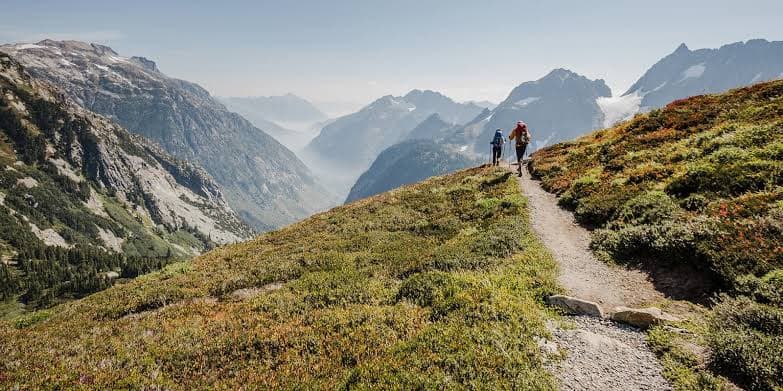
What Are the Most Scenic Hiking Routes? 10 Breathtaking Trails in U.S. National Parks
If you’re wondering what are the most scenic hiking routes in the USA, the answer depends on what kind of scenery you love most. Some trails wind through dramatic canyons, while others offer mountain views, alpine meadows, waterfalls, glaciers, or sweeping desert landscapes.
America’s national parks are home to some of the world’s most spectacular hiking trails. From the granite cliffs of Yosemite to the colorful sandstone formations of Zion and the enormous landscapes of Grand Canyon National Park, there is a scenic route for almost every type of hiker.
Below are some of the most scenic hiking routes in U.S. national parks, along with what makes each one special and what hikers should know before setting out.
1. Skyline Trail — Mount Rainier National Park, Washington
The Skyline Trail at Mount Rainier National Park is one of the best choices for hikers who want mountain scenery without committing to a multi-day trek.
The 5.5-mile loop begins in the Paradise area and climbs through beautiful subalpine meadows toward Panorama Point. Along the way, hikers can enjoy spectacular views of Mount Rainier, the Nisqually Glacier, wildflowers, and surrounding peaks. On especially clear days, views can extend as far as Mount Hood in Oregon.
The trail gains about 1,700 feet of elevation, so although it is relatively short, it is a strenuous hike. Conditions can also change quickly, particularly early in the season.
Best for: Mountain views, wildflowers, glaciers, and alpine scenery.
2. Angels Landing — Zion National Park, Utah
Few hikes are as visually dramatic as Angels Landing in Zion National Park. The route climbs above Zion Canyon, eventually reaching a narrow sandstone ridge with spectacular views in every direction.
The complete hike is about 5.4 miles round trip with approximately 1,488 feet of elevation gain. The final section is steep and exposed, with chains installed to assist hikers along narrow sections of the route. The National Park Service warns that some areas have sheer drop-offs of up to 1,000 feet.
Angels Landing is not simply a scenic walk—it is a challenging adventure. A permit is required for everyone hiking to Angels Landing beyond Scout Lookout, so visitors should plan ahead.
For hikers who want the views without the exposed final section, Scout Lookout is an excellent alternative and does not require an Angels Landing permit.
Best for: Dramatic canyon views and adventurous hikers.
3. South Kaibab Trail — Grand Canyon National Park, Arizona
When it comes to unforgettable scenery, it is difficult to beat the South Kaibab Trail in Grand Canyon National Park.
Unlike many canyon trails, South Kaibab follows a prominent ridgeline, creating panoramic views of the canyon from the moment you begin descending. The National Park Service describes it as offering some of the most expansive views available on a Grand Canyon trail.
The trail descends approximately 4,860 feet from the South Rim to the Colorado River over 6.3 miles. However, the full route is not necessary for a memorable hike. Shorter outings can provide spectacular scenery without requiring a descent all the way into the canyon.
There is little shade and no water along the South Kaibab Trail, making preparation especially important. During hot summer conditions, the National Park Service advises against strenuous hiking in the canyon.
Best for: Panoramic canyon views and sunrise photography.
4. Bright Angel Trail — Grand Canyon National Park, Arizona
Another iconic Grand Canyon route, Bright Angel Trail, takes hikers deep into one of the world’s most recognizable landscapes.
The trail offers constantly changing views of the canyon’s layered rock formations as it descends from the South Rim. It is also more developed than some other canyon routes, with resthouses and seasonal water availability along portions of the trail.
Don’t let the well-maintained trail fool you, however. Hiking down is considerably easier than hiking back up, and the National Park Service emphasizes that all trails into the canyon are steep and difficult.
For a shorter scenic experience, hikers can choose a destination such as the Second Tunnel or Mile-and-a-Half Resthouse rather than attempting a much longer descent.
Best for: First-time Grand Canyon hikers and classic canyon scenery.
5. Mist Trail — Yosemite National Park, California
The Mist Trail is one of Yosemite’s most famous hiking experiences, combining waterfalls, granite cliffs, forest, and the rushing Merced River.
Beginning near Happy Isles, the route provides access to Vernal Fall and Nevada Fall. The hike to the top of Vernal Fall via the Mist Trail is about 2.4 miles round trip with 1,000 feet of elevation gain, while continuing to Nevada Fall makes the route about 5.4 miles round trip with 2,000 feet of elevation gain.
During spring and early summer, water spray from Vernal Fall can make the trail wet and slippery—but it also creates the possibility of seeing rainbows in the mist.
The Mist Trail corridor is extremely popular, and trail repair work can result in temporary closures or detours, so visitors should check current Yosemite conditions before hiking.
Best for: Waterfalls, granite landscapes, and dramatic river scenery.
6. Yosemite Falls Trail — Yosemite National Park, California
For another spectacular Yosemite hike, consider the Yosemite Falls Trail. This strenuous route climbs toward the top of Yosemite Falls and provides increasingly impressive views over Yosemite Valley.
The complete trail is about 7.4 miles round trip with approximately 2,700 feet of elevation gain. Hikers can see Yosemite Valley from above while approaching one of North America’s tallest waterfalls.
For visitors who don’t want to complete the entire hike, even the first portion can be rewarding. The hike to Columbia Rock, for example, offers impressive valley views after a shorter climb.
Best for: Waterfalls, valley panoramas, and challenging day hikes.
7. Highline Trail — Glacier National Park, Montana
Glacier National Park is famous for rugged mountains, alpine valleys, and dramatic landscapes, making its trails ideal for hikers seeking classic Rocky Mountain scenery.
The Highline Trail is particularly memorable because it travels along the mountainside near the Continental Divide. Sections of the trail offer spectacular views of Glacier’s peaks and valleys, making it a favorite for photographers and experienced hikers.
Because mountain weather and trail conditions can change quickly, hikers should check current park conditions before setting out. Glacier also has important wildlife considerations, so visitors should follow all park guidance regarding food storage and wildlife encounters.
Best for: Alpine scenery, mountain ridges, and wildlife viewing.
8. Delicate Arch Trail — Arches National Park, Utah
For desert scenery, the Delicate Arch Trail in Arches National Park is hard to overlook.
The trail leads through Utah’s distinctive red-rock landscape to the famous Delicate Arch, one of the most recognizable natural landmarks in the American Southwest. The contrast between the enormous sandstone arch and the surrounding desert creates an especially memorable destination.
This is a popular hike, particularly around sunrise and sunset. Summer temperatures can also be intense, so carrying sufficient water and avoiding the hottest part of the day is important.
Best for: Desert landscapes, sandstone formations, and photography.
9. A Scenic Hike in Great Smoky Mountains National Park
The Great Smoky Mountains offer a completely different kind of scenery. Instead of towering desert cliffs or massive granite walls, hikers encounter lush forests, streams, wildflowers, waterfalls, and mist-covered mountain ridges.
Trails throughout the park provide opportunities for both short walks and challenging mountain hikes. Spring and autumn are particularly appealing for visitors who want to experience wildflowers or colorful foliage.
One of the biggest advantages of hiking in the Smokies is the variety. You can choose a waterfall trail, a mountain overlook, or a forest route depending on your available time and fitness level.
Best for: Forest scenery, waterfalls, wildlife, and fall colors.
10. Choose a National Scenic Trail for a Longer Adventure
If your idea of scenic hiking involves several days or even weeks on the trail, consider one of America’s National Scenic Trails.
The National Park Service lists routes including the Appalachian Trail, Pacific Crest Trail, Continental Divide Trail, Arizona Trail, and Pacific Northwest Trail. These trails are designed to showcase outstanding natural landscapes and connect significant public lands and landmarks.
A long-distance trail is a very different experience from a national park day hike, but it offers something a short trail cannot: the chance to experience changing landscapes over hundreds or even thousands of miles.
Best for: Backpackers, long-distance hikers, and multi-day adventures.
How to Choose the Most Scenic Hiking Route for You
The most scenic hiking route isn’t necessarily the longest or hardest one. Before choosing a trail, consider the type of landscape you want to see and your hiking experience.
For mountain and alpine scenery, Mount Rainier’s Skyline Trail and Glacier National Park are excellent choices. For dramatic canyon landscapes, Zion’s Angels Landing and Grand Canyon’s South Kaibab Trail stand out. If you prefer waterfalls and granite cliffs, Yosemite’s Mist Trail is an excellent option.
It’s also important to check current trail conditions, weather, permits, seasonal closures, shuttle requirements, and water availability before your hike. National park conditions can change rapidly, and a trail that is accessible one week may be affected by snow, fire, storms, maintenance, or other hazards the next.
Final Thoughts
So, what are the most scenic hiking routes? Some of the strongest contenders include Angels Landing in Zion, Skyline Trail at Mount Rainier, South Kaibab and Bright Angel in Grand Canyon, and the Mist Trail in Yosemite. Each offers a completely different experience, from soaring mountain peaks and glaciers to waterfalls, sandstone cliffs, and enormous canyon views.
The best scenic hike for you ultimately depends on your preferred landscape, fitness level, season, and appetite for adventure. Whether you’re planning a short national park day hike or a long-distance backpacking trip, America’s public lands offer countless opportunities to experience remarkable scenery on foot.
Always check the official National Park Service website for current trail conditions and regulations before starting your hike. That extra preparation can help make a spectacular hike both safer and more enjoyable.
Read Also: Can a Beginner Hike the Grand Canyon Easily?
Pingback: Best Hiking Trails in Yellowstone National Park (Beginner to Advanced)