Things to Do in Glacier National Park: 25 Best Activities & Places to See (2026)
Glacier National Park is one of Montana’s most spectacular places to explore, with towering mountains, turquoise lakes, alpine meadows, wildlife, and scenic roads. Whether you are visiting for a weekend or planning a longer trip, there are plenty of ways to experience the park beyond simply driving through it.
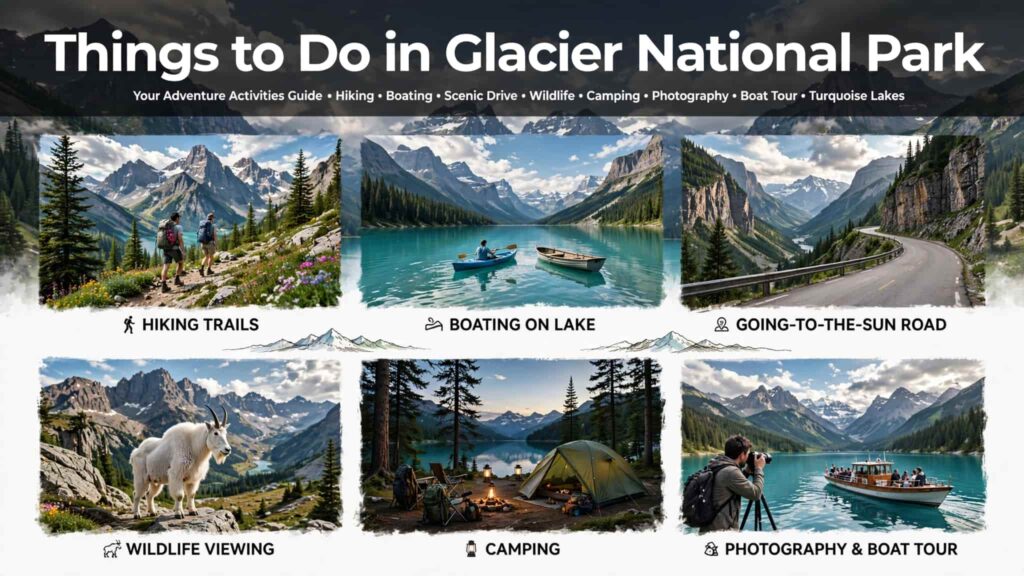
The best things to do in Glacier National Park range from hiking famous trails and exploring Going-to-the-Sun Road to watching wildlife, taking a boat tour, photographing mountain scenery, and relaxing beside one of the park’s lakes.
If you are planning a trip in 2026, this guide covers 25 worthwhile activities and places to see, along with practical tips for choosing what to do based on your time and interests.
Quick Answer: What Are the Best Things to Do in Glacier National Park?
Some of the most popular things to do in Glacier National Park include:
- Drive Going-to-the-Sun Road
- Visit Lake McDonald
- Hike to Hidden Lake Overlook
- Hike the Highline Trail
- Visit Logan Pass
- Explore Many Glacier
- See Grinnell Lake
- Take a boat tour
- Visit Many Glacier Hotel
- Hike Avalanche Lake Trail
- Look for mountain goats and bighorn sheep
- Watch for bears and other wildlife
- Visit St. Mary Lake
- See Virginia Falls
- Explore Two Medicine
- Hike to Iceberg Lake
- Photograph Wild Goose Island
- Explore the Trail of the Cedars
- Go camping
- Enjoy scenic photography
- Go fishing where permitted
- Take a scenic drive
- Explore Glacier’s waterfalls
- Watch the sunrise or sunset
- Spend time simply enjoying the alpine scenery
1. Drive Going-to-the-Sun Road

For many visitors, Going-to-the-Sun Road is the highlight of a Glacier National Park trip.
The spectacular mountain road crosses the park from the west side toward the east and passes through some of Glacier’s most impressive scenery.
Along the way, you can see forests, waterfalls, cliffs, alpine meadows, and dramatic mountain peaks.
Why visit?
- Incredible mountain views
- Access to Logan Pass
- Numerous viewpoints
- Trailheads along the route
- Excellent photography opportunities
Tip: Road access can change because of snow, construction, weather, and seasonal conditions. Check current park conditions before planning your drive.
2. Visit Lake McDonald

Lake McDonald is the largest lake in Glacier National Park and one of the easiest places to visit from the west entrance.
The lake is surrounded by mountains and forests, making it a great place for photography, sightseeing, and a relaxed walk.
The colorful rocks beneath the clear water are especially noticeable along the shoreline.
Things to do at Lake McDonald
- Take photographs
- Walk along the shoreline
- Watch the sunset
- Explore nearby trails
- Visit Lake McDonald Lodge
- Enjoy the mountain scenery
3. Hike to Hidden Lake Overlook

If you want a relatively accessible hike with spectacular alpine scenery, consider the Hidden Lake Overlook Trail from Logan Pass.
The trail passes through alpine terrain and offers panoramic views around the Logan Pass area.
Mountain goats are also commonly associated with the Logan Pass region, although wildlife sightings are never guaranteed.
Why it’s popular
- Great alpine views
- Shorter than many major Glacier hikes
- Convenient Logan Pass location
- Good introduction to the park’s high country
4. Hike the Highline Trail

The Highline Trail is one of Glacier National Park’s signature hikes.
Starting near Logan Pass, the trail follows the mountainside and provides spectacular views across the surrounding valleys and peaks.
It’s a much longer commitment than the Hidden Lake Overlook hike, so check current trail conditions and understand the distance and elevation gain before setting out.
Best for:
- Experienced hikers
- Mountain scenery
- Photography
- Full-day hiking adventures
5. Explore Logan Pass

At approximately 6,646 feet, Logan Pass is the highest point along Going-to-the-Sun Road.
The area is surrounded by rugged mountains and alpine habitat.
It’s also an important starting point for several popular hiking routes.
Even if you don’t plan a long hike, spending some time exploring the area can be worthwhile.
6. Explore Many Glacier
Many Glacier is often considered one of the park’s most scenic areas.
The landscape combines enormous mountains, lakes, glaciers, waterfalls, and hiking trails.
Some of Glacier’s most famous hikes are located here, including routes toward Grinnell Glacier and Iceberg Lake.
If you have several days in the park, Many Glacier deserves serious consideration.
7. See Grinnell Lake

Grinnell Lake is known for its striking turquoise-colored water and dramatic mountain surroundings.
The lake can be reached through hiking routes in the Many Glacier area, and some visitors combine hiking with boat transportation depending on the available seasonal services.
The scenery becomes especially impressive as you approach the lake.
8. Take a Boat Tour

A boat tour provides a different way to experience Glacier’s landscape.
Depending on the season and operating schedule, boat tours are available on some of the park’s major lakes.
A boat trip can be particularly appealing if you want to see the mountains without spending the entire day hiking.
Important: Boat schedules, routes, reservations, and operating dates can change, so verify current information before your trip.
9. Visit Many Glacier Hotel

Many Glacier Hotel is one of the park’s historic landmarks.
Its location beside Swiftcurrent Lake provides impressive views of the surrounding mountains.
Even if you aren’t staying overnight, the area can be included in a Many Glacier sightseeing itinerary.
10. Hike Avalanche Lake
Avalanche Lake is one of the most popular destinations on the west side of Glacier National Park.
The trail passes through forested terrain before reaching the lake, where steep mountain walls rise around the water.
It’s a good option if you want a rewarding hike without committing to one of Glacier’s longest backcountry routes.
11. Look for Mountain Goats

Wildlife watching is one of the memorable parts of visiting Glacier.
Mountain goats are particularly associated with the high-elevation areas around Logan Pass.
Bring binoculars if you have them and maintain a safe distance from all wildlife.
Never approach animals for photographs or attempt to feed them.
12. Watch for Bears and Other Wildlife
Glacier National Park provides habitat for a variety of wildlife, including bears, elk, deer, mountain goats, bighorn sheep, and other species.
Wildlife sightings are unpredictable, so don’t plan your itinerary around seeing a particular animal.
Instead, treat wildlife viewing as an added part of the experience.
Wildlife safety
Always follow current park regulations and maintain the required distance from wildlife. Never approach, feed, or intentionally disturb animals.
13. Visit St. Mary Lake

St. Mary Lake is located on the eastern side of Glacier National Park.
The lake stretches beneath a dramatic mountain backdrop and is one of the classic scenic stops along the Going-to-the-Sun Road corridor.
It’s particularly beautiful during early morning and evening when the light changes across the mountains.
14. See Virginia Falls
Virginia Falls is one of several impressive waterfalls accessible from the St. Mary area.
The waterfall can be visited as part of a hiking route that connects several scenic features.
Water levels and trail conditions can vary throughout the season.
15. Explore Two Medicine
Two Medicine is located in the southeastern portion of Glacier National Park.
Compared with some of the park’s most famous areas, it can provide a quieter experience depending on the day and season.
You can explore lakes, trails, mountain views, and historic structures in the area.
16. Hike to Iceberg Lake

Iceberg Lake is another famous destination in the Many Glacier area.
The trail leads through scenic mountain terrain before reaching the lake, where floating chunks of ice may sometimes be visible during warmer months.
The exact appearance of the lake changes with weather and season.
17. Photograph Wild Goose Island

Wild Goose Island is one of Glacier National Park’s most recognizable photographic viewpoints.
The small island sits in St. Mary Lake with mountains rising behind it.
It’s an easy stop to add to a scenic drive and requires far less effort than Glacier’s major hiking trails.
18. Walk the Trail of the Cedars
The Trail of the Cedars offers a completely different experience from Glacier’s exposed alpine trails.
The route passes through a forest of large cedar and hemlock trees.
A boardwalk makes portions of the trail easier to navigate, making this a useful option for visitors who don’t want a strenuous mountain hike.
19. Go Camping

Camping is one of the best ways to spend several days inside Glacier National Park.
Different campgrounds provide access to different areas of the park, so choosing a campground based on your itinerary can save considerable driving time.
Before your trip, check:
- Campground availability
- Reservation requirements
- Seasonal opening dates
- Vehicle restrictions
- Food-storage regulations
- Current fire restrictions
20. Take Landscape Photos
You don’t have to be a professional photographer to enjoy Glacier’s scenery.
The combination of mountains, lakes, forests, waterfalls, wildlife, and changing weather creates countless photography opportunities.
For softer light, consider going out early in the morning or around sunset.
21. Go Fishing Where Permitted
Fishing can be another way to enjoy Glacier’s lakes and streams.
However, fishing regulations apply, and rules can vary depending on the specific waterway, species, season, and conservation requirements.
Always check the current regulations before fishing.
Don’t assume that a fishing license or method permitted elsewhere automatically applies inside the park.
22. Take a Scenic Drive

Not everyone visiting Glacier wants to spend every day hiking.
A scenic-driving itinerary can still provide an excellent introduction to the park.
You can combine major viewpoints with short walks, lakes, visitor centers, waterfalls, and picnic stops.
This is especially useful for families or visitors with limited hiking experience.
23. Explore Glacier’s Waterfalls
Glacier’s mountainous landscape produces numerous waterfalls, particularly during periods of snowmelt.
Some waterfalls are accessible from roads or short trails, while others require longer hikes.
Water flow can vary significantly depending on the time of year, so don’t be surprised if a waterfall looks different from photographs taken earlier in the season.
24. Watch the Sunrise or Sunset

One of the simplest things to do in Glacier National Park is also one of the most memorable: watch the landscape change with the light.
Lake McDonald, St. Mary Lake, and other scenic viewpoints can provide beautiful morning or evening views.
Always check access restrictions and road conditions before planning a very early or late outing.
25. Simply Enjoy the Mountain Scenery

You don’t need to complete a long hiking trail to enjoy Glacier National Park.
Some of the best moments can come from sitting beside a lake, watching clouds move through the mountains, walking through a forest, or simply stopping at a viewpoint.
If you’re building a relaxed itinerary, leave some unscheduled time instead of filling every hour with activities.
Best Things to Do in Glacier National Park by Interest
| If you enjoy… | Consider doing… |
|---|---|
| Scenic drives | Going-to-the-Sun Road |
| Short hikes | Hidden Lake Overlook |
| Long hikes | Highline Trail |
| Lakes | Lake McDonald, St. Mary Lake |
| Waterfalls | Virginia Falls |
| Wildlife | Logan Pass, Many Glacier |
| Photography | Wild Goose Island, Lake McDonald |
| History | Many Glacier Hotel |
| Families | Trail of the Cedars, scenic viewpoints |
| Camping | Glacier’s developed campgrounds |
| Boat trips | Seasonal lake tours |
| Mountain scenery | Many Glacier, Logan Pass, Two Medicine |
Best Things to Do in Glacier National Park in 1 Day
If you only have one day, don’t try to see the entire park.
A practical approach is to focus on one major area.
Example west-side itinerary
Morning:
Lake McDonald → Going-to-the-Sun Road → Trail of the Cedars
Midday:
Logan Pass → Hidden Lake Overlook
Afternoon:
Scenic stops along Going-to-the-Sun Road
Evening:
Return toward Lake McDonald and enjoy the scenery.
Road access and seasonal restrictions can affect this itinerary.
Best Things to Do in Glacier National Park in 3 Days
Day 1 — West Glacier
- Lake McDonald
- Trail of the Cedars
- Avalanche Lake
- Going-to-the-Sun Road
Day 2 — Logan Pass
- Logan Pass
- Hidden Lake Overlook
- Highline Trail, depending on your hiking plans
- Scenic viewpoints
Day 3 — Many Glacier or St. Mary
Choose either:
Many Glacier:
- Many Glacier Hotel
- Swiftcurrent Lake
- Grinnell Lake
- Iceberg Lake
St. Mary:
- St. Mary Lake
- Wild Goose Island
- Virginia Falls
- East-side viewpoints
Best Time to Visit Glacier National Park
The best time for a particular activity depends heavily on seasonal conditions.
Summer generally provides the greatest opportunity for accessing high-elevation roads and trails, but it is also a busy period.
Early fall can bring cooler temperatures and changing foliage, while some facilities and services may operate on reduced schedules.
Winter creates a very different Glacier experience, with snow and seasonal closures affecting access.
Before traveling, check current road, trail, weather, and facility conditions rather than relying solely on information from previous years.
What Should You Bring to Glacier National Park?
Your packing list depends on the season and activities, but useful items include:
- Comfortable hiking shoes
- Water bottle
- Layers of clothing
- Rain jacket
- Sun protection
- Sunglasses
- Hat
- Small backpack
- Snacks
- Binoculars
- Camera
- Offline maps
- Bear-safety equipment where appropriate
- First-aid supplies
Mountain weather can change quickly, so even a warm forecast doesn’t necessarily mean conditions will remain comfortable throughout the day.
Glacier National Park Safety Tips
Glacier is a wilderness environment, so preparation matters.
Keep your distance from wildlife
Never approach wildlife for photographs.
Stay on designated trails
Trail conditions can change, and leaving established routes can create safety and environmental problems.
Carry enough water
Long hikes may involve significant elevation gain and exposure.
Check conditions before leaving
Weather, wildfire activity, road closures, trail closures, and other conditions can change.
Don’t rely entirely on cell service
Download maps and important information before heading into areas where connectivity may be limited.
Tell someone about longer hikes
If you’re heading into the backcountry, make sure someone knows your plans.
Frequently Asked Questions
What is the number one thing to do in Glacier National Park?
Driving or exploring Going-to-the-Sun Road is one of the classic Glacier National Park experiences, particularly when seasonal access allows visitors to reach the high-elevation sections.
How many days do you need in Glacier National Park?
Three to five days gives many visitors enough time to explore several major areas without rushing. Longer trips allow more hiking and time to explore areas such as Many Glacier and Two Medicine.
What is the most beautiful place in Glacier National Park?
Glacier has many scenic areas rather than one single viewpoint that everyone will consider the best. Lake McDonald, Logan Pass, Many Glacier, St. Mary Lake, and Wild Goose Island are among the places commonly included in sightseeing itineraries.
Can you visit Glacier National Park without hiking?
Yes. Scenic drives, viewpoints, lakes, boat tours, visitor facilities, and short walks allow visitors to experience the park without committing to long hikes.
What animals can you see in Glacier National Park?
Visitors may encounter or observe species such as mountain goats, bighorn sheep, elk, deer, and bears. Wildlife sightings aren’t guaranteed, and visitors should maintain a safe distance.
Is Glacier National Park good for families?
Yes. Families can choose from scenic drives, short walks, lakes, waterfalls, visitor areas, and easier trails. The appropriate activities depend on children’s ages, abilities, weather, and trail conditions.
Final Thoughts
There are far more than 25 ways to experience Glacier National Park. The park can be a hiking destination, a scenic road trip, a wildlife-watching experience, a photography trip, or simply a place to slow down and enjoy Montana’s mountain landscape.
For a first visit, consider combining Going-to-the-Sun Road, Lake McDonald, Logan Pass, one or two manageable hikes, and either Many Glacier or the St. Mary area. If you have more time, add destinations such as Iceberg Lake, Grinnell Lake, Two Medicine, and additional trails.
Most importantly, build your itinerary around current 2026 road, trail, weather, and facility conditions, because access in Glacier can change throughout the year.
Also See: Closest Airport to Glacier National Park: Best Airports & How to Get There (2026)