Is Manassas National Battlefield Park Worth Visiting? Honest 2026 Guide
If you’ve ever driven along Route 234 in Northern Virginia and spotted signs for Manassas National Battlefield Park, you might have wondered whether it’s worth pulling over — or making it a dedicated day trip.
The short answer? Absolutely yes. But only if you know what you’re getting into.
This isn’t a park with dramatic canyon views or towering waterfalls. Manassas is a place where you feel something quieter — and somehow heavier. It’s open farmland, rolling hills, and miles of trails that wind through ground where two of the Civil War’s most decisive battles unfolded. For history lovers, it’s one of the most authentic and underrated battlefield sites in the entire country.
In this guide, I’ll cover everything you need to know before visiting in 2026 — from trail distances and entry fees to honest tips that most travel blogs skip over.
Overview of Manassas National Battlefield Park
Manassas National Battlefield Park is a 5,000-acre National Park Service site located in Prince William County, Virginia — roughly 25 miles southwest of Washington, D.C.
The park preserves the sites of two major Civil War battles, both fought on the same ground just over a year apart. The First Battle of Bull Run (July 1861) was the first large-scale land battle of the Civil War. The Second Battle of Bull Run (August 1862) was even larger and proved devastating for Union forces.
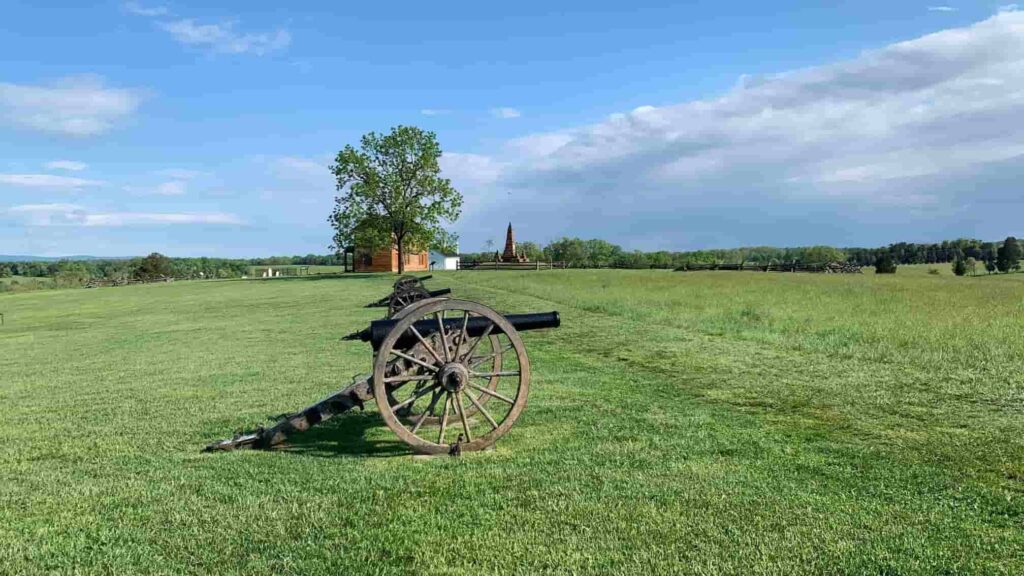
Today the park is one of the best-preserved Civil War battlefields in the eastern United States. It draws historians, school groups, hikers, and curious travelers year-round — and entry is completely free.
The park is managed by the National Park Service and includes a well-equipped visitor center, multiple driving and walking tours, and over 40 miles of trails threading through the historic landscape.
Why It’s Popular
Many visitors say the park stands out because:
- It’s well-preserved and peaceful
- You can walk through actual historic battlefields
- It’s not overly crowded like bigger national parks
- It combines history + easy outdoor exploration
Unlike typical tourist attractions, this place feels calm and meaningful.
Why People Visit — And Why Some Are Disappointed
Many visitors come to Manassas expecting a museum-style experience — interactive exhibits, dramatic recreations, maybe a gift shop the size of a small mall. And while the visitor center is genuinely excellent, the real experience happens outside on the land itself.
The park is popular for a few specific reasons:
- Proximity to D.C. — It’s one of the closest major historical sites to the nation’s capital, making it ideal for a half-day or full-day excursion.
- Preserved landscape — Unlike many battlefield sites that have been built over or altered, much of Manassas looks remarkably similar to how it did in the 1860s.
- Free admission — In an era when park fees keep climbing, Manassas remains free to enter.
- Trails and open space — Dog-walkers, joggers, and families with kids use the park regularly, not just history buffs.
That said, if you’re expecting something like Gettysburg’s scale of monuments and visitor infrastructure, Manassas is a different experience. It’s quieter, more open, and more about interpretation than spectacle. That’s not a flaw — it’s just something to know going in.
Is Manassas National Battlefield Park Worth Visiting?
Short Answer: Yes — but it depends on your travel style
Here’s an honest breakdown.
You WILL enjoy it if:
- You like history or storytelling
- You prefer quiet, uncrowded places
- You enjoy walking trails and open landscapes
- You want a half-day or 1-day trip from Washington, D.C.
You might NOT enjoy it if:
- You expect dramatic scenery like mountains or waterfalls
- You don’t enjoy historical sites at all
- You’re looking for adventure activities
Honest Insight
Many regular visitors say the experience becomes meaningful when you understand the history before or during your visit. Without that context, it can feel like just open land.
What to See and Do Inside the Park {what-to-do}
The Henry Hill Visitor Center

Start here every single time — no exceptions. The visitor center on Henry Hill Road houses a well-curated museum with exhibits covering both battles, a 45-minute film that plays on rotation, and staff rangers who genuinely know their stuff. If you skip this, you’ll walk the battlefield with zero context, and that’s a real shame.
The center also has trail maps, restrooms, and water. Pick up a free map before heading out.
Henry Hill Walking Tour
This is the signature short walk at Manassas. It’s a roughly one-mile loop around Henry Hill — the focal point of both battles and the place where Confederate General Thomas Jackson earned the nickname “Stonewall.” Several cannons, monuments, and informational markers make this a self-guided history lesson that doesn’t feel like homework.
You’ll notice that the open ridgeline gives you a real sense of the terrain — why this hill was worth fighting over and what both armies were up against.
The Stone House
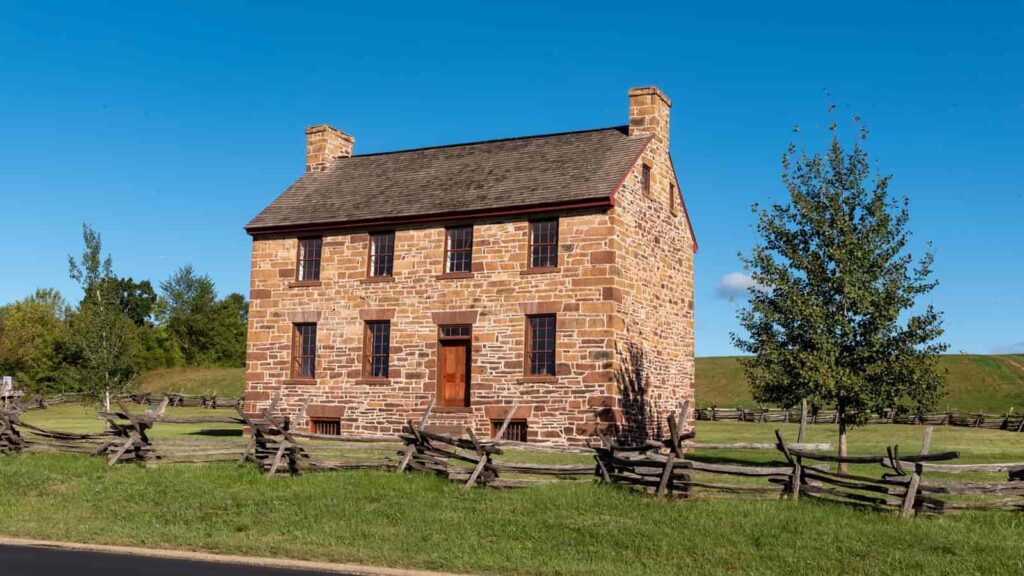
One of the most photographed spots in the park, the Stone House served as a Union field hospital during both battles. It sits right at the intersection of Sudley Road and Lee Highway (Route 29), and it’s remarkably intact for a 160-year-old structure. You can walk right up to it.
Driving Tour
For first-time visitors or anyone with limited mobility, the driving tour connects the major landmarks of both battlefields. It covers about 12 miles and takes roughly 90 minutes with stops. Pick up the audio tour guide at the visitor center or download the NPS app before you arrive.
Ranger Programs
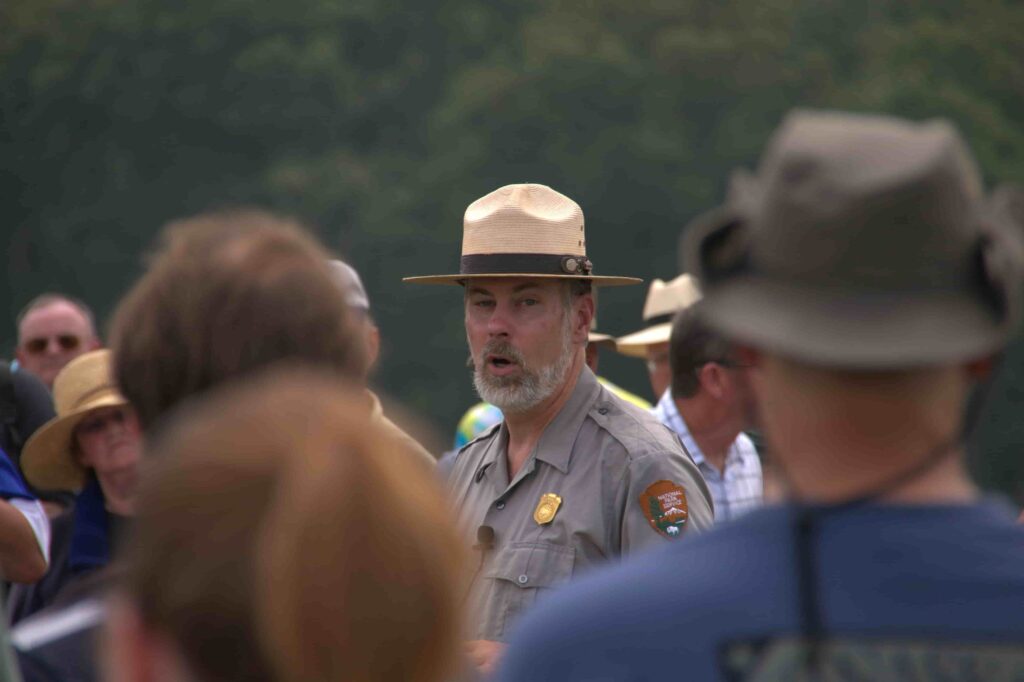
From spring through fall, the park offers ranger-led walks, talks, and demonstrations. Check the official NPS website or call ahead to see what’s scheduled during your visit. These programs are free and often much more engaging than going it alone.
Trails and Hiking Guide
Manassas has over 40 miles of trails, making it surprisingly robust for hikers who want more than a quick stroll.
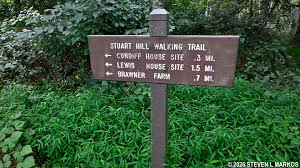
Stuart’s Hill Trail
- Distance: 1.3 miles round trip
- Difficulty: Easy
- Time: 30–45 minutes
- Highlights: Panoramic views of the Second Manassas battlefield, excellent for photography
This is a great option if you’re short on time or visiting with younger kids. The trail is relatively flat and well-maintained.
Deep Cut Trail
- Distance: Approximately 1.5 miles one way
- Difficulty: Easy to moderate
- Time: 45–60 minutes one way
- Highlights: The famous railroad cut where Confederate troops held their position during the Second Battle
One thing many people overlook is how significant this unassuming trench-like feature actually is. The Deep Cut Trail puts you right along the railroad grade that became one of the battle’s defining chokepoints.
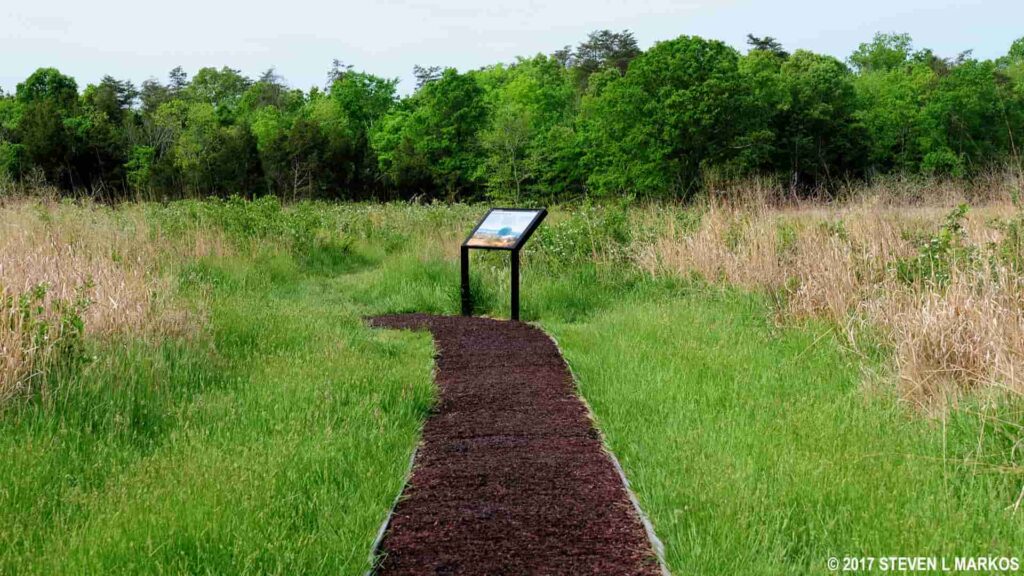
Second Manassas Battlefield Loop
- Distance: 6+ miles
- Difficulty: Moderate
- Time: 2.5–3.5 hours
- Highlights: Full circuit of the Second Battle landscape, Brawner Farm site
This is the trail for serious hikers and history enthusiasts. It passes through meadows, woodlands, and farm fields — and the signage along the way adds real depth to the experience.
What to Carry on Any Trail
- At least 16–20 oz of water per person (no water fountains on outer trails)
- Sunscreen and a hat — many sections are fully exposed
- Comfortable walking shoes (trails can be muddy after rain)
- Insect repellent in summer and fall
- A printed or downloaded trail map
Best Time to Visit
Spring (March–May)
- Pleasant weather
- Green landscapes
- Best overall experience
Fall (September–November)
- Cooler temperatures
- Beautiful colors
- Great for walking
Summer (June–August)
- Hot and humid
- Visit early morning or evening
Winter (December–February)
- Quiet and peaceful
- Fewer crowds, but cold
Many visitors say early morning is the best time for a calm and reflective experience.
1-Day Itinerary
Sample 3-Hour Plan:
- Visitor Center (45 min)
- Henry Hill Walk (45 min)
- Stone Bridge (30 min)
- Drive Tour (1 hour)
Practical Travel Information for 2026
Location
12521 Lee Highway, Manassas, VA 20109
Getting There
- From Washington D.C.: Approximately 30–35 minutes via I-66 West
- From Fredericksburg: About 45 minutes north on I-95 and Route 234
- From Dulles Airport: About 20 minutes south on Route 28
Parking is free at the visitor center and at several trailheads throughout the park.
Entry Fee
Free. No America the Beautiful pass required. There’s no entry gate or fee booth.
Hours
- Visitor Center: Generally open daily from 8:30 AM to 5:00 PM (check NPS.gov for seasonal adjustments)
- Park Grounds: Open daily from dawn to dusk
- Closed: Thanksgiving Day and Christmas Day
Accessibility
The visitor center is fully ADA accessible, including restrooms and exhibits. The Henry Hill walking tour has some paved sections and is partially accessible, though some areas have uneven terrain. The driving tour is a good option for visitors with mobility limitations.
Cell Signal and Amenities
Cell signal is decent near the visitor center but can drop off on the outer trails. There are no food vendors or restaurants inside the park — bring snacks and water. The nearest restaurants and gas stations are a few minutes away on Route 234 in Manassas city.
Pro Tips Before You Go
⭐ Pro Tips
- Arrive early on weekends — The parking lot at the visitor center fills up by mid-morning on nice-weather Saturdays and during peak fall months.
- Download the NPS app before you go — It includes maps, audio content, and trail info that work partially offline.
- Visit on a weekday if possible — You’ll have the trails almost to yourself, especially on weekday mornings.
- Watch the film at the visitor center — It runs about 45 minutes but genuinely changes how you experience the battlefield outside.
- Combine with a Manassas city visit — The old town center is just a few miles away with good restaurants and a small historic district.
- Go in autumn — The tree-lined sections of trail turn beautiful in October, and the cooler temperatures make hiking much more comfortable.
- Bring binoculars — The open terrain makes for excellent birdwatching, and you can spot the landscape features that mattered to both armies.
If you confuse what to pack for a first time national park trip, read this article: What to Pack for a National Park Trip: The Ultimate Checklist (2026)
Mistakes to Avoid
Skipping the visitor center. I’ve seen plenty of people drive to a trailhead, hop out, walk around for 20 minutes without any context, and leave underwhelmed. The visitor center frames everything you’ll see outside. Budget at least 30–45 minutes there.
Underestimating the heat in summer. The open meadows of Manassas offer almost zero shade from June through August. If you’re visiting between Memorial Day and Labor Day, plan to hike in the early morning and get back before noon. The heat on the exposed hilltops can be intense.
Not checking for events. Manassas regularly hosts living history weekends, anniversary commemorations, and ranger programs. These events can either greatly enhance your visit — or create traffic and crowds you weren’t expecting. Check the NPS events calendar before you go.
Bringing dogs without water. Dogs are welcome on the trails but not inside the visitor center. Bring a collapsible bowl and enough water for them. Trail heat affects dogs faster than most people expect.
Expecting a “theme park” experience. This is a preserved historic landscape, not a curated entertainment destination. The power of Manassas is in its restraint — but you have to be willing to slow down and engage with it.
Read Also: Hiking in Joshua Tree for Beginners: Trails, Tips & Mistakes to Avoid (2026)
Summary
| Detail | Info |
|---|---|
| Location | Prince William County, VA (25 mi from D.C.) |
| Entry Fee | Free |
| Best Time to Visit | Spring (April–May) or Fall (September–October) |
| Visitor Center Hours | 8:30 AM – 5:00 PM daily |
| Trails | 40+ miles; easy to moderate |
| Dogs Allowed? | Yes, on-leash on trails |
| Food Available? | No — bring your own |
| Recommended Time | 2.5–4 hours |
FAQs About Manassas National Battlefield Park
Q: Is Manassas National Battlefield Park free to visit?
Yes, completely free. There is no admission fee, no entry gate, and no reservation required for a standard visit. Some special ranger programs may require advance sign-up, but general access to the grounds and visitor center is always free.
Q: How long should I plan for a visit to Manassas?
For a thorough first visit — visitor center film, Henry Hill walking tour, and the Stone House — plan for about 2.5 to 3 hours. If you want to add the driving tour or tackle one of the longer trail loops, budget a full day.
Q: Is Manassas National Battlefield Park good for kids?
It can be, with some preparation. Kids who enjoy outdoor walking and have some interest in history will find it engaging, especially if a parent or ranger can explain the stories behind what they’re seeing. The battlefield itself doesn’t have playgrounds or interactive kids’ stations, so manage expectations beforehand. The park’s junior ranger program is a great option for younger visitors.
Q: What is the difference between Manassas and Gettysburg?
Both are major Civil War battlefield parks, but they’re quite different experiences. Gettysburg is much larger, more heavily developed with monuments and infrastructure, and draws significantly more visitors. Manassas is smaller, quieter, and arguably better preserved in terms of its natural landscape. If you’re doing both, do Gettysburg first — it sets a scale reference — and appreciate Manassas for its quieter, more immersive quality.
Q: Are pets allowed at Manassas National Battlefield Park?
Yes, leashed pets are welcome on all outdoor trails and grounds. Pets are not permitted inside the visitor center. Bring water for your animals, especially in warmer months, and clean up after them.
Q: Is there any food available inside the park?
No. There are no food vendors, cafes, or vending machines inside the park. Pack snacks, lunch, and water before you arrive. Several restaurants and fast food options are available on Route 234 just outside the park entrance.
Also See: Things to Do in Bryce Canyon National Park: Complete Visitor Guide (2026)
Final Thoughts
So, is Manassas National Battlefield Park worth visiting?
Yes—if you go with the right expectations.
It’s not about dramatic views or thrilling activities. Instead, it offers something quieter and deeper. You’ll walk through real history, reflect on the past, and enjoy a peaceful outdoor experience.
If you’re visiting for the first time, take your time, learn the story behind the land, and you’ll likely leave appreciating it more than you expected.
Plan your visit at nps.gov/mana, check the seasonal event calendar, and download the NPS app before you leave home. The park is free, it’s accessible, and it’s ready for you.
About the Author
Rubie Rose has personally explored multiple Civil War battlefields, including Manassas, and focuses on creating practical guides for first-time visitors. Many regular visitors say that understanding battlefield history before visiting makes the experience far more meaningful — and her guides are designed exactly for that.

Rubie Rose is a travel writer who focuses on USA national parks, hiking trails, and practical travel planning. She shares easy-to-follow guides to help visitors explore parks safely and confidently. Her work on parktrailsguide.com is built on deep research, firsthand accounts from park visitors, and a commitment to giving readers information they can actually use on the trail.