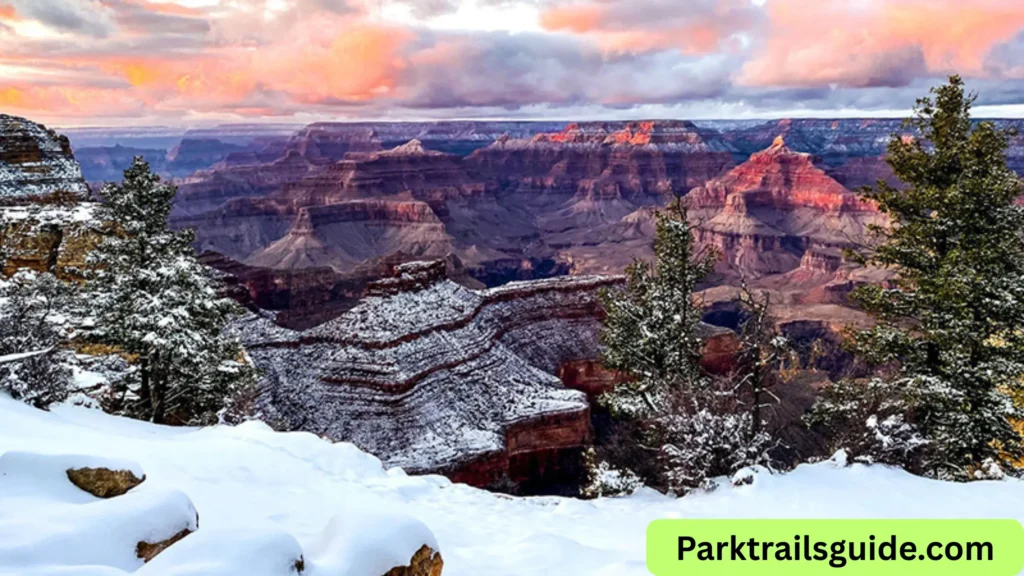
Grand Canyon Worst Season to Visit: Avoid These Months in 2026
Last updated: May 2026 | By Rubie Rose, National Parks Researcher at ParkTrailsGuide.com
The Grand Canyon is one of the most jaw-dropping places on earth. Roughly five million visitors make the trip to Arizona every year, and yet — a surprisingly large number of them go home disappointed, sunburned, overcrowded, or in worse cases, seriously dehydrated and rescued by park rangers. Why? Because they visited during the wrong time of year.
Here’s the truth nobody puts on a postcard: the Grand Canyon can be genuinely dangerous in summer, unbearably crowded during spring break, icy and road-closed in winter, and shoulder seasons that feel perfect in photos but catch first-timers off guard. Picking your dates thoughtfully can be the difference between the trip of a lifetime and a miserable, even hazardous, experience.
In this guide, I’ll break down exactly which months are the worst times to visit the Grand Canyon in 2026, why each season has its own set of serious pitfalls, and what you need to know to plan the safest, most enjoyable trip possible — whether you’re a solo adventurer, a family with kids, or a couple on your first National Park road trip.
A quick note on my research method: I’m a dedicated national parks researcher based in the USA. While I haven’t personally hiked the Grand Canyon yet (that trip is very much on the bucket list!), this guide is built on thorough research of official NPS sources, 2026 park updates, recent hiker reports from AllTrails, Reddit’s r/GrandCanyon community, TripAdvisor, and verified visitor data. I believe in being fully transparent about that — because you deserve honest, well-sourced guidance you can actually trust.
Grand Canyon Overview & Best Times to Visit in 2026
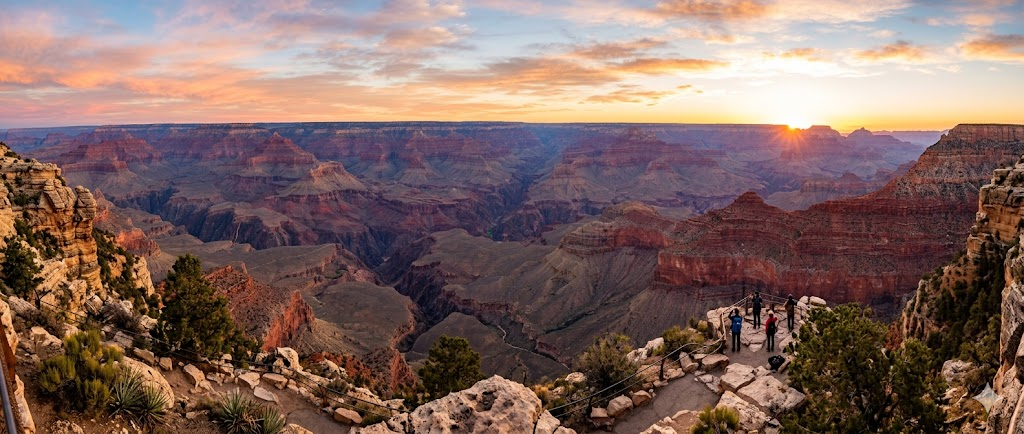
The Grand Canyon stretches 277 miles long, up to 18 miles wide, and over a mile deep. There are two main visitor areas: the South Rim (open year-round, the most popular by far) and the North Rim (open roughly mid-May through mid-November, weather permitting). There’s also the remote West Rim, operated by the Havasupai Tribe, home to the famous Havasupai Falls.
According to NPS visitor data, the Grand Canyon sees its highest traffic from May through September, with July being the peak — and ironically, the most dangerous month to hike below the rim. The quietest months are January and February, but they bring their own challenges.
Quick Season Snapshot for 2026
| Season | Months | Crowds | Temps (South Rim / Inner Canyon) | Overall Rating |
|---|---|---|---|---|
| Spring | March–May | High (Spring Break peak) | 50–70°F / 70–90°F | ⭐⭐⭐⭐ (good but busy) |
| Summer | June–August | Very High | 80–90°F+ Rim / 100–115°F+ Canyon floor | ⭐⭐ (dangerous for hiking) |
| Fall | September–November | Moderate | 55–75°F / 75–95°F | ⭐⭐⭐⭐⭐ (best overall) |
| Winter | December–February | Low | 20–45°F / 30–60°F | ⭐⭐⭐ (beautiful but icy) |
The sweet spots for most visitors — especially beginners and families — are late September through November and late March through early May (avoiding Spring Break week). But let’s dig deep into the worst months and exactly why you should avoid them.—
The Grand Canyon Worst Season to Visit: Month-by-Month Breakdown
#1 Worst: June, July & August (Summer) — Extreme Heat Danger
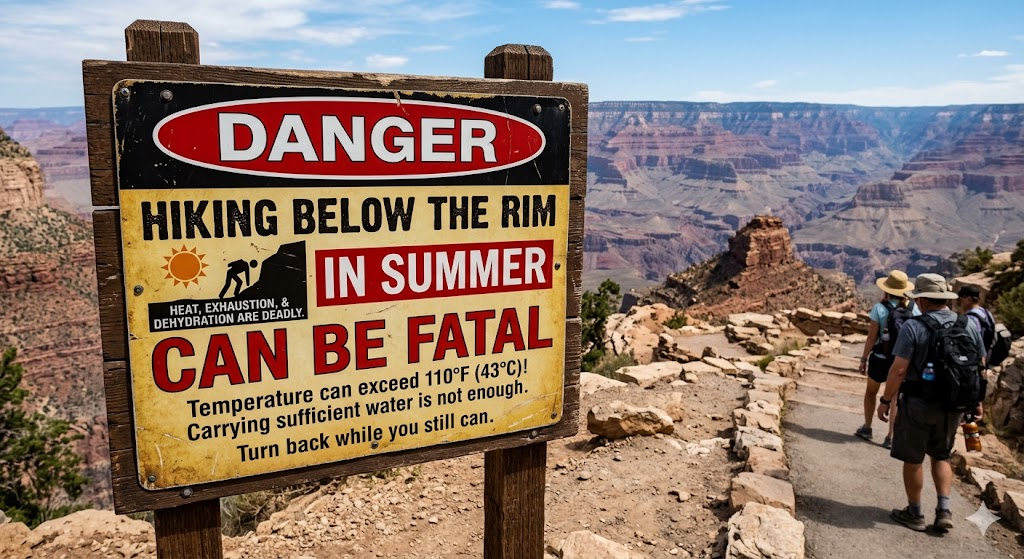
Let me be blunt: summer is by far the Grand Canyon’s worst season to visit if you plan to hike below the rim. The NPS itself issues some of the most stark warning language I’ve seen from any federal agency. Here’s why.
The South Rim sits at approximately 6,860 feet elevation. Temperatures up top might “only” reach 85–95°F. Sounds manageable, right? The problem is that the inner canyon — where most of the famous trails like Bright Angel and South Kaibab go — is a completely different world. The dark rock absorbs heat like a furnace. Temperatures at the canyon floor regularly exceed 110–115°F from late June through early August. That’s not a typo. Phoenix-level heat, in a steep narrow gorge, with very limited shade, and a brutal uphill climb waiting for you on the way out.
Every single year, dozens of hikers are evacuated from the inner canyon due to heat illness. Some die. The NPS rescue statistics are sobering — in a typical summer, rangers conduct hundreds of search-and-rescue operations, many heat-related. In July 2024, multiple hikers required emergency helicopter evacuations in a single week.
Specific Summer Hazards to Know:
- Hyperthermia (heat stroke): Your body can’t cool itself fast enough in 110°F temps. Symptoms include confusion, stopping sweating, and collapse. It can kill within hours.
- The “too far, too fast” trap: Going downhill into the canyon feels easy. The brutal climb back out, in the hottest part of the day, is where people get into trouble. The NPS calls this the #1 cause of hiker rescues.
- Monsoon season (mid-July through September): Arizona’s summer monsoon brings sudden violent thunderstorms, flash floods in narrow canyon corridors, and lightning on exposed ridges. Flash floods in side canyons can appear from storms miles away with zero warning.
- Insane crowds: July is the single busiest month at the Grand Canyon. Parking lots overflow (often before 7am at the South Rim), shuttle buses are standing-room only, and the most popular overlooks like Mather Point feel like Times Square.
- Rim Trail congestion: Even if you’re not hiking below the rim, summer crowds make a simple stroll feel chaotic.
If you absolutely must visit in summer: Limit any below-rim hiking strictly to the first two hours after sunrise. Carry at least one liter of water per hour. Turn around when you’ve consumed one-third of your water — not when you feel tired. The NPS recommends a “dawn patrol” approach: be back at the rim by 10am at the absolute latest. Never hike between 10am and 4pm in June–August.
#2 Worst: Mid-March (Spring Break Week) — Maximum Crowds
Okay, summer has the heat danger crown, but if you hate crowds and prefer actually being able to see the canyon without 800 people in your field of vision, mid-March during Spring Break week is a nightmare.
The South Rim village and popular viewpoints — Mather Point, Yavapai Observation Station, Desert View — get absolutely mobbed during the third and fourth weeks of March. Rim Trail parking is impossible without arriving at 5am. Lodges like Bright Angel Lodge and El Tovar book out months in advance. Village restaurants have hour-long waits.
In 2025, a Reddit thread on r/GrandCanyon documented a Spring Break visitor who waited 45 minutes just to get a spot on the free shuttle bus. Multiple AllTrails reviews from March 2025 mentioned Bright Angel Trail being “wall-to-wall people” and feeling more like a theme park than a national park.
Budget travelers also get hit hard: lodging prices in Tusayan (the gateway town) spike 30–50% during this period.
#3 Caution: December & January — Ice, Closures & Limited Access
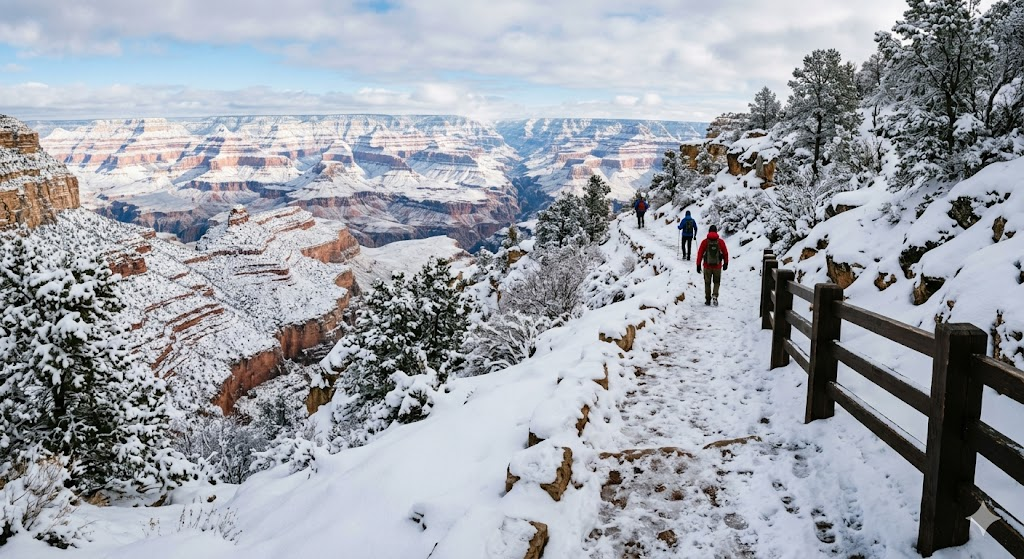
Winter gets unfair press. Honestly, a snowy Grand Canyon is breathtaking — one of the most visually striking things I’ve seen in research photos and visitor reports. But there are real practical challenges, especially for first-time visitors or anyone unfamiliar with icy hiking conditions.
Winter-Specific Challenges:
- Icy trails: South Rim trails — including the first stretch of Bright Angel — can be covered in packed ice and snow from December through February. Microspikes or crampons are essential, not optional. Multiple injuries from falls on icy sections are reported every winter.
- North Rim closure: The North Rim closes entirely around mid-November and doesn’t reopen until mid-May 2026. If the North Rim is on your itinerary, December–April is completely off the table.
- Limited services: Several South Rim facilities reduce hours or close in winter, including some dining options and visitor services.
- Highway closures: Desert View Drive (the scenic eastern route along the South Rim) can close during and after heavy snowfall. SR-64 from Cameron occasionally closes briefly.
- Short daylight hours: December and January have roughly 10 hours of daylight. Sunrise is around 7:20am and sunset by 5:30pm, compressing your hiking window.
- Permit complications: If you had planned a below-the-rim overnight stay at Phantom Ranch or Bright Angel Campground, winter weather can make sections of the trail (especially South Kaibab) genuinely dangerous without proper cold-weather gear and experience.
Who winter works well for: Experienced hikers with proper gear, photographers chasing snowy canyon shots, and visitors who only plan rim walks. The solitude is real — January crowds are roughly 20% of peak summer volume.—
Getting There & Grand Canyon Park Basics (2026)
Entry Fees & Hours (2026)
- Private vehicle: $35 per vehicle, valid for 7 days (South Rim)
- Individual (foot/bike): $20, valid for 7 days
- Annual America the Beautiful Pass: $80 — covers Grand Canyon and all other National Parks for 12 months. A no-brainer if you plan to visit 2+ parks in 2026.
- Park hours: South Rim is open 24/7, 365 days a year. Visitor centers have seasonal hours — always check nps.gov/grca for current 2026 schedules.
Getting There
- By car from Flagstaff, AZ: ~1.5 hours north via US-180 / SR-64 — the most common approach
- By car from Las Vegas, NV: ~4.5 hours via US-93 and SR-64
- By car from Phoenix, AZ: ~3.5 hours via I-17 North to US-89 to SR-64
- Via train: The Grand Canyon Railway runs from Williams, AZ to the South Rim — a scenic, stress-free option that eliminates parking headaches entirely. Highly recommended during busy seasons.
- By air: Closest major airports are Phoenix Sky Harbor (PHX) and Las Vegas Harry Reid International (LAS). Flagstaff Pulliam Airport (FLG) is small but much closer.
Parking Reality Check
This cannot be stressed enough for 2026 visitors: parking at the South Rim is extremely limited. During peak periods (summer, Spring Break, holidays), the main Visitor Center lot fills by 7am or earlier. The NPS strongly recommends using the free shuttle bus system from the Tusayan area — this is legitimately the easiest way to get around the South Rim without the parking stress. Tusayan has a free park-and-ride lot with shuttle service to the Visitor Center.—
Beginner-Friendly Trails & Itinerary Options
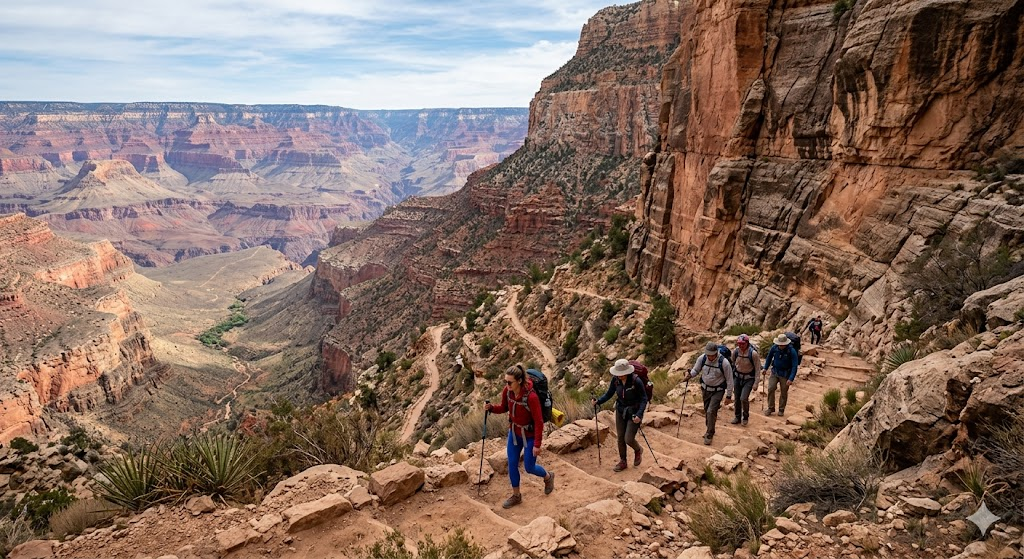
Even if you’re visiting during a less-than-ideal month, choosing the right trail makes an enormous difference in safety and enjoyment. Here are the best options for first-timers, with realistic distances and times.
Trail 1: Rim Trail (South Rim) — Easiest, Safest Year-Round
- Distance: Up to 13 miles one-way (walk as much or little as you want)
- Difficulty: Easy — mostly paved or compacted gravel, flat
- Realistic time: Most visitors walk 1–3 miles between viewpoints; 2–4 hours for a satisfying experience
- Best for: Families with young kids, seniors, visitors with limited mobility, anyone in summer
- Highlights: Mather Point, Yavapai Point, Bright Angel Lodge area, Trailview Overlook
- Note: The western section (Hermit Road, 7 miles) is accessible by free shuttle March–November or by foot/bike year-round
Trail 2: Bright Angel Trail (Partial — 1.5 miles to Mile-and-a-Half Resthouse)
- Distance: 3 miles round-trip
- Difficulty: Moderate — 1,120 ft elevation change down and back up
- Realistic time: 2–3 hours
- Best season: October–May. Avoid in summer between 10am–4pm.
- Why beginners love it: The trail is well-maintained and clearly marked. There are emergency phones, shade structures, and seasonal water at the rest house. It gives you a genuine “inside the canyon” experience without the full 9-mile commitment to the Colorado River.
- Beginner tip: Turn around at the first resthouse. Many first-timers feel great going down and push to the 3-Mile Resthouse (4,460 ft drop) — and then struggle painfully on the climb back. Honor the turnaround point.
Trail 3: South Kaibab Trail (Partial — to Ooh Aah Point)
- Distance: 1.8 miles round-trip
- Difficulty: Moderate — steep and exposed, 600 ft elevation change
- Realistic time: 1.5–2 hours
- Best season: October–May. Note: no water available on this trail at all — bring everything you need.
- Why it’s worth it: Ooh Aah Point offers arguably the most dramatic 360° canyon views accessible with a short hike. The name is earned. Sunrise here is extraordinary.
- Winter note: South Kaibab can be extremely icy — microspikes are mandatory in December–February.
Suggested 1-Day Itinerary (Fall/Spring — Ideal Seasons)
- 6:00am: Arrive early, park at Visitor Center (or take shuttle from Tusayan). Watch sunrise from Mather Point.
- 7:00am: Begin descent on Bright Angel Trail. Hike to 1.5-Mile Resthouse, take it all in, turn around.
- 9:30am: Back at rim. Breakfast at Bright Angel Lodge (budget option: cafeteria) or packed food at a rim viewpoint.
- 11:00am: Take the free Hermit Road shuttle west, hopping off at Powell Point, Hopi Point, and Hermits Rest.
- 1:00pm: Lunch in the village. Visit Kolb Studio or the Geology Museum.
- 3:00pm: Drive or shuttle Desert View Drive east to the Watchtower — a stunning historic structure with panoramic views.
- 6:00pm: Return to the rim for sunset. Yavapai Point and Mather Point are classics for sunset photography.
Practical Tips & Safety: What Every Visitor Needs to Know
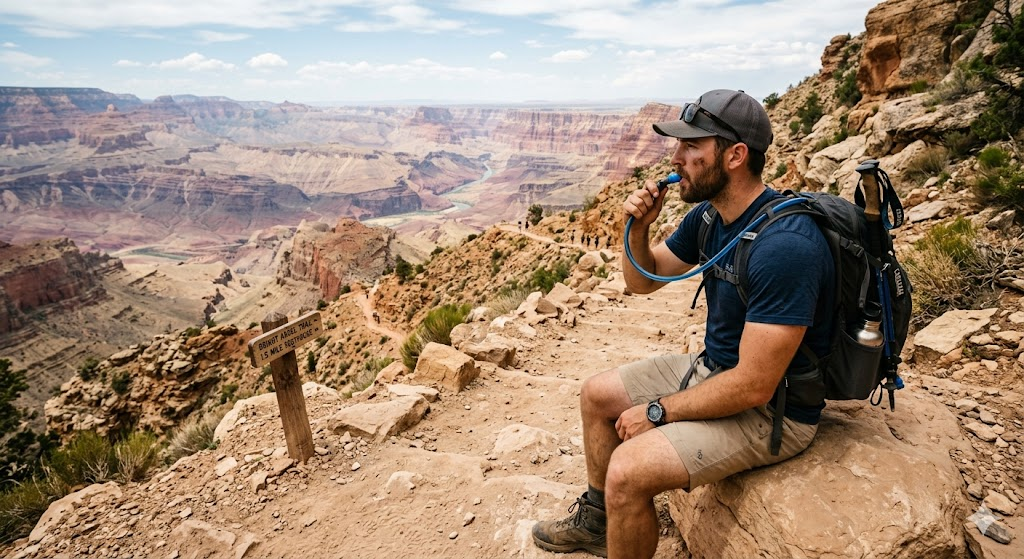
Hydration — The Most Critical Safety Factor
The NPS has a specific guideline for Grand Canyon hiking: drink one liter (about 34 oz) of water for every hour of hiking below the rim. This isn’t a suggestion — it’s a survival guideline. Electrolyte replacement (sports drinks, electrolyte tablets) is equally important; drinking too much plain water without electrolytes can cause hyponatremia, which is also dangerous.
Water is available at the South Rim Visitor Center, Bright Angel Trailhead, and the 1.5-Mile and 3-Mile Resthouses on Bright Angel Trail (seasonal — confirm current availability on nps.gov). There is no water on South Kaibab Trail — bring everything.
Gear Checklist by Season
- All seasons: Sturdy hiking shoes (not flip-flops or sandals), sun protection (hat, SPF 50+), sunglasses, trekking poles for descent/ascent
- Summer: 2–3 liters of water minimum, electrolyte tablets or mix, cooling towel, breathable moisture-wicking clothing, start before 6am
- Winter: Microspikes or crampons (non-negotiable on icy sections), layered clothing, windproof jacket, gloves, waterproof boots
- Monsoon season (July–Sept): Rain jacket or poncho, avoid narrow canyon slots, check weather hourly
Permits: Do You Need One?
- Day hikes: No permit needed for any day hike below or on the rim.
- Overnight camping below the rim (Bright Angel/Cottonwood/Phantom Ranch): Yes — a backcountry permit is required. Apply via the NPS Backcountry Information Center. Permits are competitive; the lottery opens 4 months before your intended entry month.
- Phantom Ranch cabin/canteen: Reservations via Xanterra (the park concessionaire) — these book out a year in advance during popular seasons.
- Havasupai Falls (West Rim): Reservation system run by the Havasupai Tribe at havasupaireservations.com. Highly competitive, especially for spring/fall dates. For 2026 visits, bookings for popular months were snapped up quickly — check for cancellations.
Wildlife & Other Safety Notes
- California Condors: You may see these magnificent endangered birds soaring at the rim. Do not feed them — it’s illegal and harmful.
- Mule deer and squirrels: They’re cute. They’re also disease-carriers. Never feed wildlife, full stop.
- Rattlesnakes: Present in the canyon, especially in warmer months. Watch where you step and put your hands. They generally avoid humans.
- Flash floods: During monsoon season, never camp or hike in narrow side canyons if there’s any rain in the forecast — including storms many miles away.
Budget Breakdown: Realistic Costs for a Grand Canyon Visit in 2026
| Expense | Budget Option | Mid-Range | Splurge |
|---|---|---|---|
| Park Entry | $35/vehicle (7 days) | $35/vehicle | $80 America the Beautiful Pass (all parks) |
| Lodging (per night) | Mather Campground ~$18–$25 (reserve in advance at recreation.gov) | Yavapai Lodge ~$130–$180/nt | El Tovar Hotel ~$230–$400+/nt |
| Nearby Hotel (Tusayan) | Budget motels ~$80–$120/nt | Best Western $130–$160/nt | Grand Hotel ~$200–$280/nt |
| Food (per day) | Pack your own: ~$10–$15/day | Cafeteria/deli on-rim: $20–$35/day | El Tovar dining: $60–$100+/day |
| Transportation | Free NPS shuttle buses (all rim routes) | Rental car from Flagstaff ~$50–$80/day | Grand Canyon Railway from Williams ~$67–$226 round-trip |
| Tours | Self-guided (free) | Ranger-led programs (free–$5) | Helicopter tour: $150–$300+/person |
| Estimated 2-Day Trip Total | ~$80–$130/person | ~$250–$400/person | ~$600–$1,000+/person |
Budget tip: Mather Campground on the South Rim is the best value in the park — you’re literally camping on the canyon rim. Book 6 months in advance via recreation.gov, especially for October and spring dates. Sites sell out fast.
Shoulder season savings: Visiting in October or November vs. July can save you 30–40% on Tusayan lodging. Prices drop noticeably after Labor Day.
Common Mistakes & Pro Tips from Recent Hikers (2025–2026)
Pulling from recent AllTrails reviews, Reddit threads, and TripAdvisor reports, here are the mistakes that come up again and again — and how to avoid them.
Mistake #1: Underestimating the Uphill Return
Going down is easy and deceptively fun. Multiple recent hikers report “feeling great” at the 3-Mile Resthouse and deciding to push to the river — then struggling badly on the 4,380-foot climb back to the rim. The rule: if you wouldn’t want to climb it right now, don’t go further down.
Mistake #2: Not Reserving Lodging Far Enough in Advance
In-park lodges (El Tovar, Bright Angel Lodge, Yavapai Lodge) book up months in advance for summer and Spring Break. A March 2025 TripAdvisor reviewer mentioned booking their July visit in January and barely finding availability at Yavapai Lodge. For 2026 summer visits, book now — not two weeks before you go.
Mistake #3: Wearing the Wrong Shoes
AllTrails reviews mention flip-flops and thin sneakers on a near-weekly basis. The canyon trail surfaces are rocky, uneven, and steep. Ankle rolls are common without proper footwear. Bring real hiking shoes with ankle support — trail runners at a minimum.
Mistake #4: Only Visiting the South Rim
The North Rim (open mid-May through mid-November 2026) offers dramatically fewer crowds and a genuinely different, arguably more dramatic perspective on the canyon. It’s a longer drive (4–5 hours from the South Rim via highway), but for visitors with time, it’s extraordinary. Elevation is higher (~8,200 ft), making it significantly cooler in summer.
Mistake #5: Skipping the Ranger Programs
The NPS offers free ranger-led talks, walks, and constellation-viewing programs. These are genuinely exceptional — knowledgeable, entertaining, and deeply informative. Check the schedule at the Visitor Center when you arrive. Multiple recent visitors called the geology talks a highlight of their trip.
Mistake #6: Driving When You Should Be Shuttling
Rim parking lots fill before 8am in summer. Visitors who drive to every viewpoint spend half their day looking for parking. The free shuttle system covers all major viewpoints efficiently — use it.
Pro Tip: The “Dawn Patrol” Strategy
For summer visitors who want any below-rim experience safely, serious hikers recommend the “dawn patrol”: arrive at the trailhead by 5:30–6:00am, hike down no more than 1.5 miles, and be back at the rim before 9:30am. This small window is genuinely enjoyable and manageable even in July.
Read Also: Grand Canyon Admission Charge Guide for Visitors 2026
Frequently Asked Questions: Grand Canyon Worst Season & Planning
Q1: What is the absolute worst month to visit the Grand Canyon?
July is generally considered the worst single month. It combines the extreme inner canyon heat (regularly 110–115°F), the highest crowd volumes of the year, and the increased risk of monsoon flash floods and lightning. If you must visit in summer, June is slightly more manageable than July–August, but all three summer months require serious heat precautions.
Q2: Is the Grand Canyon dangerous in summer?
For below-rim hiking, yes — summer is genuinely dangerous if you’re unprepared. The NPS conducts hundreds of rescues every summer, many related to heat illness. Above-rim activities (Rim Trail walks, viewpoints, driving Desert View Drive) are safe and enjoyable with normal sun precautions. The danger is specifically tied to hiking down into the canyon where temperatures are extreme and the return climb is physically demanding.
Q3: Can you visit the Grand Canyon in winter?
Yes! The South Rim is open year-round and winter has a magical, uncrowded quality. But be prepared for icy trail conditions (microspikes are essential), cold temperatures, possible road closures, and shorter daylight hours. The North Rim is closed from approximately mid-November through mid-May.
Q4: How far in advance should I book for 2026 visits?
For summer (June–August) and Spring Break: book lodging 6–12 months in advance. For fall (September–November): 3–6 months in advance for the best choices. Winter visitors have the most flexibility — 1–3 months is often sufficient. Phantom Ranch (below the rim) books 13 months in advance via lottery through Xanterra.
Q5: What’s the best month to visit the Grand Canyon in 2026?
October is widely considered the single best month by experienced Grand Canyon visitors and park rangers. Temperatures are ideal (60–75°F on the rim, 80–90°F in the canyon), crowds drop significantly after Labor Day, and the golden autumn light on the canyon walls is stunning. Late September and early November are close seconds.
Q6: Is Spring Break really that bad at the Grand Canyon?
It depends entirely on your crowd tolerance. For families with school-age kids who can only travel then — it’s still worth going. The canyon itself is glorious. But manage expectations: parking will be chaotic, viewpoints will be crowded, and lodging will be pricier. If you have flexibility, even one week before or after Spring Break is dramatically less hectic.
Q7: Can first-timers hike below the rim safely?
Yes, with the right approach. The 3-mile round-trip hike to the 1.5-Mile Resthouse on Bright Angel Trail is manageable for most reasonably fit adults outside of summer’s peak heat. Go early, carry plenty of water, honor your turnaround point, and wear proper footwear. Many first-timers have a fantastic experience on partial below-rim hikes. The key is not overextending — the most dangerous people in the canyon are often fit, confident hikers who push too far.
Q8: Do I need a permit for a day hike at the Grand Canyon?
No permit is required for any day hike in the Grand Canyon, including below-rim day hikes on Bright Angel and South Kaibab trails. Permits are only required for overnight camping below the rim. Apply through the NPS Backcountry Information Center at nps.gov/grca.
Q9: How hot does it actually get at the bottom of the Grand Canyon in summer?
According to NPS data, temperatures at Phantom Ranch (the canyon floor near the Colorado River) regularly exceed 105–115°F in July and August, with recorded highs above 120°F during heat events. Combined with 0% humidity and direct sun on dark rock, the effective felt temperature is even more punishing. This is not comfortable-but-warm weather — it’s genuinely extreme heat that has killed experienced hikers.
Q10: Is the Grand Canyon worth visiting in December or January?
For the right kind of visitor, absolutely. The solitude is remarkable — you can have major viewpoints almost to yourself. Snow on the canyon rim against the red rock layers below creates otherworldly photography opportunities. The main trade-offs are icy trails, cold temps, limited services, and the North Rim closure. If you’re comfortable in winter conditions and not planning serious below-rim hiking, January can be one of the most memorable times to visit.
Q11: Is the Grand Canyon good for kids in summer?
Rim-level activities — the Rim Trail, viewpoints, the Junior Ranger program, shuttle rides — are great for kids in summer if you take normal sun and heat precautions. Below-rim hiking with children in summer is strongly discouraged by the NPS. Young children are more vulnerable to heat illness and less able to communicate symptoms. For a family hike below the rim with kids, plan for October through April and keep it short.
Q12: What should I do if I see someone in distress on a Grand Canyon trail?
Call 911 — this does work in many parts of the canyon and emergency responders are experienced. Emergency phones are available at several points on Bright Angel Trail. If you’re in a cell dead zone, send another hiker up to the rim to call for help. Do not leave a seriously distressed person alone. Stay calm, move them to shade if possible, and provide water and electrolytes if they are conscious and able to swallow. The Grand Canyon has one of the most experienced wilderness rescue teams in the country — help is faster than you might expect.—
Final Thoughts: Planning Your Grand Canyon Trip the Smart Way in 2026
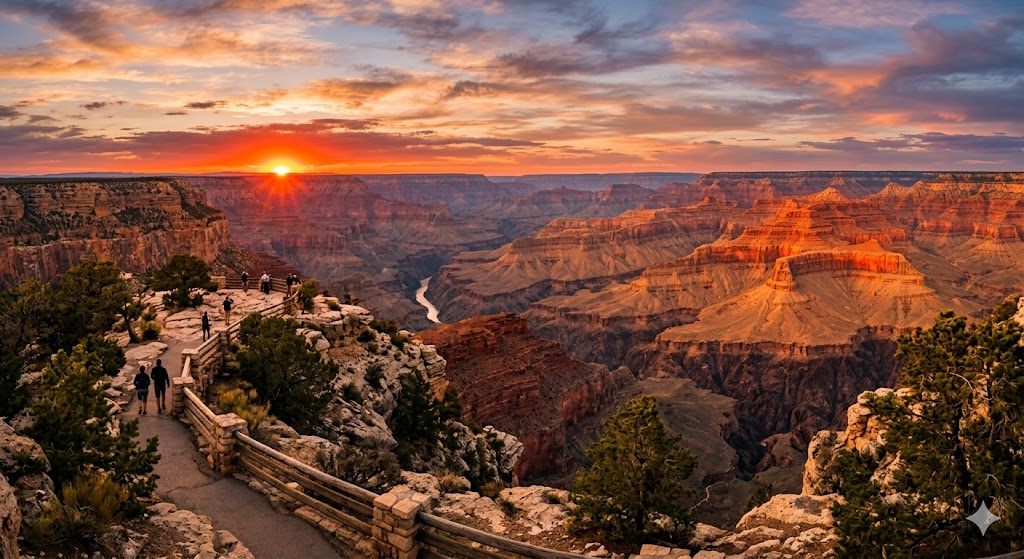
The Grand Canyon is worth every mile of the drive, every permit application, and every dollar you spend to get there. It genuinely changes people — there’s something about standing on that rim and looking into a billion years of Earth’s history that no photograph fully captures.
But — and this is the heart of this whole guide — when you go matters enormously. The Grand Canyon worst season to visit isn’t just about comfort. In summer, it’s a genuine safety issue. During Spring Break, it’s a crowd management challenge. In winter, it requires gear and experience that first-timers may not have. None of these seasons are impossible — but all of them demand specific planning that too many visitors skip.
The good news: the best seasons, fall and spring, are genuinely excellent. October in particular is about as close to a perfect Grand Canyon visit as it gets — comfortable temperatures, stunning light, thinner crowds, and the full Bright Angel trail experience without the summer heat danger. If you have any flexibility at all in your 2026 travel calendar, aim for September 15 – November 15 or April 1 – May 15.
Wherever your trip lands, go prepared, go informed, and honor the canyon’s power. Respect the turnaround signs. Carry more water than you think you need. And take a moment at the rim — whether it’s snowy and quiet in January, golden and crisp in October, or buzzing with summer energy in July — to simply look out and feel grateful that this impossible place exists.
I hope this guide saves you stress, keeps you safe, and helps you have the Grand Canyon trip you’ve been dreaming of. Safe travels from Rubie Rose and the ParkTrailsGuide team — and if you found this helpful, check out our full Grand Canyon Planning Hub for trail guides, packing lists, and more.
Sources & Further Reading:
- NPS Grand Canyon: Heat-Related Illness Prevention
- NPS Grand Canyon: Backcountry Permit Information
- NPS Grand Canyon: Weather & Climate
- Recreation.gov — Mather Campground Reservations
Disclaimer: Trail conditions, fees, and services change. Always verify current information directly with nps.gov/grca before your visit.