Glacier National Park Hiking Trails Guide: Top Routes with Maps & Tips (2026)
If you’ve ever dreamed of hiking through a landscape that feels completely untouched — where glaciers hang above turquoise lakes and mountain goats stare you down on narrow ridgelines — Glacier National Park is exactly what you’re imagining.
Known as the “Crown of the Continent,” Glacier sits in northwestern Montana and offers some of the most rewarding hiking in the entire United States. But it’s also a park that can overwhelm first-time visitors. With over 700 miles of trails, variable weather, and serious wildlife, walking in unprepared is a mistake.
This guide will walk you through the best hiking trails in Glacier National Park, what each route actually feels like on the ground, how to time your visit right, and the practical details you need to plan a safe and enjoyable trip.
Overview of Glacier National Park Hiking
Glacier National Park covers over one million acres along the U.S.-Canada border. It was established in 1910, and today it protects more than 700 named lakes, dozens of active (and retreating) glaciers, and one of the most intact ecosystems in the lower 48 states.
Many visitors say the scenery here hits differently from other western parks. There’s no crowd of famous arches or canyon walls — instead, you get raw alpine wilderness. Wildflower meadows bloom well into July. Mountain goats, grizzly bears, gray wolves, and moose all live here in real density.
The Going-to-the-Sun Road, the park’s iconic 50-mile alpine highway, serves as the main corridor for most popular trailheads. It’s one of the most scenic drives in America, and it also gives hikers direct access to some of the best routes on the continent.
One thing many people overlook is how seasonal Glacier really is. Many high trails don’t fully open until mid-July due to snowpack, and conditions change fast. Planning around that window is everything.
Top Hiking Trails in Glacier: Full Breakdown
1. Highline Trail
- Distance: 11.6 miles one-way (often done as a loop via the Granite Park Chalet)
- Difficulty: Moderate to Strenuous
- Elevation Gain: ~830 feet
- Time Required: 5–7 hours
- Trailhead: Logan Pass Visitor Center
The Highline Trail is probably the most talked-about hike in all of Glacier — and it deserves the reputation. Starting at Logan Pass, the trail hugs a dramatic cliff face right from the start. There’s a fixed cable on the wall for the first quarter mile that many hikers grip without thinking twice.
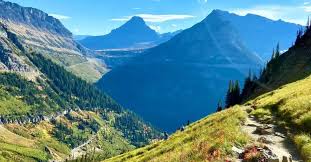
From there, the path opens up into wide alpine meadows with views that stretch for miles on both sides of the Continental Divide. You’ll notice that bighorn sheep and mountain goats are common along this stretch — they’re practically used to hikers.
If you visit for the first time, hike it in the morning before afternoon thunderstorms roll in. Turning around at the Granite Park Chalet area (about 7.6 miles) is a popular option for those who want the best scenery without committing to the full distance.
2. Hidden Lake Overlook Trail
- Distance: 2.7 miles round trip
- Difficulty: Easy to Moderate
- Elevation Gain: ~540 feet
- Time Required: 1.5–2.5 hours
- Trailhead: Logan Pass Visitor Center
This short hike offers a massive payoff. You start right from Logan Pass and follow a boardwalk through a meadow that’s often still patchy with snow in early summer. The overlook at the end frames Hidden Lake below with jagged peaks on all sides.
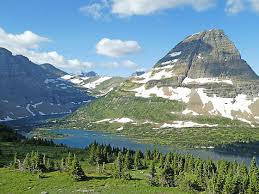
Because it’s short and starts from the most accessible point on Going-to-the-Sun Road, this trail gets crowded. If you’re visiting in July or August, arrive before 8 AM or wait until late afternoon. The crowds thin noticeably on weekday evenings.
You can also continue past the overlook down to the lake itself, adding roughly 1.5 miles each way. That lower section feels far more remote despite being the same trail.
3. Grinnell Glacier Trail
- Distance: 10.6 miles round trip
- Difficulty: Strenuous
- Elevation Gain: ~1,600 feet
- Time Required: 5–8 hours
- Trailhead: Many Glacier area (trail begins near boat docks on Lake Josephine)
If you want to actually reach one of Glacier’s remaining glaciers, this is your route. The Grinnell Glacier Trail is physically demanding but offers a constantly evolving landscape as you climb — wildflower fields, waterfalls, and eventually the icy blue surface of Grinnell Glacier itself.
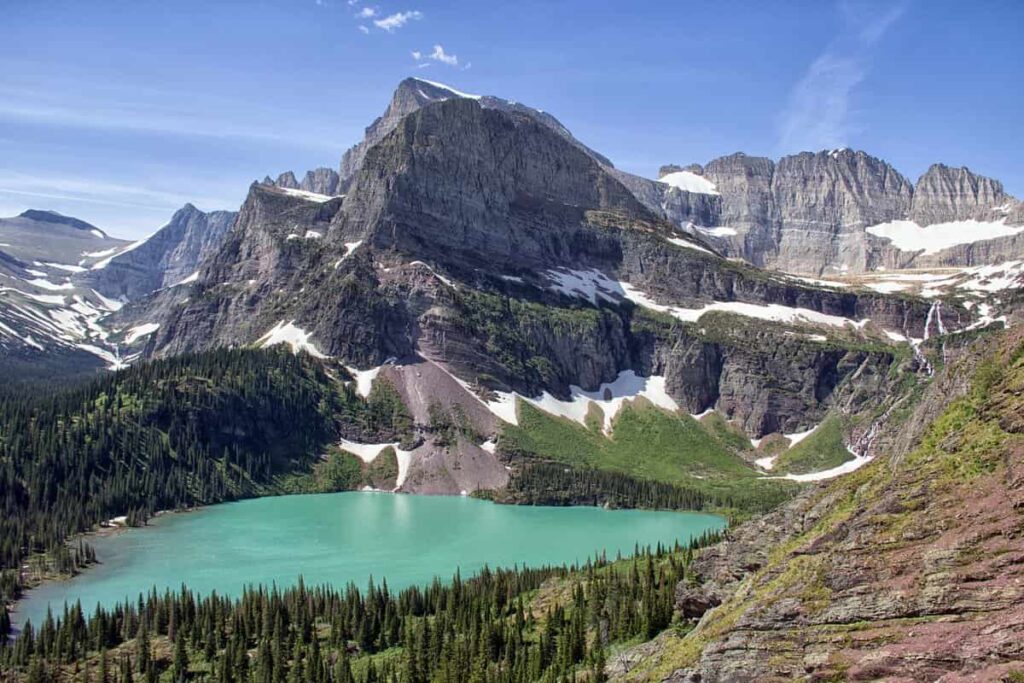
Many visitors take the shuttle boats across Swiftcurrent Lake and Lake Josephine, which cuts about 3 miles off the round trip. It’s worth the small additional cost to save your legs for the upper trail.
The glacier has retreated significantly over the decades — scientists estimate it’s now roughly 10% of its size in the late 1800s. You can actually see the rock scars where ice once sat. It’s a striking, sobering hike.
Bear activity is frequent in this valley. Going in groups and carrying bear spray is not optional here — it’s standard practice.
4. Avalanche Lake Trail
- Distance: 4.5 miles round trip
- Difficulty: Easy
- Elevation Gain: ~500 feet
- Time Required: 2–3 hours
- Trailhead: Avalanche Creek Picnic Area
This is one of the best beginner hikes in Glacier, and it’s genuinely beautiful — not a consolation prize for those skipping harder trails. The trail follows Avalanche Creek through a deep red-rock gorge called Avalanche Gorge before climbing steadily to the lake.
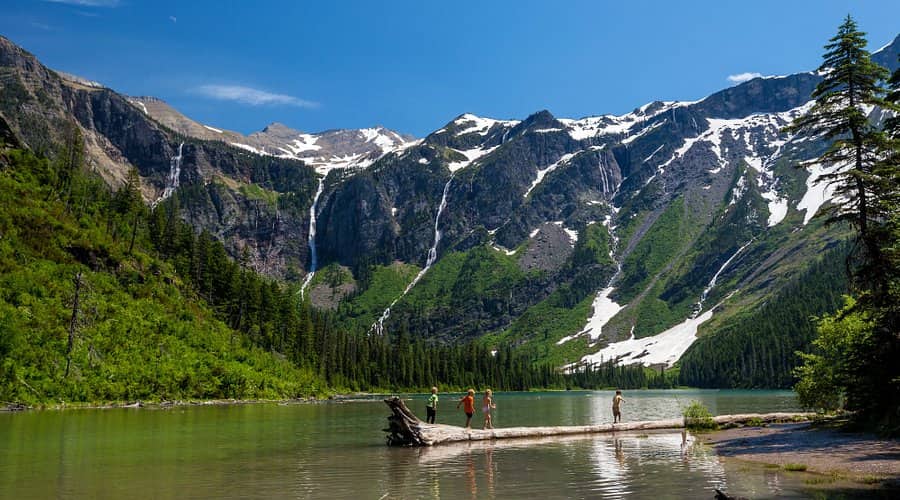
The lake sits at the base of a cirque with waterfalls dropping off the walls from all directions during early summer snowmelt. It’s one of those spots that makes the whole trip feel worth it.
Because of its easy rating and accessibility from Going-to-the-Sun Road, this trail sees heavy foot traffic. Trail crew and park staff do an excellent job maintaining it.
5. Iceberg Lake Trail
- Distance: 9.6 miles round trip
- Difficulty: Moderate
- Elevation Gain: ~1,275 feet
- Time Required: 4–6 hours
- Trailhead: Swiftcurrent Motor Inn area, Many Glacier
Iceberg Lake earns its name — the lake holds floating chunks of ice well into August most years because it sits in a deep north-facing cirque that blocks direct sun. The hike itself weaves through wildflower meadows and open ridgelines with stunning views long before you reach the lake.
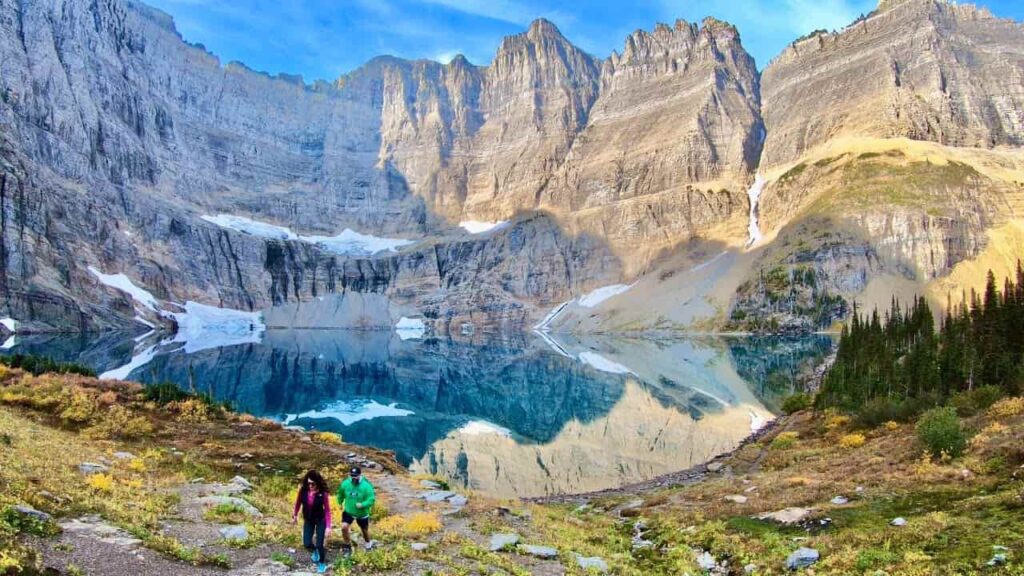
This trail is particularly popular with wildflower enthusiasts in July. The basin below the lake can be thick with beargrass, paintbrush, and lupine depending on the year.
One thing to note: the Many Glacier area where this trail begins requires a timed entry permit during peak season (typically July through early September). Check nps.gov well in advance.
Best Time to Visit Glacier for Hiking
The hiking season in Glacier runs roughly from mid-June through late September, though peak conditions vary by elevation.
- July to mid-August is considered the sweet spot — most trails are snow-free, wildflowers are peaking, and Going-to-the-Sun Road is fully open.
- Late August to September is excellent for fewer crowds and stable weather. Fall color begins creeping into the lower valleys.
- Before July: Many high trails still have dangerous snow and ice. Hidden Lake Overlook may be doable in snowshoes; most others require prior alpine experience.
- Winter: The park is open but most facilities are closed. Cross-country skiing and snowshoeing are possible but require significant preparation.
Entry Fees, Hours & Permits
As of 2026, standard entry fees for Glacier National Park are as follows (fees are subject to annual adjustment by the NPS):
- Private vehicle: $35 per vehicle (valid 7 days)
- Individual (on foot, bike): $20 per person
- America the Beautiful Annual Pass: $80 (covers all federal lands — highly worth it if visiting multiple parks)
Timed Entry Permits (Vehicle Reservation): During peak season, Going-to-the-Sun Road requires a timed entry permit between 6 AM and 3 PM. These are released on recreation.gov in batches months in advance. They sell out fast — set calendar reminders.
The park is technically open year-round. The visitor centers at Logan Pass and Apgar operate on seasonal schedules; check nps.gov/glac for current hours.
What to Pack for Glacier Hikes
- Bear spray (can be rented inside the park — carry it accessible, not buried in your pack)
- Layered clothing — temperatures at elevation can drop 20°F or more from the trailhead
- Rain jacket (afternoon storms are common July through August)
- Hiking boots with ankle support (rocky and uneven terrain on most trails)
- Trekking poles (especially helpful on Grinnell and Highline)
- At least 2–3 liters of water per person
- High-calorie snacks
- Sunscreen and sunglasses (alpine UV is intense)
- Offline maps downloaded to your phone (cell service is unreliable)
Safety Tips & Common Mistakes to Avoid
Bear Safety Glacier has one of the highest grizzly bear densities in the lower 48. Make noise while hiking, never hike alone in remote areas, and always carry bear spray within arm’s reach. Know how to use it before you hit the trail.
Weather Start early. Afternoon thunderstorms are predictable and dangerous on exposed ridgelines. If you’re on the Highline Trail and see dark clouds building by noon, turn around.
Trail Conditions Snow lingers on high trails through early July and can return by October. Check trail conditions on the park’s official website or at visitor centers before heading out.
Altitude Logan Pass sits at 6,646 feet. Visitors from low elevation may feel the effects — headaches, fatigue, shortness of breath. Hydrate well and don’t push too hard on day one.
Common Mistakes
- Underestimating trail distances — trails in Glacier are often more demanding than their mileage suggests
- Skipping timed entry reservations and getting turned away at the gate
- Leaving bear spray in the car
- Starting hikes after 11 AM on long routes
Pro Tips for First-Time Visitors
Pro Tips from Rubie Rose
- Book your timed entry permit the moment they’re released — they’re gone within minutes
- The Many Glacier area is quieter than Logan Pass but equally stunning; don’t skip it
- Rent bear spray at the Apgar or St. Mary visitor centers if you’re flying in
- Download the Avenza Maps app with Glacier’s official PDF map as a backup
- If you’re short on time, Avalanche Lake + Highline Trail covers both ends of the experience spectrum perfectly
Quick Summary
| Trail | Distance | Difficulty | Highlights |
|---|---|---|---|
| Highline Trail | 11.6 mi one-way | Strenuous | Continental Divide views, wildlife |
| Hidden Lake Overlook | 2.7 mi RT | Easy–Moderate | Great for first-timers, mountain goats |
| Grinnell Glacier | 10.6 mi RT | Strenuous | Actual glacier, stunning lakes |
| Avalanche Lake | 4.5 mi RT | Easy | Beginner-friendly, gorge + lake |
| Iceberg Lake | 9.6 mi RT | Moderate | Floating icebergs, wildflowers |
FAQs
Q1: Do I need a permit to hike in Glacier National Park?
Most day hikes don’t require a separate permit, but driving into the park via Going-to-the-Sun Road during peak hours requires a timed vehicle reservation. Overnight backcountry camping does require a backcountry permit, available through recreation.gov.
Q2: Is Glacier National Park safe for solo hikers?
Solo hiking is allowed but comes with added responsibility. The grizzly bear population is real and active. Solo hikers should make extra noise, stay on well-traveled trails, carry bear spray, and tell someone their itinerary. Many experienced hikers do it safely — just don’t take shortcuts on bear safety.
Q3: What is the easiest hike in Glacier National Park?
Avalanche Lake Trail is widely considered the best beginner hike in the park. It’s beautiful, well-maintained, short enough for most fitness levels, and gives you a genuine feel for Glacier’s landscape.
Q4: When does Going-to-the-Sun Road fully open?
Typically in mid-to-late June, depending on snowpack. The NPS plows the road progressively each spring. Check nps.gov/glac for the official opening status as your trip approaches — it varies by a week or two each year.
Q5: Are dogs allowed on Glacier’s hiking trails?
Dogs are only allowed in limited areas of the park — primarily on paved roads, in campgrounds, and within 100 feet of a road. They are not allowed on most hiking trails. This rule protects both wildlife and your pet.
Q6: How far in advance should I plan a Glacier trip?
Ideally, 3–6 months in advance for peak season (July–August). Timed entry permits, campsite reservations, and lodging at iconic spots like Many Glacier Hotel fill up extremely fast. Last-minute trips in peak season are possible but require flexibility.
Conclusion
Glacier National Park is one of those places that stays with you long after you’ve driven away. The trails here aren’t just scenic routes — they take you through ecosystems that feel genuinely wild and unchanged.
Whether you’re a first-time hiker doing Avalanche Lake in trail runners or an experienced mountaineer tackling the Highline on a July morning, there’s something in Glacier that matches your pace. The key is showing up prepared.
Check the trail conditions before you go. Book your permits early. Carry your bear spray where you can actually grab it. And leave yourself more time than you think you’ll need — because you will want to stop, look around, and just take it in.
Happy hiking, and stay safe out there.
— Rubie Rose
Read Also: Best Hikes in Zion National Park Ranked by Difficulty (2026 Guide)
Also see: Best Hikes in Great Smoky Mountains National Park for Beginners

Rubie Rose is a travel writer who focuses on USA national parks, hiking trails, and practical travel planning. She shares easy-to-follow guides to help visitors explore parks safely and confidently. Her work on parktrailsguide.com is built on deep research, firsthand accounts from park visitors, and a commitment to giving readers information they can actually use on the trail.