Can You Visit Yellowstone in Winter Without Snow Tires?
Last updated: May 2026
Yes, you can visit Yellowstone National Park in winter without snow tires — but whether you should depends heavily on your plans, vehicle, driving experience, and risk tolerance. Winter transforms Yellowstone into a magical, frozen wonderland with steaming geysers against snow, wildlife huddled in the Northern Range, and far fewer crowds. However, access is limited, roads are challenging, and safety is non-negotiable.
As Rubie Rose, I’ve compiled this guide through extensive review of official NPS sources (nps.gov/yell), 2026 winter operating updates, recent hiker and visitor reports from AllTrails, Reddit, TripAdvisor, and forums, plus road condition data. I haven’t yet stood in the snow myself, but my goal is to equip you — especially first-timers, families, and budget travelers — with practical, honest advice so you can plan a safe, unforgettable trip.
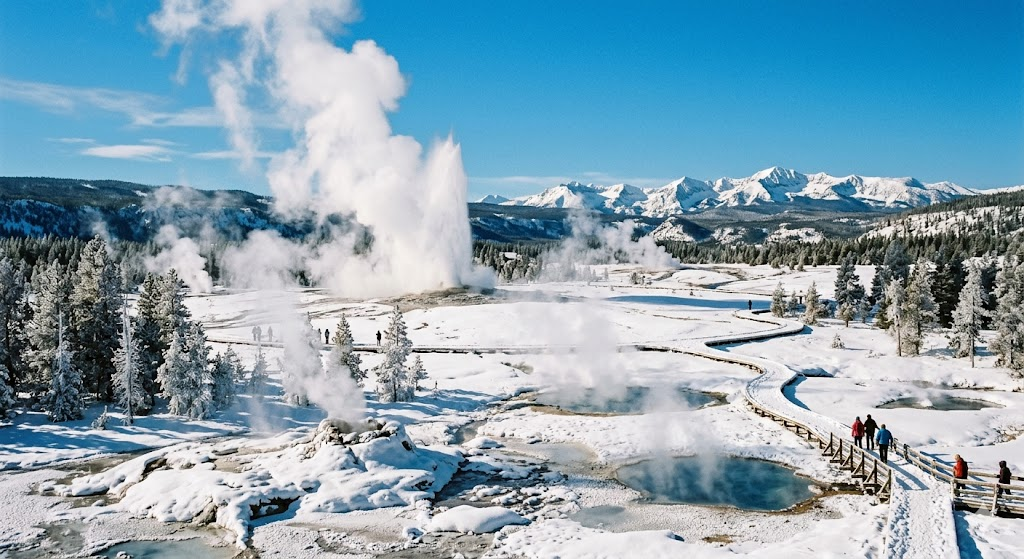
Overview & Best Time to Visit Yellowstone in Winter (2026 Specifics)
Yellowstone’s winter season generally runs mid-December to mid-March for oversnow travel. Most park roads close to wheeled vehicles in early November and reopen gradually in April.
Key 2026 Winter Access (based on current patterns and NPS announcements):
- North Entrance (Gardiner, MT) to Northeast Entrance (Cooke City, MT): Open year-round to personal vehicles. This is your main option for self-driving.
- Interior roads (e.g., to Old Faithful, Canyon, etc.): Open mid-December to mid-March for guided snowmobiles and snowcoaches only.
- Winter officially “ends” around mid-March as plowing begins; transitional periods have very limited services.
Best windows:
- Mid-December to early February: Deepest snow, best for classic winter scenery, fewer people.
- Late February to mid-March: Slightly milder temperatures, more daylight, but check for closing dates.
Expect daytime highs of 0–20°F (-18 to -7°C), with nights often sub-zero. Wind chill can make it feel far colder. Snowfall is heavy and conditions change fast.
Getting There & Park Basics
Driving the Northern Range (the self-drive option): The Gardiner-to-Cooke City road is plowed but often snow-packed or icy. NPS strongly recommends snow tires and a full winter safety kit (shovel, blankets, flashlight, booster cables, first aid, maps, food/water). Chains may be required or highly advised during/after storms.
Can you do it without dedicated snow tires? Many visitors with quality all-season tires and AWD/4WD manage it on clearer days, especially if experienced in winter driving. However, recent reports mention slick sections, black ice, and occasional requirements or strong recommendations for snow tires on parts of the route. Rental cars in the area often come with winter tires in season — confirm this. If your vehicle has worn tires or you’re uncomfortable on snow, skip self-driving and book a tour.
Alternative access (recommended for most first-timers):
- Snowcoach tours: Comfortable, guided, heated vehicles on tracks or large tires. Depart from West Yellowstone, Jackson, Bozeman, etc. Reach Old Faithful, Grand Canyon of the Yellowstone, etc.
- Guided snowmobile tours: More adventurous.
- Lodging inside the park: Mammoth Hot Springs Hotel (open year-round) or Old Faithful Snow Lodge (winter season). Shuttles or tours from there.
Entrances & Airports:
- Fly into Bozeman (BZN), drive ~1.5 hours to Gardiner, or take shuttles.
- Jackson Hole (JAC) for South Entrance snowcoach options.
- West Yellowstone (WYS) is seasonal.
Entrance Fees: $35/vehicle for 7 days (or America the Beautiful Pass). Winter fees same; pay at entrance or online.
Facilities: Limited. Mammoth has services; interior spots have minimal winter lodging/dining. Book months ahead.
Beginner-Friendly Trails & Itinerary Options
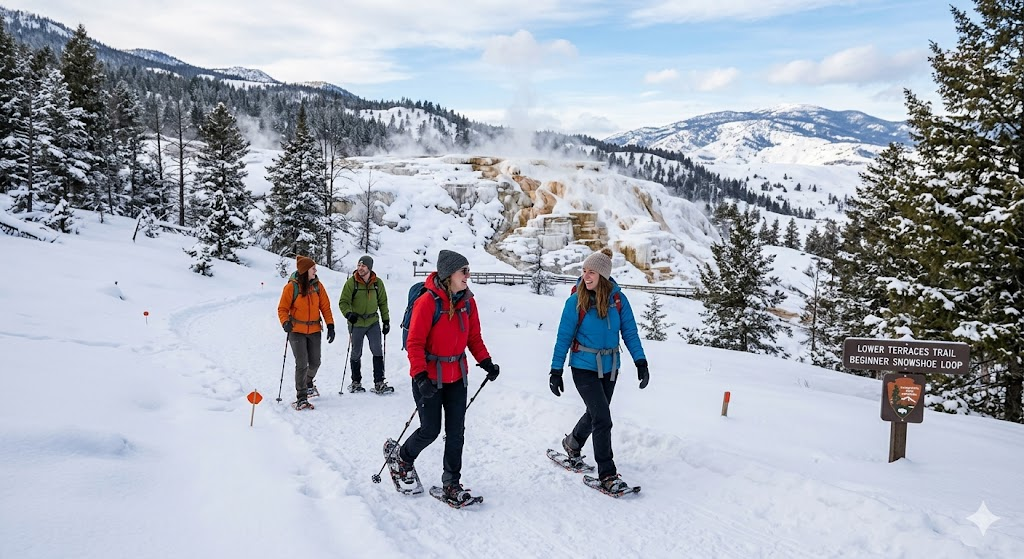
Winter “hiking” means snowshoeing or cross-country skiing on groomed or packed trails. Rent gear at Mammoth or gateway towns. Always check conditions and carry traction aids (crampons/microspikes) for icy boardwalks.
Easy Northern Range Options (self-drive accessible):
- Mammoth Hot Springs Terraces: Short boardwalk loops. Steam, colorful travertine, wildlife. 0.5–2 miles, easy. Realistic time: 1–2 hours.
- Beaver Ponds Trail: 5-mile loop from Mammoth. Gentle, good for snowshoeing, possible beaver/wildlife sightings. Beginner-friendly with proper gear. 3–5 hours round-trip.
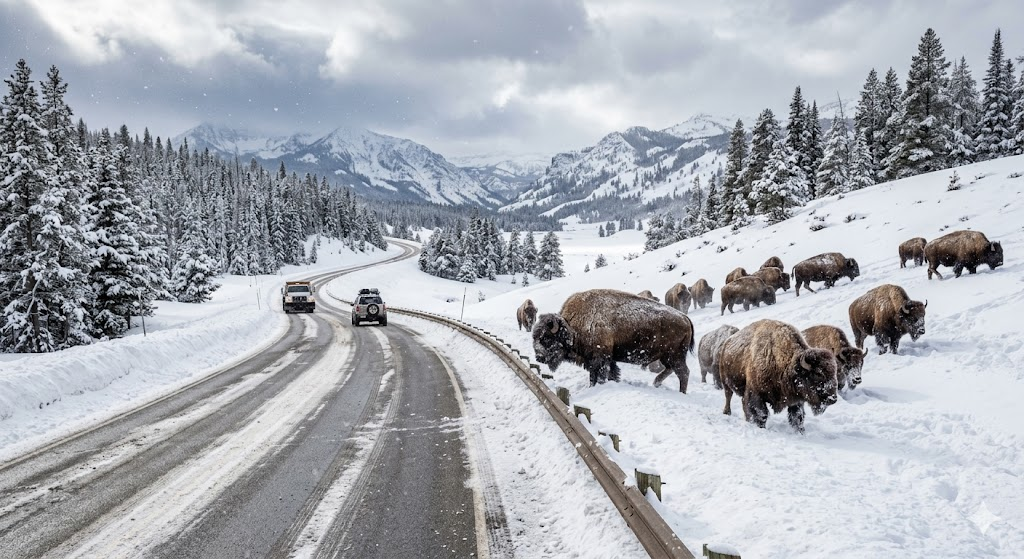
- Lamar Valley area: Pullouts for wildlife viewing. Short walks from road to view wolves, bison, elk (use scopes/binoculars). Stay 100 yards from predators, 25 from others.
- Tower Falls area: Snowshoe along plowed/groomed sections for views.
Interior via Snowcoach/Snowmobile (guided):
- Old Faithful & Upper Geyser Basin: Boardwalks often packed. See eruptions in snow — magical. Easy walking with traction aids.
- Grand Canyon of the Yellowstone (South Rim): Overlooks like Artist Point. Snowshoe short sections.
- Lone Star Geyser: ~4.8 miles round-trip on old road (groomed). Beginner-intermediate snowshoe. Erupts every ~3 hours.
Sample 3–4 Day Beginner Itinerary (Budget-Friendly Hybrid):
- Day 1: Arrive Gardiner/Mammoth. Explore terraces + short snowshoe.
- Day 2: Northern Range drive to Lamar/Cooke City for wildlife. Easy trails.
- Day 3: Snowcoach day trip to Old Faithful (book ahead).
- Day 4: Morning snowshoe, depart.
Families: Stick to short boardwalks and guided tours. Kids love the steam and animals but need warm layers and supervision near thermals.
Practical Tips & Safety
Gear Essentials:
- Layers: Base (moisture-wicking), insulating (fleece/down), shell (waterproof). Wool socks, waterproof boots, gloves, hat, balaclava.
- Traction aids for boardwalks.
- Daypack with water (insulated), snacks, headlamp, map/GPS, whistle, bear spray (required knowledge for wildlife).
- Sunscreen & lip balm (high altitude reflection).
Safety Realities:
- Hypothermia, frostbite, slips on ice are common. Tell someone your plans.
- Wildlife: Bison especially active and unpredictable in winter.
- Weather: Whiteouts possible. Check NPS road status and avalanche forecasts (Gallatin/Bridger-Teton centers).
- Thermal areas: Stay on boardwalks — thin crust can collapse into scalding water.
Hydration & Health: Drink even if not thirsty. Altitude + cold = dehydration risk.
Permits: Snowmobile non-commercial permits limited/required in advance. Backcountry overnight permits needed.
Budget Breakdown (Realistic USD for 2026, per person)
Low-Budget (self-drive Northern Range, camping/lodging outside):
- Entrance + gas: $50–100
- Basic lodging/food (gateway towns): $150–250/night for 2
- Gear rental (snowshoes): $20–40/day
- Total 4 days: $600–1,200/person (sharing costs)
Mid-Range (mix self-drive + 1–2 snowcoach tours):
- Lodging in Mammoth/Old Faithful Snow Lodge: $200–400+/night
- Guided tour: $150–300/person
- Total 4 days: $1,200–2,500/person
Premium (full guided, luxury lodging): $3,000+
Book early — winter fills fast. Groceries in Gardiner or West Yellowstone help save on meals.
Common Mistakes & Pro Tips from Recent Hikers
- Mistake: Underestimating cold or driving without proper tires/kit. Result: Stranded or turned around.
- Tip: Have a flexible itinerary. Weather can close roads anytime.
- Mistake: Not booking tours/lodging early.
- Tip from visitors: Bring hand/foot warmers. Download offline maps. Join ranger programs if available.
- Common turnaround: If roads look bad and you lack snow tires/experience, pivot to guided options immediately — better safe than sorry.
Pro move: Combine a Northern Range self-drive day with a snowcoach interior day.
Also See: Is Hunting Allowed in Yosemite National Park?
FAQs
1. Do I need snow tires for Yellowstone in winter? Strongly recommended for the Northern Range road. Not strictly enforced everywhere but can be required on certain sections. Without them, consider tours.
2. Can beginners enjoy winter Yellowstone? Absolutely, with guided options and easy snowshoe trails. Start short.
3. Is it worth visiting in winter? Yes for the solitude, steam-on-snow photos, and wildlife. Different but special.
4. What about kids or families? Doable with short activities and warm base. Book family-friendly snowcoaches.
5. How cold does it really get? Sub-zero nights common. Dress in layers and test gear beforehand.
6. Are there restrooms and food? Limited. Plan accordingly.
7. Can I snowmobile without a guide? Limited permits available; guided is easier/safer for most.
8. What if I don’t want to drive at all? Airport shuttles + snowcoach packages from Bozeman/Jackson.
9. Best photo spots in winter? Old Faithful, Grand Prismatic (via tour), Mammoth Terraces, Lamar Valley.
10. How busy is it compared to summer? Much quieter — a huge plus.
11. Any 2026 updates I should know? Check nps.gov/yell for road openings, construction, or thermal area changes.
12. Is it safe for solo travelers? Yes with preparation, but share plans and consider group tours for interior.
Conclusion
Visiting Yellowstone in winter without snow tires is possible — especially if you base in Mammoth, stick to guided tours for the interior, and have a capable vehicle with good all-seasons for the Northern Range. But prioritizing safety with proper tires, gear, or professional guides will let you truly relax and soak in the magic.
This incredible park rewards those who prepare. Whether you’re chasing geyser steam against white fields or spotting bison in the snow, a winter visit creates memories that last a lifetime.
Start planning now: Check the NPS Yellowstone winter page, book lodging/tours, and get your gear ready. You’ve got this!
Safe travels — tag your photos with #ParkTrailsGuide when you go. I’d love to hear how your trip turns out.
Rubie Rose, dedicated national parks researcher
