
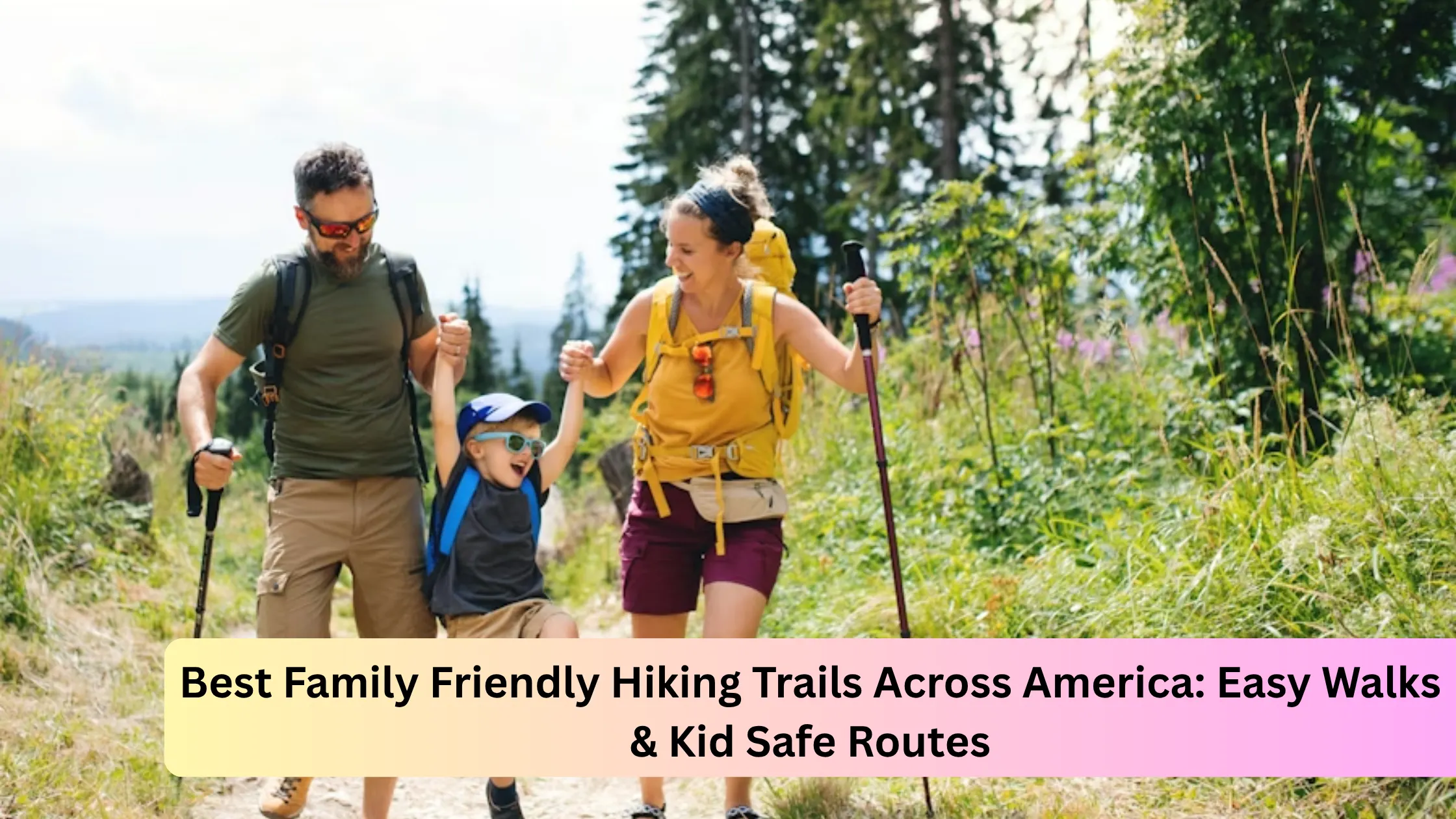
Introduction: You Decided to Take the Kids Hiking. Bold Choice.
So you woke up on a Saturday morning, looked at your children who have been staring at screens since 7am, thought about the $18 you spent on a nature subscription app they opened once, and decided today is the day. Today you are going outside. As a family. On purpose. You typed family hiking trails near me into Google, got completely overwhelmed, and ended up here. Welcome. You made a genuinely good decision and this blog is going to make sure it stays that way. Family Hiking does not have to be a negotiation, a meltdown, or a moment you describe to your therapist later. It just requires the right trail, the right snacks, and slightly lowered expectations.
Why Family Hiking Is Worth the Chaos (And It Will Be Chaotic)
Let us be honest about what family hiking actually looks like. Someone is going to complain about their shoes within the first quarter mile. Someone else is going to need a bathroom exactly where there is no bathroom. The youngest one is going to find a stick and declare it their hiking stick with a level of attachment that makes you wonder if you should have named it. And somewhere in the middle of all of that, something genuinely beautiful is going to happen.
A kid is going to see something for the first time that you have forgotten how to see.
A waterfall. A frog sitting on a rock. The way light comes through a forest canopy in the morning. These are the moments that do not happen on a couch and cannot be scheduled and will not show up in a TikTok algorithm because they belong entirely to the people who were present for them. That is the whole argument for family Hiking and it is a strong one.
The practical argument is also solid. Studies consistently show that time in nature reduces stress hormones in both children and adults. Kids who spend time outdoors regularly show improvements in attention, mood, and sleep. And a tired child who has spent three hours walking through a forest is a child who goes to bed at a reasonable hour, which is information every parent deserves to have.
What makes a trail actually family-friendly?
Not every trail that gets labeled easy on AllTrails is actually appropriate for children. Here is what to actually look for:
• Distance: Under 5 miles round trip for most families with kids under 10. Under 3 miles for families with kids under 6.
• Elevation gain: Under 500 feet for younger kids. Gradual is always better than steep.
• Trail surface: Paved, gravel, or packed dirt. Not boulder scrambles or loose scree.
• Waypoints: A waterfall, a lake, a viewpoint, or a bridge gives kids something to hike toward. Purpose helps.
• Shade: Especially in summer. An exposed trail with no shade and a six-year-old is an experience you will not repeat.
• Bail-out options: Trails with loop options or easy turn-around points are your best friends.
The Best Family Hiking Trails in the West: Postcards Your Kids Will Actually Remember
The American West has a way of making everyone feel small and amazed simultaneously, including children who ten minutes ago were complaining that the trail was too long. These trails deliver the big scenery without the technical difficulty.
1. Lower Antelope Canyon Walk, Page, Arizona
Distance: About 0.5 miles. Difficulty: Very easy. What it is: A guided walk through a slot canyon with walls that glow orange, red, and purple depending on the time of day.
Lower Antelope Canyon is not a traditional hike in the sense that you are not conquering anything. You are walking through a narrow sandstone slot canyon that looks like the inside of a painting and trying to process the fact that water carved this over millions of years. For kids, it is legitimately magical. The canyon walls twist and spiral and the light changes constantly. A Navajo Nation guide leads all tours, which is required, and the tour companies are excellent at keeping groups moving and engaged.
This is one of the best ways to introduce very young children to outdoor wonder without any physical demands. Strollers do not work in the canyon but a carrier or toddler backpack is fine. Book tickets well in advance because this fills up, especially in spring and summer.
Family Tips:
• Book through authorized Navajo tour operators only, the canyon is on Navajo Nation land
• Morning tours offer the best light
• No strollers inside the canyon, use a carrier for toddlers
• The canyon is narrow and can feel crowded, go on a weekday if possible
• Combine with a visit to Horseshoe Bend which is a short paved walk from the parking area
2. Mirror Lake Trail, Yosemite National Park, California
Distance: 5 miles round trip. Difficulty: Easy, flat, paved for the first section. What it is: A loop trail around a seasonal lake with Half Dome reflected in the water.
Yosemite does not have to mean hiking to the top of something. Mirror Lake Trail is a flat loop that delivers one of the most photographed views in the park, Half Dome reflected in still water, without asking anyone to climb anything. In spring the lake is full and the reflection is dramatic. By late summer it becomes more of a meadow, which is actually its own kind of beautiful and a lot more interesting to kids who want to poke around in the grasses and look for frogs.
The paved section makes it stroller-accessible for the first half. The full loop is unpaved but flat and easy. Valley Shuttle stops nearby make it accessible without fighting for trailhead parking, which in Yosemite in summer is genuinely its own kind of adventure you do not need.
Family Tips:
• Take the Valley Shuttle to stop 17, do not try to park at the trailhead in peak season
• Bring layers, the valley floor can be cool even in summer mornings
• The flat paved section is stroller-friendly for about the first mile
• Visit in May or June for the fullest lake and best reflections
• Black bears are present in Yosemite, keep all food in bear boxes or canisters
3. Sprague Lake Trail, Rocky Mountain National Park, Colorado
Distance: 0.5 miles. Difficulty: Completely flat, fully accessible. What it is: A loop around a lake with mountain views and wildlife.
Sprague Lake is the trail that national park rangers actually recommend when someone shows up with a toddler and asks what they can do. It is half a mile of flat gravel path around a gorgeous alpine lake with the peaks of Rocky Mountain National Park reflecting in the water. Elk graze nearby regularly. Ducks exist. The whole thing takes about 20 minutes at a leisurely pace or two hours if you have a three-year-old who needs to examine every rock individually, which is both of those things being equally valid uses of time.
The trailhead has accessible parking and restrooms. It is genuinely one of the best accessible outdoor experiences in the country and the kind of place that makes you feel like you gave your family something real without anyone crying about their feet.
Family Tips:
• One of the most accessible trails in the entire national park system
• Timed entry permits required for the park during peak season, book at recreation.gov
• Morning visits are best for calm water and wildlife sightings
• The trailhead has a picnic area, bring lunch and stay a while
• Wheelchair and stroller accessible for the full loop

The Best Family Hiking Trails in the East and Southeast: Old Growth, Waterfalls, and Surprisingly Good Vibes
The East Coast and Southeast have been quietly delivering some of the best family hiking in the country for decades. Old forests, accessible waterfalls, and terrain that rewards effort without requiring a rescue helicopter. These trails do not get the Instagram engagement of the West but they absolutely deliver.
4. Laurel Falls Trail, Great Smoky Mountains National Park, Tennessee
Distance: 2.6 miles round trip. Difficulty: Easy to moderate, paved the entire way. What it is: A paved trail to the most visited waterfall in the most visited national park in the country.
Laurel Falls is popular because it is genuinely excellent. The paved trail makes it accessible for families with strollers or younger kids who are reliable walkers but not yet ready for rough terrain. The waterfall at the end is a two-tiered cascade in a forested setting and it is exactly as satisfying as advertised. Kids respond to waterfalls consistently and powerfully, which is worth noting when you are planning a Hiking trip and trying to figure out how to maintain enthusiasm across 2.6 miles of uphill.
The trailhead parking fills up by 9am on weekends in summer. Arrive early or take the park shuttle. Bring your own water because there are no services on this trail.
Family Tips:
• Arrive before 9am on weekends or use the park shuttle to reach the trailhead
• Paved the entire way, suitable for younger kids who are reliable walkers
• Stroller-friendly but the grade is moderate in sections, a jogging stroller handles it better
• No restrooms on trail, use the facilities at the trailhead before you start
• Black bears are very active in this park, make noise on the trail and store food properly
5. Bearfence Mountain Loop, Shenandoah National Park, Virginia
Distance: 1.2 miles. Difficulty: Moderate with a short scramble section. What it is: A short loop with a 360-degree panoramic view that rewards even the most reluctant young hiker.
Bearfence Mountain Loop is the trail that converts kids who claim they hate hiking. It is short enough that nobody has time to get genuinely miserable and there is a scramble section over rocks near the summit that most kids find thrilling rather than difficult. The view from the top is a full 360-degree panorama of the Shenandoah Valley and Blue Ridge Mountains that makes adults go quiet for a minute and makes kids immediately ask if they can come back tomorrow.
Accessible from Skyline Drive with easy parking. The rock scramble is suitable for kids around 6 and up who are comfortable on uneven surfaces. Younger children or very nervous hikers can turn back before the scramble and still have had a good time.
Family Tips:
• Shenandoah charges an entrance fee, the America the Beautiful annual pass covers this
• The scramble section is suitable for kids 6 and up who are comfortable on rocks
• Keep dogs on leash, deer ticks are very active in this region
• Pair with a picnic at one of the Skyline Drive overlooks for a full day out
• Fall foliage here is extraordinary and the trail is even better in October
6. Appalachian Trail to McAfee Knob, Virginia
Distance: 8.8 miles round trip. Difficulty: Moderate. What it is: The most photographed spot on the entire Appalachian Trail.
McAfee Knob is the rock outcropping you have definitely seen without knowing where it is. The one where someone is standing at the very edge of a ledge with their arms out and a valley stretching behind them into the distance. It is one of the most iconic views in the Eastern United States and the trail to reach it is manageable for older kids and teenagers who are ready for a longer day hike.
This is not a trail for very young children. At 8.8 miles it is a commitment that requires kids who can genuinely sustain effort over several hours. But for families with kids aged 10 and up who want a real challenge with a genuinely spectacular payoff, it is one of the best options in the East. The summit ledge feels dramatic. Photos are basically mandatory.
Family Tips:
• Best for families with kids 10 and older who are experienced day hikers
• Start early, this trail is popular and parking fills by 9am on weekends
• The summit ledge is unfenced, supervise young children carefully
• Bring at least 2 liters of water per person, no water sources on the trail
• Sunset hikers should bring headlamps, the parking area closes at night
The Midwest and South Deserve More Credit: Family Trails That Nobody Is Talking About But Should Be
Everyone skips the Midwest when they plan a family Hiking trip and honestly it is their loss. The trails here are less crowded, extremely accessible, and have the kind of biodiversity that makes kids who are into bugs, birds, and weird mushrooms feel like they have arrived somewhere important.
7. Pictured Rocks National Lakeshore, Chapel Loop, Michigan
Distance: 10 miles for the full loop, shorter out-and-back options available. Difficulty: Moderate with some muddy sections. What it is: Sandstone cliffs, waterfalls, and Lake Superior.
The Chapel Loop in the Upper Peninsula of Michigan is one of the most underrated family hiking destinations in the country. The route passes Chapel Falls, a 60-foot cascade in the forest, Chapel Lake, and the Chapel Rock arch perched above Lake Superior. The full loop is 10 miles which is too much for younger kids, but the out-and-back to Chapel Falls is only about 3.5 miles and is genuinely stunning.
The Upper Peninsula has a different energy from the crowded national parks. The crowds are manageable, the mosquitoes in midsummer are not, and the scenery is spectacular in a quiet way that sneaks up on you. Bring bug spray. Bring actual bug spray, not the gentle lavender kind. The UP mosquitoes are not interested in gentle.
Family Tips:
• The out-and-back to Chapel Falls at 3.5 miles is the best option for families with younger kids
• Bug spray is essential from June through August, bring the good kind
• Trails can be muddy, waterproof shoes or boots make a significant difference
• Munising is the nearest town with food, lodging, and services
• The park has no entrance fee but camping requires a reservation through recreation.gov
8. Congaree National Park Boardwalk Loop, South Carolina
Distance: 2.4 miles. Difficulty: Easy, flat, fully boardwalked. What it is: An elevated boardwalk through old-growth bottomland hardwood forest.
Congaree is the least visited national park in the contiguous United States, which makes absolutely no sense once you walk the boardwalk loop. The trees are massive. Ancient bald cypresses rise out of shallow floodplain water with their knobby root structures exposed. The forest is so dense and so old that it has a cathedral quality, genuinely quiet and enormous in a way that makes children go wide-eyed before they start asking questions about the trees.
The boardwalk loop is completely flat and accessible. Families with strollers can do most of it comfortably. The park offers free ranger-led programs including firefly tours in late May and early June when the synchronous fireflies flash in coordinated patterns. These tours book out immediately. If you can get tickets, it is one of the most extraordinary natural experiences available to families in America and costs nothing beyond the price of getting there.
Family Tips:
• No entrance fee, one of the most accessible national park experiences in the country
• Synchronous firefly tours in late May and early June fill within minutes of opening, check nps.gov/cong
• The boardwalk is stroller and wheelchair accessible for most of the loop
• Mosquitoes are active year-round, treat clothing and exposed skin
• The visitor center has excellent exhibits on the ecology that kids and adults both find genuinely interesting

9. Starved Rock State Park, Illinois
Distance: Varies by trail, most canyon trails are 1 to 3 miles. Difficulty: Easy to moderate. What it is: Sandstone canyons, waterfalls, and bluffs along the Illinois River, one hour from Chicago.
Starved Rock is the proof that you do not need to drive 14 hours to find genuinely impressive terrain. The park has 18 canyons carved by glacial meltwater after the last ice age, each one with vertical sandstone walls draped in ferns and moss. Several have waterfalls, especially in spring when snowmelt fills the canyon streams. The trails between canyons are well-maintained and clearly marked, which is exactly what you want when you have children who will take a wrong turn given any opportunity.
This is one of the best day trip options for families in the Midwest and it is wildly underrated nationally. The park has a full-service lodge with food and lodging if you want to make it an overnight. Weekends in spring get busy by mid-morning, arrive early.
Family Tips:
• French Canyon and St. Louis Canyon are the best options for waterfall views
• Trails can be very muddy in spring, waterproof footwear is strongly recommended
• The park lodge restaurant is a solid post-hike lunch option without having to drive anywhere
• Weekends in April and May are the most crowded, arrive before 9am
• The canyon floors are cool and shaded, bring an extra layer even in summer
10. Enchanted Rock State Natural Area, Texas
Distance: 1 mile round trip to summit on the Summit Trail. Difficulty: Short but steep on bare granite. What it is: A massive pink granite dome rising out of the Texas Hill Country.
Enchanted Rock is a 425-foot granite dome that rises out of the Texas Hill Country like someone left a small mountain there and forgot to pick it up. The Summit Trail is only about a mile but it is steep and the surface is bare sloping granite, which means footing matters. The view from the top of the surrounding Hill Country is spectacular and kids who complete it feel genuinely accomplished in a way that a short trail almost never produces.
The park has a capacity limit and on popular weekends the parking lot fills before 9am with a queue forming before the gate opens. Book a timed entry day pass in advance. The spring wildflower season in March and April makes the surrounding landscape extraordinary. Texas heat in summer makes the same landscape something to approach with caution and a lot of water.
Family Tips:
• Reserve a day use pass in advance at texasstateparks.reserveamerica.com, the park fills out early
• Bring at least 2 liters of water per person, there is limited shade on the dome
• The bare granite surface gets hot in direct sun, start early in summer
• Shoes with grip are important on the sloping granite surface
• The base loop trail at 1.5 miles is a good option for younger children who do not attempt the summit
The Complete Family Hiking Toolkit: Because Good Intentions Without Good Snacks is Just a Walk to Misery
You have picked your trail. You have your permits. Now let us talk about the part where things go sideways for most families, which is preparation. Not the gear-obsessive-REI kind of preparation but the practical human kind.
The snack strategy is not optional.
Children on trails operate on a different metabolic schedule than adults and that schedule involves needing food approximately every 45 minutes or whenever they announce they are dying, whichever comes first. Bring more snacks than you think you need. Bring snacks that are interesting enough to be motivating but not so elaborate that you are unpacking a charcuterie situation on a log. Trail mix with chocolate chips, string cheese, fruit pouches, and a backup granola bar per person is a functional and proven system.
The distance rule that actually works.
A general rule of thumb that experienced family hikers use is one mile per year of age for the youngest child up to about age 8, after which the rule no longer applies because kids that age can often out-hike adults. A 4-year-old has a comfortable range of about 2 to 4 miles total. A 6-year-old can reasonably manage 4 to 6 miles on good terrain. A 10-year-old with regular outdoor exposure can handle a full day hike. These are not hard limits but they are useful starting points for not picking a trail that turns into a situation.
The turnaround rule.
Pick a turnaround time before you start, not a turnaround distance. If you decide in advance that you turn around at noon regardless of where you are on the trail, you eliminate most of the arguments that happen when you have been hiking for three hours and the summit is still a mile away and someone needs to be carried. Turnaround time is non-negotiable and knowing it in advance lets everyone manage their own expectations.
What to pack for family Hiking that is not already on every other list:
• A small field guide to local birds, bugs, or trees so kids have something to identify on the trail
• Moleskin blister pads because new hiking shoes on a long trail is a predictable problem
• A lightweight sit pad for rest breaks so everyone actually wants to sit down and rest
• A printed trail map because phone batteries die and you should not be caught without one
• Sunscreen in a spray bottle because getting a child to hold still for lotion application on a trailhead is a negotiation nobody wins
• An extra pair of socks per child because wet socks are responsible for more trail meltdowns than any other single factor
• Duct tape, which can fix shoes, packs, and blisters in an emergency
• A simple first aid kit with bandages, antiseptic wipes, and children’s ibuprofen
The electronics conversation.
Some parents do a full no-phones-on-trail policy. Others let kids use apps like iNaturalist to identify plants and animals, which turns the hike into a game and produces genuine enthusiasm in children who would otherwise be uninterested. Both approaches work. The one that does not work is handing a child a device for passive consumption on the trail and expecting them to also engage with the forest. Pick a lane and commit to it before you leave the trailhead parking lot.
The debrief that most families skip.
After the hike, in the car on the way home when everyone is tired and muddy and the adrenaline has worn off, ask each person what their favorite moment was. Not how they feel or if they had fun but specifically what was their favorite moment. The answers are almost always surprising. Kids remember the frog more than the waterfall. The snack break more than the summit. The specific quality of the light through the trees at a moment you were not paying attention. These conversations are brief and easy and they are what make the next hike feel like something everyone chose rather than something that happened to them.
Conclusion: You Survived the Research. Now Go Do the Hike.
You have now read approximately 4,000 words about hiking with your children, which means you have spent more time preparing to go outside than most people spend actually going outside. That is either responsible or slightly ironic depending on how you look at it. The point is you have everything you need. Pick one trail. Get the permit if it requires one. Pack the snacks. Download the offline map. And accept in advance that something will not go exactly as planned and that this is not a failure, it is just what going outside with children actually looks like. This is the one activity that consistently produces good memories from imperfect experiences. Go make some.

Rubie Rose is the founder of Park Trails Guide. As a USA resident and nature lover, she is dedicated to creating helpful national park guides using official sources and real visitor experiences. Her mission is to make planning trips to places like Yosemite, Grand Canyon, and Zion easier for families, beginners, and travelers.