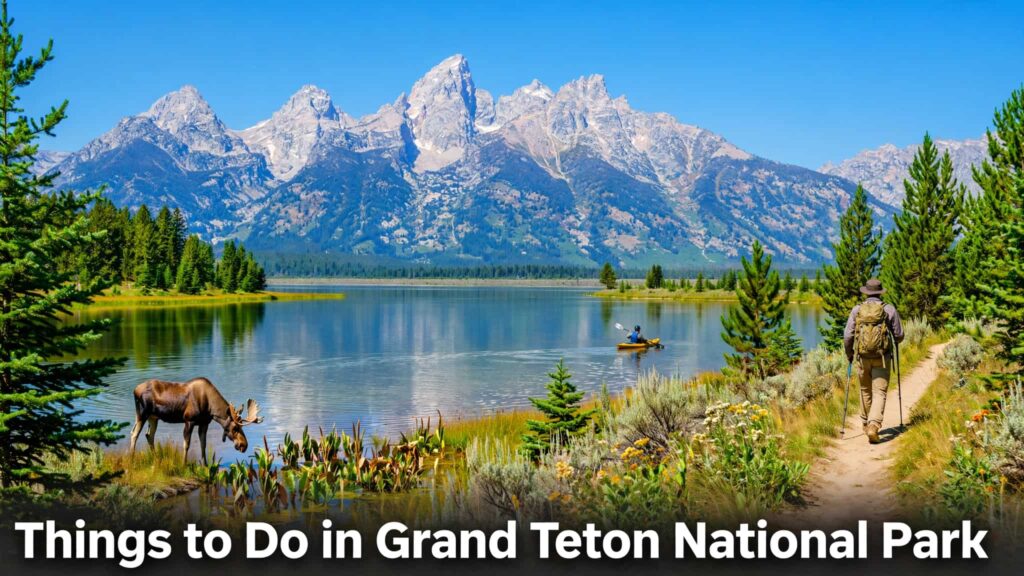
Best Things to Do in Grand Teton National Park: Complete Visitor Guide (2026)
Grand Teton National Park is one of Wyoming’s most spectacular destinations, known for the sharp peaks of the Teton Range, alpine lakes, wildlife-rich valleys, scenic roads, historic ranches, and outdoor adventures.
If you’re planning a trip in 2026, there are plenty of ways to experience the park whether you have a few hours, one day, or several days. The National Park Service currently recommends planning ahead because construction is taking place in parts of the park during 2026.
This guide covers the best things to do in Grand Teton National Park, including hiking, scenic viewpoints, wildlife watching, boating, photography, historic sites, and practical tips for your visit.

Quick Guide: Best Things to Do in Grand Teton
If you’re short on time, consider adding these experiences to your itinerary:
- Visit Jenny Lake
- Hike to Hidden Falls and Inspiration Point
- Photograph Mormon Row and the historic barns
- Watch wildlife around Oxbow Bend
- Stop at Schwabacher Landing
- Enjoy the views from Snake River Overlook
- Drive the park’s scenic roads
- Visit Jackson Lake
- Hike to Taggart Lake
- Take a boat or kayak onto one of the park’s lakes
- Explore the park with a ranger-led program
- Bike or walk along the Grand Teton Pathway
- Try fishing where permitted
- Experience a guided Snake River float trip
1. Visit Jenny Lake
Jenny Lake is one of the most popular places to visit in Grand Teton National Park. Located beneath the Teton Range, it combines mountain scenery, hiking trails, water activities, and some of the park’s most recognizable views.
You can spend a few minutes enjoying the shoreline or make Jenny Lake the starting point for a longer hike.
Popular options include:
- Jenny Lake Loop
- Hidden Falls
- Inspiration Point
- Cascade Canyon
- Jenny Lake boat shuttle
Parking can become difficult during busy periods. For 2026, NPS recommends arriving early or later in the afternoon when possible.

2. Hike to Hidden Falls and Inspiration Point
One of the classic Grand Teton experiences is hiking from Jenny Lake toward Hidden Falls and Inspiration Point.
Hidden Falls is a roughly 100-foot cascading waterfall, while Inspiration Point provides elevated views over Jenny Lake and the surrounding landscape.
The trail can be rocky and steep in sections, so wear suitable hiking shoes and carry water.
For longer adventures, hikers can continue toward Cascade Canyon, which takes you farther into the Teton Range.
3. Photograph Mormon Row and the Historic Barns
Mormon Row is one of the most photographed historic areas near the Tetons.
The historic ranch buildings provide an interesting contrast with the enormous mountains behind them. The T.A. Moulton Barn is particularly recognizable and is frequently photographed with the Teton Range in the background.
For photographers, Mormon Row can be especially attractive around sunrise when the mountains and buildings can receive soft morning light.
Photography tip: Bring a wide-angle lens for the landscape and a telephoto lens if you want to isolate the mountains or architectural details.

4. Go Wildlife Watching
Wildlife viewing is another major reason people visit Grand Teton National Park.
Depending on the season and conditions, you may see:
- Moose
- Elk
- Bison
- Pronghorn
- Black bears
- Grizzly bears
- Deer
- Foxes
- Birds and waterfowl
The NPS identifies areas such as Oxbow Bend as wildlife-viewing locations.
Early morning and evening can be productive times for wildlife viewing, but animals are unpredictable, so sightings are never guaranteed.

Wildlife Safety
This is extremely important.
Grand Teton requires visitors to maintain at least:
- 100 yards from bears and wolves
- 25 yards from other wildlife
Never approach, chase, feed, or attempt to photograph an animal from dangerously close range.
If wildlife creates a roadside traffic jam, use designated pullouts or safely move completely off the roadway rather than stopping in traffic.
5. Stop at Schwabacher Landing
Schwabacher Landing is a popular photography location where the Teton Range can be reflected in calm water and beaver ponds.


The location is particularly attractive when the water is calm enough to produce reflections of the mountains. The NPS notes that the site provides views of the Teton Range reflected in its beaver ponds.
Best for: landscape photography, sunrise views, peaceful scenery, and short walks.
Road access can be seasonal, so check current conditions before visiting.
6. Enjoy the View from Snake River Overlook
Snake River Overlook is another excellent roadside viewpoint.
From here, you can see the Snake River winding through the valley with the Teton Range rising in the background.
It is a convenient stop because you don’t need to commit to a long hike to enjoy the landscape.
Consider visiting at different times of day because changing light can dramatically alter the appearance of the mountains and valley.
7. Take a Scenic Drive
You don’t have to hike all day to experience Grand Teton.
Driving through the park provides access to numerous viewpoints, trailheads, lakes, historic sites, and wildlife areas. The NPS notes that park roads include turnouts where visitors can safely stop for scenery, wildlife viewing, and educational exhibits.
Popular stops can include:
- Jenny Lake
- Jackson Lake
- Mormon Row
- Snake River Overlook
- Schwabacher Landing
- Oxbow Bend
- Signal Mountain
- Colter Bay
Important 2026 Road Information
Construction is underway in Grand Teton during 2026, so road conditions and travel times can change.
Check current road information before leaving for the day and allow extra time for delays.
8. Hike to Taggart Lake
Taggart Lake is a popular hiking destination with mountain scenery and a beautiful alpine-lake setting.

The trailhead is located south of Jenny Lake and provides an accessible way to experience the landscape without committing to a major backcountry expedition.
The NPS describes Taggart Lake as a place where visitors with different levels of hiking experience can experience the backcountry.
Because trail and parking conditions can change, check current NPS information before starting your hike.
9. Explore Jackson Lake
Jackson Lake sits beneath the Teton Range and offers opportunities for sightseeing, photography, boating, fishing, and lakeside recreation.

For visitors who aren’t interested in strenuous hiking, Jackson Lake is an excellent place to slow down and enjoy the scenery.
You can explore areas around:
- Jackson Lake Dam
- Colter Bay
- Signal Mountain
- Lakeshore areas
10. Go Boating or Kayaking
Grand Teton offers several opportunities to get on the water.
Depending on regulations and conditions, visitors can enjoy activities such as:
- Kayaking
- Canoeing
- Paddleboarding
- Boating
- Fishing
- Guided floating trips
Human-powered vessels are permitted on several park lakes, while motorized boating has additional restrictions. A Grand Teton boat permit and applicable Wyoming aquatic invasive species requirements may apply.

Water Safety
Mountain lakes can remain extremely cold even during summer.
The NPS warns that many park waters are below 60°F and that hypothermia can develop quickly. There are also no lifeguards in the park.
Wear an appropriate personal flotation device when boating or floating.
11. Take a Snake River Float Trip
A guided Snake River float is another way to see Grand Teton from a different perspective.
Instead of viewing the mountains from a road or trail, you’ll travel through the valley with the Teton Range surrounding you.
The NPS includes Snake River float trips among its recommended water activities and trip ideas.
A guided trip can also be useful if you don’t have your own boat or don’t want to navigate the river independently.
12. Visit Signal Mountain
Signal Mountain provides elevated views across the Jackson Hole valley and surrounding landscape.
It’s a convenient option for visitors who want panoramic scenery without committing to a long mountain hike.
Before driving to viewpoints, check current road conditions and seasonal access because conditions in Grand Teton can change throughout the year.
13. Bike or Walk the Grand Teton Pathway
For something different from traditional hiking, consider using the Grand Teton Pathway.
The park lists biking, hiking, and skating among its recreational opportunities.
The pathway can be a good choice for visitors who want to spend time outdoors without tackling a steep mountain trail.
14. Attend a Ranger-Led Program
A ranger-led program can add context to your visit.
Programs may cover:
- Wildlife
- Geology
- Park history
- Indigenous history and culture
- Conservation
- Local ecosystems
For part of the 2026 season, the NPS is offering ranger orientation opportunities at Glacier View Overlook and Snake River Overlook.
Check the current NPS schedule when planning your visit because programs and locations can change.
15. Go Fishing
Fishing is another popular activity in Grand Teton.
The park’s lakes, rivers, and streams provide opportunities to fish for trout and other species under applicable regulations.
Before fishing, check current Wyoming fishing regulations and Grand Teton National Park requirements.
16. Try a Longer Backcountry Hike
If you’re an experienced hiker, Grand Teton has considerably more to explore beyond the short trails around Jenny Lake.
The park has more than 250 miles of trails, ranging from relatively short walks to demanding backcountry routes.
Longer adventures can take you toward places such as:
- Cascade Canyon
- Lake Solitude
- Paintbrush Canyon
- Death Canyon
- Hurricane Pass
However, backcountry trips require much more preparation than a roadside sightseeing trip.
Some overnight trips require permits, and trail conditions can change rapidly.
17. Enjoy Grand Teton Photography
You don’t need professional equipment to photograph Grand Teton.
Some locations worth considering include:
| Photography Location | What You Can Photograph |
|---|---|
| Mormon Row | Historic barns + mountains |
| Schwabacher Landing | Mountain reflections |
| Snake River Overlook | Teton Range + Snake River |
| Jenny Lake | Lake + mountain scenery |
| Oxbow Bend | Wildlife + mountains |
| Jackson Lake | Water + Teton Range |
| Taggart Lake | Alpine lake + peaks |
For sunrise photography, arrive early because popular parking areas can fill quickly.
18. Visit in Different Seasons
Grand Teton changes dramatically throughout the year.
Summer
July and August generally bring warm days and cool nights, with afternoon thunderstorms possible. Many hiking and water activities are available during this period.
Fall
September and October can bring colorful foliage, cooler temperatures, and changing weather.
Winter
Winter transforms the park into a snowy landscape. Cross-country skiing and snowshoeing become popular activities.
Spring
Spring can bring a mixture of rain, snow, and milder temperatures. Wildlife activity can be especially interesting, but visitors should be prepared for changing conditions.
Best Things to Do in Grand Teton National Park for Different Travelers
| If you enjoy… | Consider doing… |
|---|---|
| First-time sightseeing | Jenny Lake + scenic drives |
| Photography | Mormon Row + Schwabacher Landing |
| Wildlife | Oxbow Bend + park roads |
| Hiking | Hidden Falls + Taggart Lake |
| Water activities | Jackson Lake + Jenny Lake |
| History | Mormon Row + Murie Ranch |
| Families | Scenic drives + ranger programs |
| Adventure | Cascade Canyon + backcountry routes |
| Relaxing | Jackson Lake + scenic overlooks |
| Winter activities | Snowshoeing + cross-country skiing |
How Many Days Do You Need in Grand Teton National Park?
For a first visit, 2–4 days gives you enough time to combine several different experiences.
The NPS itself describes a standard Grand Teton visit as ranging from approximately two to four days.
One Day
Focus on:
- Mormon Row
- Jenny Lake
- Hidden Falls or a short hike
- Snake River Overlook
- Schwabacher Landing or Oxbow Bend
Two Days
Add:
- Taggart Lake
- Jackson Lake
- Wildlife viewing
- More scenic viewpoints
Three to Four Days
You can add:
- Longer hikes
- Water activities
- Ranger programs
- Fishing
- Snake River float
- More photography locations
Grand Teton National Park Entrance Fee in 2026
A standard private vehicle entrance pass is $35 and is valid for seven days. The standard individual entrance fee is $20, while a motorcycle pass is $30.
For 2026, the NPS also states that non-U.S. residents age 16 and older are subject to an additional $100 per-person fee unless admitted with an Annual or America the Beautiful Pass.
Grand Teton does not require an entrance reservation or timed entry reservation.
The park is also cashless for entrance fees and certain permits as of May 1, 2026, so visitors should be prepared to pay electronically.
Grand Teton National Park 2026 Travel Tips
Arrive Early
Popular locations such as Jenny Lake can become crowded. NPS recommends arriving before 8 a.m. or after 3 p.m. at some high-demand locations when possible.
Check Conditions Before Hiking
Weather and trail conditions can change quickly in the mountains.
Check the official NPS conditions and trail information before heading out.
Prepare for Wildlife
Carry bear spray when appropriate, know how to use it, and follow current bear-safety guidance. The park advises hikers and backcountry users to travel in groups of three or more in areas with active bears, make noise, and carry bear spray.
Don’t Stop in the Road
Wildlife sightings can cause traffic jams. Use designated pullouts and keep roadways clear.
Plan Around 2026 Construction
Construction may cause delays or closures during your trip. Check the latest NPS road information before setting out.
Frequently Asked Questions
What is the number one thing to do in Grand Teton National Park?
Jenny Lake is one of the park’s most visited areas and offers hiking, mountain views, waterfalls, boating options, and access to Cascade Canyon.
Is Grand Teton National Park worth visiting without hiking?
Yes. Scenic drives, wildlife viewing, photography, historic sites, lakes, overlooks, and ranger programs allow visitors to experience the park without taking long hikes.
Can you see wildlife in Grand Teton?
Yes. Grand Teton is home to animals including moose, elk, bison, pronghorn, black bears, and grizzly bears. Sightings aren’t guaranteed, and visitors must maintain required distances.
Can you swim in Grand Teton National Park?
Swimming is allowed in park waters, but there are no lifeguards and the water can be extremely cold. Visitors enter the water at their own risk.
Do you need a reservation to enter Grand Teton National Park?
No. Grand Teton does not currently require an entrance reservation or timed entry reservation.
How long should you spend in Grand Teton National Park?
For a first visit, 2–4 days provides time for several major sights, hikes, wildlife-viewing opportunities, and scenic drives.
Final Thoughts
The best things to do in Grand Teton National Park depend on how you want to experience the park. A first-time visitor can combine Jenny Lake, Hidden Falls, Mormon Row, Schwabacher Landing, Oxbow Bend, scenic overlooks, and a few wildlife stops without attempting a demanding backcountry adventure.
If you have several days, add Taggart Lake, Jackson Lake, boating, fishing, ranger programs, biking, or a longer hike to experience more of the park.
Most importantly, check current NPS road, trail, weather, wildlife, and construction information shortly before your 2026 visit. Conditions can change quickly, and the park is actively managing construction and visitor access this year.
Official planning resource: Grand Teton National Park — National Park Service
Read Also: Where Is Grand Teton National Park? Location, Map & How to Get There (2026)