Las Vegas to Zion National Park: Distance, Route, Drive Time & Travel Guide (2026)
Planning a trip from Las Vegas to Zion National Park is one of the easiest ways to experience the dramatic red-rock scenery of southern Utah. Zion is close enough to Las Vegas for a day trip, but there is also plenty to see if you stay overnight in Springdale or nearby.
The drive from Las Vegas to Zion National Park is approximately 160 miles and normally takes around 2.5 to 3 hours without major stops or traffic. The most direct route follows I-15 North toward St. George before continuing on Utah State Route 9 toward Springdale and Zion’s South Entrance.
How Far Is Zion National Park From Las Vegas?
The distance from Las Vegas to Zion National Park is roughly 160 miles, although the exact mileage can vary depending on your starting point in Las Vegas and where you enter the park.
Under normal driving conditions, expect about 2 hours 30 minutes to 3 hours of driving time. Traffic, road construction, weather, stops and holiday crowds can make the journey longer.
One important thing to remember is the time-zone change. Las Vegas is in the Pacific Time Zone, while Zion National Park is in the Mountain Time Zone. When you cross into Utah, your clock moves one hour ahead.
For that reason, check your navigation app on the morning of your trip rather than relying only on a fixed arrival time.
Best Route From Las Vegas to Zion National Park
For most travelers, the fastest and simplest route is:
Las Vegas → I-15 N → St. George → Hurricane → La Verkin → Virgin → Springdale → Zion National Park
The majority of the journey is on I-15 North, making it an easy road trip for visitors who want to spend as much time as possible exploring Zion.
After reaching the St. George area, continue toward Hurricane and then follow UT-9 east through communities including Virgin and Springdale. Zion’s South Entrance and pedestrian entrance are located at the north end of Springdale.
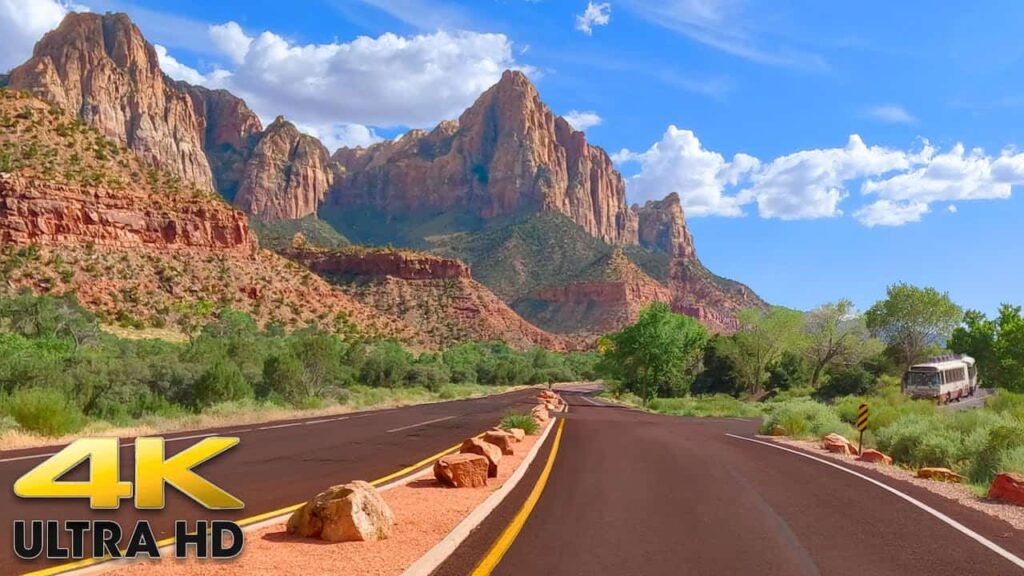
As you get closer to Zion, the landscape changes dramatically. The flat desert scenery gradually gives way to colorful sandstone cliffs and the towering canyon walls that make Zion famous.
What Is the Drive Like?
The Las Vegas to Zion road trip is relatively straightforward, but the scenery becomes increasingly interesting as you approach southern Utah.
The first part of the drive takes you through the Nevada desert. You then pass through the Virgin River Gorge area before reaching St. George and continuing toward Zion.
St. George is a useful place to stop for fuel, food or supplies before continuing toward Springdale. If you are driving early in the morning, you may also want to have breakfast or coffee there.
Once you reach UT-9, the drive becomes more scenic. The road passes through smaller communities and eventually leads directly toward the dramatic landscapes surrounding Zion.
Should You Stop Along the Way?
If your goal is to reach Zion as quickly as possible, drive directly on I-15 and UT-9.
However, travelers with extra time can turn the journey into a longer southern Utah road trip. Snow Canyon State Park, Sand Hollow State Park and the St. George area are popular additions to a Las Vegas-to-Zion itinerary. Visit Utah also recommends exploring the St. George region as part of a multi-day trip from Las Vegas to Zion.
Another option is to spend a night in St. George before continuing to Zion the following morning. This works particularly well for families or travelers who do not want to spend several hours driving and hiking on the same day.
Can You Do Las Vegas to Zion as a Day Trip?
Yes. Zion National Park can be visited as a day trip from Las Vegas, but you need an early start.
A direct drive takes roughly 2.5 to 3 hours each way, so the round trip alone can require about five to six hours behind the wheel. That leaves limited time for hiking and sightseeing.
If you are planning a one-day trip, leave Las Vegas early in the morning. Arriving early is especially important during busy periods because Zion’s parking areas can fill quickly. The National Park Service recommends visiting early in the morning or later in the evening and notes that weekdays are generally less busy than weekends.
For a more relaxed experience, staying one or two nights in Springdale is a better option.
What to Do in Zion National Park
Zion is best known for its spectacular canyon scenery and hiking trails. Depending on your available time and fitness level, you can choose anything from an easy riverside walk to a demanding mountain hike.
Some popular experiences include:
Riverside Walk
Riverside Walk is one of the easier ways to experience Zion Canyon. The trail follows the Virgin River and provides views of the canyon walls.
The Narrows
The Narrows is one of Zion’s signature adventures, where hikers travel through the canyon along the Virgin River. Conditions can change, so check current weather, river flow and flash-flood information before starting.
Emerald Pools
The Emerald Pools area offers a series of trails with views of cliffs, vegetation and seasonal waterfalls. It can be a good choice if you want a hike without committing to one of Zion’s most strenuous routes.
Angels Landing
Angels Landing is one of Zion’s most famous hikes, but it is strenuous and exposed. A permit is required to hike to Angels Landing, according to the National Park Service. Visitors can still hike the West Rim Trail to Scout Lookout without an Angels Landing permit.
Zion Shuttle: What Las Vegas Visitors Need to Know
One of the biggest things to understand before driving from Las Vegas to Zion is the park’s shuttle system.
During the shuttle season, personal vehicles are not allowed on Zion Canyon Scenic Drive. Visitors normally park at the Zion Canyon Visitor Center or in Springdale and use the free shuttle to travel into Zion Canyon.
For 2026, Zion’s shuttle service resumed on March 7. From May 17 through September 12, the Zion Canyon Line is scheduled to begin at 7 a.m., with the final shuttle leaving the Visitor Center toward the Temple of Sinawava at 7 p.m. The final shuttle out of the canyon is scheduled for 8:15 p.m.
Schedules can change, so check the National Park Service’s current information before your trip.
The shuttle itself does not require a ticket or reservation, but you still need to pay the park entrance fee.
Zion National Park Entrance Fees in 2026
Zion requires visitors to have a recreational use pass.
For 2026, the standard entrance fee for a private vehicle is $35, valid for up to seven days. The standard per-person fee is $20, while the motorcycle fee is $30.
There is also an important 2026 rule for international travelers. Non-U.S. residents aged 16 and older must pay an additional $100 nonresident fee unless they are admitted with an applicable Annual or America the Beautiful Pass.
Because entrance policies and fees can change, check the official Zion National Park fee page before leaving Las Vegas.
Where to Stay Near Zion
For the easiest access to Zion Canyon, Springdale is the most convenient base. The town sits directly outside Zion’s South Entrance and has hotels, restaurants, shops and shuttle connections.
St. George is another option if you prefer a larger city with more accommodation choices, although it adds driving time to your Zion visit.
If you want to spend more time inside the park, Zion Lodge and the park’s campgrounds are additional possibilities. The National Park Service states that Zion Lodge operates year-round, while campground availability varies by season.
Best Time to Drive From Las Vegas to Zion
Spring and fall are generally comfortable periods for exploring Zion, while summer can bring high temperatures and heavy visitation.
If you travel during summer, start your hikes early and carry plenty of water. The National Park Service recommends preparing for heat by carrying three to four liters of water, using sun protection and taking breaks in shaded areas.
Weekdays are generally a better choice if your schedule is flexible. Parking can fill early, particularly during busy periods and holiday weekends.
Tips for Driving From Las Vegas to Zion National Park
Keep these tips in mind before starting your trip:
- Start early if you are visiting Zion for only one day.
- Check road conditions and traffic before leaving Las Vegas.
- Fill up with fuel before the final stretch if your tank is getting low.
- Carry plenty of drinking water, especially in hot weather.
- Download maps or navigation information before entering areas with weaker service.
- Check the current Zion shuttle schedule before arriving.
- Consider parking in Springdale if park parking is full.
- Make lodging and camping reservations well ahead of your visit.
- If hiking Angels Landing, obtain the required permit.
- Check flash-flood and river conditions before hiking The Narrows.
Final Thoughts
The Las Vegas to Zion National Park drive is a relatively short road trip that takes you from the desert landscape of Nevada into the spectacular red-rock scenery of southern Utah. At around 160 miles, Zion is close enough to Las Vegas for a carefully planned day trip, although an overnight stay gives you considerably more time to hike and explore.
For the fastest journey, take I-15 North toward St. George and then UT-9 toward Springdale and Zion’s South Entrance. Arrive early, plan around the seasonal shuttle system and check current National Park Service conditions before setting out.
If you have the time, spending at least one night near Zion can turn a rushed day trip into a much more enjoyable national park adventure.