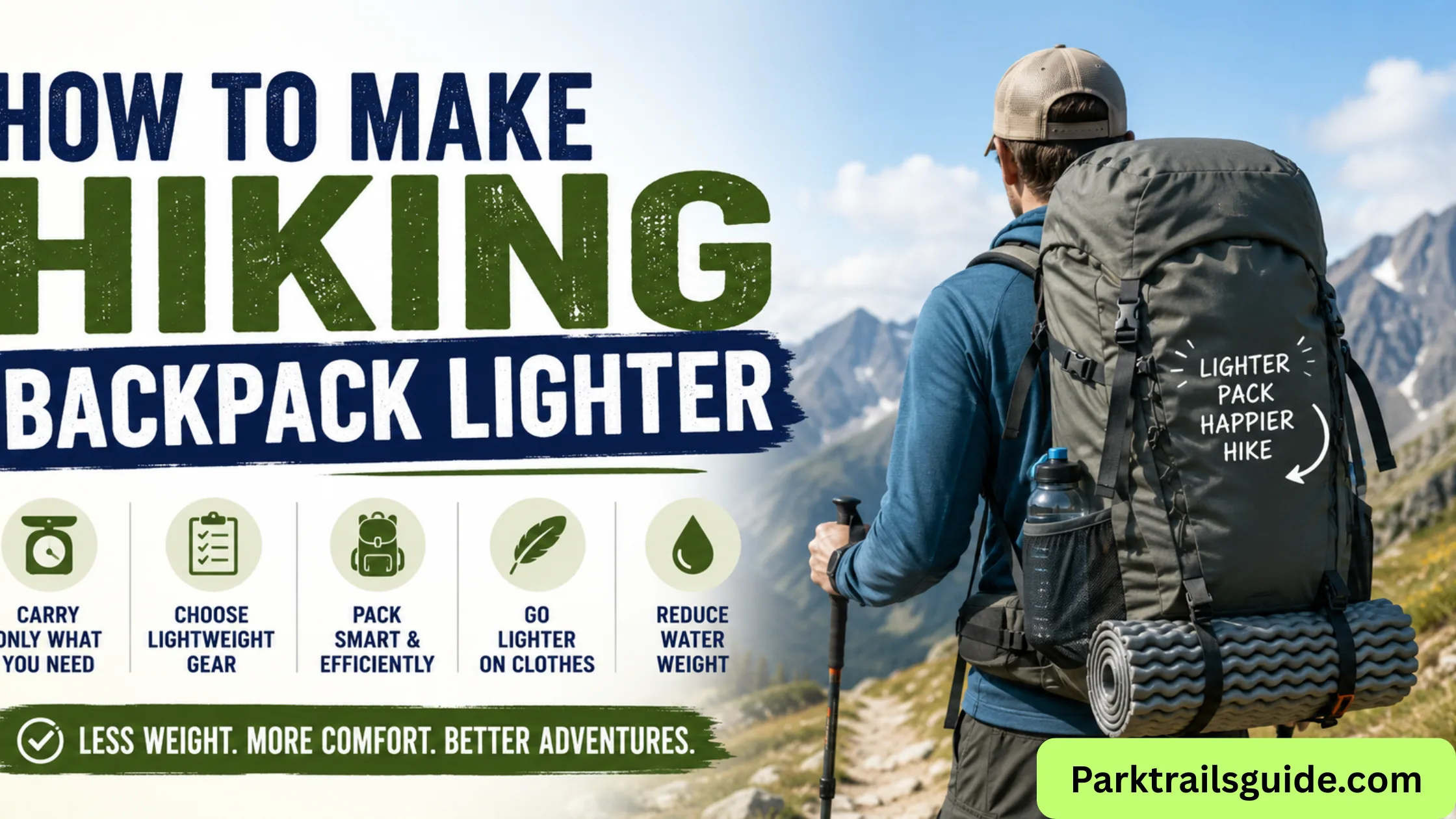
Ultimate Guide: How to Make Your Hiking Backpack Lighter
If your back aches after mile two, your shoulders feel like they’re being slowly pulled out of their sockets, and you’re questioning every life decision that led you to this trail — your pack is probably too heavy. You are not alone. It’s one of the single most common complaints among hikers of all experience levels, and it’s also one of the most fixable problems in all of outdoor recreation.
This guide is going to walk you through, in real and practical detail, exactly how to make your hiking backpack lighter — whether you’re heading out for a weekend backpacking trip, a long day hike, or prepping for your first multi-day adventure in a national park. We’ll cover everything from the “Big Three” gear categories to the sneaky weight culprits you’ve probably never thought about, to the mindset shifts that separate casual hikers from confident, pain-free trail veterans.
A quick note on my approach: I’m Rubie Rose, a national parks researcher based in the USA. I haven’t personally hiked every trail I write about, but I dig deep — official NPS sources, gear manufacturer specs, 2026 hiker reports from Reddit’s r/ultralight and r/CampingandHiking, AllTrails reviews, and expert resources like Andrew Skurka’s and the MYOG community. Everything here is built from that research, and I’ll always flag where the guidance comes from. My goal is to give you a guide so thorough you feel genuinely confident before you ever clip your hip belt.
Why Pack Weight Matters More Than You Think (And the 2026 Mindset)
Here’s the number that keeps showing up in long-distance hiker communities: the ideal base weight for a comfortable day or backpacking trip is under 20 lbs total (including food and water), and ideally under 15 lbs for experienced hikers. “Base weight” refers to everything in your pack minus consumables like food, water, and fuel. Most beginner hikers, however, set out with base weights of 30–40 lbs without realizing it.
That extra 10–20 lbs isn’t just uncomfortable — it’s a genuine safety concern. Heavier packs increase fatigue, reduce trail speed, raise your center of gravity (increasing fall risk), and can cause real joint damage over time, especially to knees on descents. A 2024 study published in the Journal of Sports Science & Medicine found that pack loads exceeding 20–25% of body weight significantly increase injury risk per mile hiked.
The good news? In 2026, lightweight and ultralight gear has never been more accessible or affordable. Budget-friendly ultralight options from brands like Gossamer Gear, Durston, and Six Moon Designs have matured significantly. You no longer need to spend $700 on a titanium pot set to go light — you just need a plan.
The “Carry Only What You’ll Use” Philosophy
The most important mental shift: every single item in your pack must earn its place. That means asking three questions about every piece of gear before it goes in: (1) Do I actually need it? (2) Do I need it in this quantity? (3) Is there a lighter version that still does the job safely? Run through this exercise honestly, and most hikers find they can cut 20–30% of their pack weight before touching any gear they own.
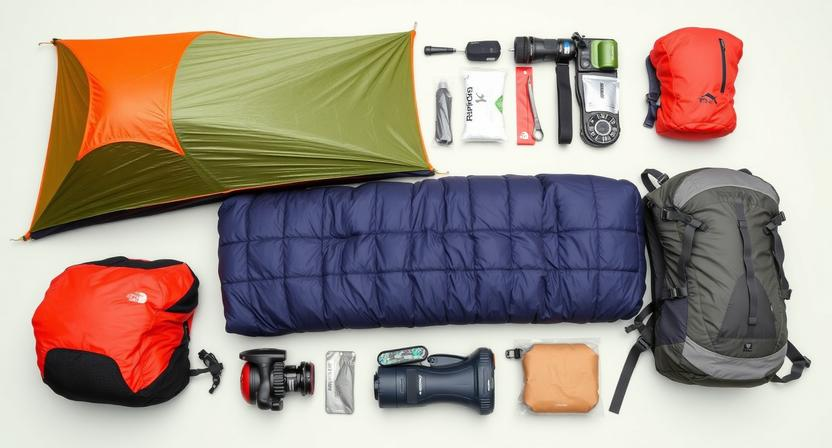
Start Here: Reducing the “Big Three” — Shelter, Sleep System, and Pack
In the lightweight hiking world, the “Big Three” refers to your shelter, sleeping bag/quilt, and backpack itself. These three categories typically account for 50–70% of your total base weight. Optimizing here gives you the biggest return on investment, by far.
1. Your Backpack — The Container That Sets the Tone
A traditional internal-frame pack (like a Kelty Redwing or older Osprey Atmos) can weigh 4–6 lbs on its own. An ultralight frameless pack or a lightweight framed pack can come in at under 2 lbs — sometimes under 1 lb. That’s a potential 3–4 lb savings from one swap.
| Pack Type | Typical Weight | Best For | Example Models (2026) |
|---|---|---|---|
| Traditional framed pack | 4–6 lbs | Heavy loads (50+ lbs), beginners | Osprey Atmos 65, Gregory Baltoro |
| Lightweight framed pack | 2–3 lbs | Weekend trips, moderate loads | Osprey Exos 48, REI Flash 45 |
| Ultralight framed pack | 1–2 lbs | Experienced packers, sub-20 lb loads | Gossamer Gear Gorilla, Zpacks Arc Blast |
| Frameless/minimalist pack | Under 1 lb | Ultralight experts, short trips | Hyperlite Mountain Gear Windrider, ULA Ohm |
Pro tip: Don’t buy a 70-liter pack if you’re carrying 30 liters of gear. Oversized packs encourage overpacking. Size your pack to your actual needs — and then stick to it.
2. Shelter — Your Second-Biggest Win
A heavy three-season camping tent can weigh 5–8 lbs. A lightweight one-person tent or bivy system can weigh 1–3 lbs. Here’s how the options break down:
- Freestanding tents (traditional): 4–7 lbs. Great for beginners who value ease of setup, less great for your back.
- Non-freestanding trekking-pole tents: 1–2.5 lbs. Use your trekking poles as tent poles — genius dual-use. Popular models include the Zpacks Duplex and Durston X-Mid.
- Tarps and bivy combos: Under 1.5 lbs total. Best for experienced campers who want maximum airflow and minimum weight.
- Hammocks (with bug net + rain tarp): 2–3 lbs combined. Perfect for forested areas with plenty of trees 12–15 feet apart.
Family and beginner note: If you’re new to camping or hiking with kids, don’t sacrifice comfort for extreme weight savings. A 3-lb 2-person tent is a very reasonable middle ground. The Nemo Hornet Elite Osmo 2P and the Big Agnes Copper Spur HV UL2 both come in around 2.5–3 lbs and are genuinely beginner-friendly.
3. Sleep System — The Sneaky Heavy Hitter
Sleeping bags are heavy. A traditional rectangular camping bag from a big-box store can weigh 4–6 lbs. A well-designed 20°F down sleeping bag runs 1.5–2.5 lbs. A down quilt — which ditches the zipper, hood, and the insulation on the underside (where it compresses and doesn’t work anyway) — can come in under 1 lb for a summer quilt, and around 1.5–2 lbs for a 3-season quilt.
The key specs to know when shopping for a lighter sleep system:
- Fill power: Higher is better (700–900 fill power). More warmth per ounce.
- Temperature rating: Don’t overbuy. A 20°F bag for a summer Sierra trip is dead weight.
- Synthetic vs. down: Down is lighter and more compressible. Synthetic is better in wet conditions and cheaper. For most 3-season use, down wins on weight.
- Quilts: The Enlightened Equipment Revelation and Katabatic Palisade are community favorites in 2026 and worth every cent.
The Clothing Problem: Why Hikers Overpack Layers
Clothing is the second sneakiest source of pack weight after the Big Three. Most hikers bring way too many layers. Here’s a framework that works across nearly all 3-season conditions:
The Core Layering System (The Only Clothing You Actually Need)
- Base layer: Merino wool or polyester moisture-wicking shirt + underwear. Merino resists odor, so you can wear it multiple days. One set. That’s it.
- Mid layer: Lightweight fleece or down puffy jacket (if temps drop at night). For summer, this can be a very light 1-lb down jacket. Skip the heavy fleece.
- Shell/rain layer: A lightweight waterproof-breathable rain jacket. Under 1 lb options include the Outdoor Research Helium or the REI Co-op Ultralight. Skip the rain pants unless you’re in a notoriously wet area — rain skirts are lighter and many hikers swear by them.
- Bottoms: Lightweight hiking pants or shorts + one pair of thermal leggings if needed for cold evenings.
- Sleep clothes: Your base layer IS your sleep layer. Stop packing separate PJs.
Hikers frequently report on AllTrails and Reddit that they packed three hoodies “just in case” and never touched two of them. Be ruthless. Check the forecast. Know your destination’s typical weather. The NPS weather page for your specific park (available at nps.gov for every park) is your best resource.
Footwear — The Weight on Your Feet Is Worth More
There’s an old trail adage: one pound on your feet equals five pounds on your back in terms of energy expenditure. Modern trail runners (like the Hoka Speedgoat or Salomon Speedcross) have largely replaced heavy leather boots for 3-season hiking. They’re lighter, dry faster, and break in immediately. Unless you’re on technical scrambles with heavy loads, trail runners are almost always the better call.
Food, Water, and Kitchen Gear: Big Savings, Easy Wins
Food Weight Strategy
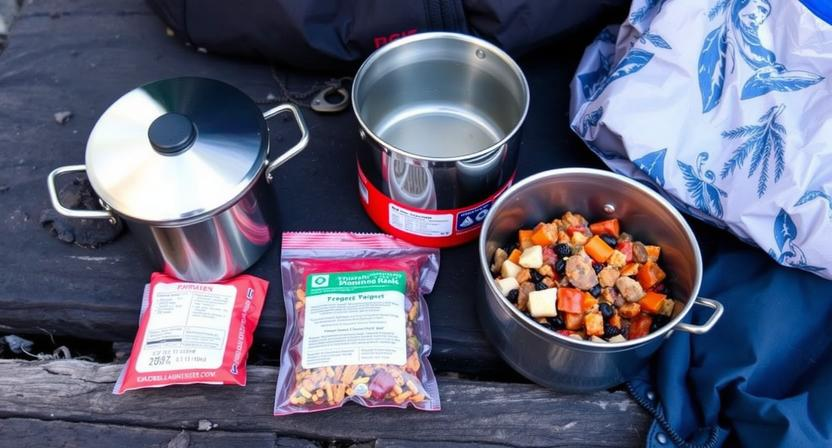
Backpacking food planning comes down to calories per ounce. You want to aim for at least 100 calories per ounce (ideally 120–130). Foods that hit this mark:
- Nuts and nut butters (peanut butter, almond butter packets)
- Hard cheeses (Babybel, aged cheddar)
- Olive oil (add to anything for calorie density)
- Salami and hard sausages
- Freeze-dried meals (Mountain House, Good To-Go, Heather’s Choice)
- Instant oatmeal, instant mashed potatoes, ramen
- Protein bars with high calorie density (Clif Builder’s, RX Bars)
Aim for 1.5–2 lbs of food per person per day on a moderate-activity trip. Most weekend hikers pack 3–4 lbs per day without realizing it. That extra food weight adds up fast.
Water — The Heaviest Consumable
Water weighs 2.2 lbs per liter. Carrying 3 liters when a water source is 0.5 miles ahead is dead weight. Smart water strategies:
- Use a water filter instead of carrying all your water. The Sawyer Squeeze (3 oz) and the BeFree filter (3 oz) are ultralight, highly reliable, and allow you to drink from streams and lakes along the way. Source filtration = less water weight carried.
- Use a soft flask or Smartwater bottle instead of a heavy Nalgene. A 1-liter Smartwater bottle weighs 1.4 oz. A Nalgene weighs 6.2 oz. That’s 5 oz saved per bottle.
- Know your water sources before the hike. Apps like Guthook (now FarOut) map reliable trail water sources so you can plan exactly how much water you need to carry between points.
Kitchen Gear: Cut It Down
The classic heavy camp kitchen includes a camp stove, fuel canister, pot, pan, spatula, mug, bowl, and spork. Here’s the lightweight version:
- Stove: BRS-3000T canister stove (25 grams — yes, really) or an Esbit solid fuel tablet system (ultra-minimalist, no moving parts).
- Pot: Toaks 750ml titanium pot (3.2 oz). That’s your pot AND your bowl AND your mug.
- Utensil: One titanium long spoon. That’s it.
- No-cook option: Many ultralight hikers skip the stove entirely on trips under 3 days. Cold-soaking (soaking meals like ramen or couscous in a jar) saves stove + fuel weight entirely.
Safety, Hydration, and Trail Realities When Going Lighter
Going lighter does NOT mean going unsafe. There’s a clear and important line between cutting luxury weight and cutting safety essentials. Here’s what never comes out of a responsible pack, regardless of how ultralight you’re going:
- ✅ Navigation: Downloaded offline maps (on your phone) + a physical map and compass. GPS devices like the Garmin inReach Mini 2 double as a satellite communicator — worth the weight on any remote trail.
- ✅ First aid kit: Keep it trimmed to the essentials — blister care, wound closure strips, pain reliever, antihistamine, moleskin, SAM splint, small roll of duct tape. Skip the kitchen sink.
- ✅ Emergency shelter: A SOL Emergency Bivy weighs 3.5 oz and can save your life in an unexpected night out. Non-negotiable.
- ✅ Headlamp: The Black Diamond Spot 400 weighs 3.2 oz and is bright enough for any situation. Carry it even on day hikes.
- ✅ Sun protection: Lightweight sun hoody (UPF 50+) instead of heavy sunscreen bottles. Saves weight, provides all-day protection.
- ✅ Fire starting: A lighter + one backup method (Bic lighter is 1 oz, waterproof matches are 0.5 oz).
Hydration Reality Check on the Trail
Dehydration is the #1 cause of hiking emergencies, according to NPS emergency response data (nps.gov). When you’re going lighter and moving faster, you sweat more — meaning you need to drink more. The general rule is 0.5 liters per hour of moderate hiking, and more in heat or at elevation. Electrolyte packets (like Liquid IV or Skratch) weigh almost nothing and dramatically help with performance and safety. Add them to your water when the miles get long.
Weather and Seasonal Safety — Don’t Cut Corners Here
In 2026, wildfire smoke, early monsoon activity in the Southwest, and increasingly unpredictable snowpack in the Cascades and Sierra Nevada mean that weather preparedness is more important than ever. Check the NPS weather pages, NOAA forecasts, and park-specific alerts before every trip. A light rain shell is non-negotiable. Know the signs of hypothermia (shivering, confusion, poor coordination) and how to treat it even if you’re running a super-light kit.
The Full Pack Audit: A Category-by-Category Weight Reduction Plan
The best tool for going lighter is a gear spreadsheet. Programs like LighterPack (lighterpack.com) are free, easy to use, and help you see exactly where your weight is coming from. Here’s a category-by-category breakdown of typical weight savings available to most hikers:
| Category | Average Heavy Hiker | Lightweight Target | Potential Savings |
|---|---|---|---|
| Backpack | 5 lbs | 1.5–2 lbs | 3–3.5 lbs |
| Tent/Shelter | 5–7 lbs | 1.5–2.5 lbs | 3–5 lbs |
| Sleeping Bag | 4–5 lbs | 1.5–2 lbs (quilt) | 2–3 lbs |
| Clothing | 6–8 lbs | 2–3 lbs | 3–5 lbs |
| Kitchen | 3–4 lbs | 0.5–1 lb | 2–3 lbs |
| Water system | 2 lbs (heavy bottles) | 0.5 lbs (Sawyer + soft flask) | 1.5 lbs |
| First aid / misc. | 2–3 lbs | 1–1.5 lbs | 1–1.5 lbs |
| Total Base Weight | ~27–35 lbs | ~8–14 lbs | Up to 20+ lbs |
Note: These are general ranges. Your actual savings will vary by trip type, season, and personal choices. Even cutting 5–10 lbs makes a huge real-world difference on the trail.
Budget Breakdown: What Does Going Lighter Actually Cost?
This is the question most people are afraid to ask, so I’ll be direct: ultralight gear can be expensive, but it doesn’t have to be. There are three realistic budget tiers for going lighter, and all three work.
Tier 1 — Budget Lightweight ($0–$200 total upgrades)
This approach focuses on gear you probably already own + a few affordable swaps.
- Replace heavy boots with trail runners you may already own: $0
- Switch water bottles to Smartwater bottles: $2–$5
- Add a Sawyer Squeeze filter: $30–$35
- Remove 20–30% of clothing from your pack: $0
- Replace heavy snacks with calorie-dense foods: $0–$10 extra
- Add a BRS-3000T stove: $18–$25
- Download LighterPack and do a full audit: Free
Realistic weight savings from Tier 1: 5–10 lbs. This tier is where almost every hiker should start.
Tier 2 — Mid-Range Lightweight ($200–$800 total upgrades)
- Lightweight tent (Big Agnes Copper Spur HV UL2): $450–$550
- Lightweight sleeping bag or quilt (Enlightened Equipment): $200–$350
- Lightweight framed pack (REI Flash 45 or Osprey Exos): $160–$250
Realistic weight savings from Tier 2: 10–15 lbs vs. heavy traditional setup.
Tier 3 — Full Ultralight ($800–$2,000+ total upgrades)
- Zpacks Duplex trekking pole tent: $650
- Enlightened Equipment quilt (850 fill): $300–$400
- Zpacks Arc Haul or Gossamer Gear Gorilla: $350–$500
- Titanium cookware, ultralight shelter accessories: $100–$200
Realistic weight savings from Tier 3: 15–20+ lbs vs. traditional setup. Base weights under 10 lbs become achievable.
Budget traveler tip: Gear Swap communities on Reddit (r/ULgeartrade) and Facebook (Ultralight Backpacking Gear Swap) regularly offer ultralight gear at 40–60% off retail. Many hikers buy once, use twice, and resell — so the effective cost of quality gear is much lower than sticker price.
Common Mistakes and Pro Tips from Recent Hikers (2025–2026)
These insights are pulled from AllTrails reviews, Reddit hiking threads, and hiker forums from the past 12 months. These are real patterns from real hikers:
Mistake #1: Treating the “Just In Case” Category Like a Safety Net
The most frequently cited mistake from experienced hikers: packing items for unlikely scenarios. The “just in case” mindset leads to a spare set of clothes “in case it rains,” a camp pillow “in case the sleeping pad isn’t enough,” a full first aid kit “in case of anything.” Trim the just-in-cases to genuine probability. A rain jacket is probable. A knee brace for your hypothetically-bad knee is not. Pack for what’s likely, prepare for the rest with skills.
Mistake #2: Not Knowing Your Gear’s Actual Weight
Shocking number of hikers have never actually weighed their gear. A kitchen scale is all you need. Weigh every single item. You’ll almost certainly find “mystery weight” — things you’ve been carrying for years that you don’t even remember packing. Common examples from Reddit users: extra tent stakes, a full-size lantern “just in case,” multiple pairs of gloves, three backup phone chargers.
Mistake #3: Upgrading Gear Before Auditing Behavior
Buying a $500 ultralight tent before auditing what’s already in your pack is backwards. A thorough pack audit — removing unnecessary items — is free and often saves more weight than any single gear purchase. Audit first, upgrade second.
Mistake #4: Going Too Light Too Fast
Multiple r/ultralight posts in 2025 featured hikers who went fully ultralight on a first backpacking trip and had miserable experiences — cold because their quilt was rated too warm, wet because they trusted a tarp but didn’t know how to set it up, exhausted because a frameless pack with poor load transfer destroyed their hips. Go lighter incrementally. Take 5 lbs off this trip. Take another 3 lbs off next time.
Mistake #5: Ignoring Fit in Favor of Weight
A poorly-fitted 2-lb pack will feel worse than a well-fitted 4-lb pack. Pack fit — hip belt placement, torso length, shoulder harness angle — matters enormously for comfort and injury prevention. Always try packs on with weight in them before buying, or order from retailers with good return policies.
Pro Tips Straight From the Trail (2025–2026 Community Insights)
- “Repackage everything.” Transfer food out of heavy packaging into ziplock bags. It’s tedious but can save 0.5–1 lb of packaging weight alone. (r/ultralight, March 2026)
- “Cut the tags.” Literally cut clothing tags. Every ounce you save without spending money is a win. (AllTrails forum)
- “Toilet kit minimalism.” One small squeeze of Dr. Bronner’s soap serves as body wash, dish soap, and laundry. Replace full-size items with travel sizes. (TripAdvisor hiking forums, 2025)
- “Use your phone, not a separate GPS.” The Gaia GPS or FarOut app on your existing phone replaces a standalone GPS device. Just bring an extra battery bank if you’re going multi-day. (r/CampingandHiking, 2025)
- “Trekking poles are worth it.” They reduce knee stress on descents, can pitch non-freestanding shelters, and help with balance on creek crossings. Lightweight carbon poles (Black Diamond Distance Carbon) weigh under 10 oz per pair. (r/backpacking)
Frequently Asked Questions — How to Make Your Hiking Backpack Lighter
Q1: What is a good total pack weight for a beginner hiker?
For a beginner on a day hike, aim for under 10 lbs total (including water). For a beginner on an overnight backpacking trip, under 25 lbs total is a comfortable starting goal. As you gain experience and optimize your gear, shooting for under 20 lbs total — even on multi-day trips — becomes realistic.
Q2: What is “base weight” and how do I calculate it?
Base weight is everything in your pack excluding consumables — meaning no food, water, or fuel. It’s the best metric for comparing your kit to others and tracking your progress over time. To calculate it, weigh every item in your pack on a kitchen scale, list them in a spreadsheet or on LighterPack, and add them up. Everything that doesn’t get consumed goes into your base weight.
Q3: Are ultralight packs comfortable for people with back problems?
This depends heavily on the specific pack and how well it fits. Frameless ultralight packs are generally not recommended for people with back issues or those carrying heavy loads. However, many lightweight framed packs (like the Osprey Exos or Granite Gear Crown2) offer excellent support at under 2.5 lbs. Talk to a gear specialist at an REI or similar store and do a fitting before buying.
Q4: Can I go lightweight on a budget, or does it require expensive gear?
Absolutely, you can go lighter without spending much. Start with a pack audit (free), replace water bottles with Smartwater bottles ($2), add a Sawyer Squeeze filter ($30), and remove clothing you don’t need. That alone can save 5–8 lbs at minimal cost. Gear upgrades are helpful but they’re step two, not step one.
Q5: Is it safe to go ultralight solo?
Yes, with the right preparation. The key is that going ultralight doesn’t mean going unsafe — it means cutting luxury weight, not safety weight. A solo ultralight hiker should always carry: navigation tools, an emergency shelter (SOL bivy), a communication device (ideally with satellite capability), a headlamp, and first aid essentials. File a trip plan with someone before you go.
Q6: What’s the single biggest weight savings for most hikers?
For most people, the biggest single savings comes from replacing a heavy traditional tent with a lightweight alternative (trekking-pole tent or bivy). This alone can save 3–5 lbs. The second biggest win is typically the sleeping bag — swapping to a well-rated down quilt can save another 2–3 lbs.
Q7: How do I handle bear canisters? They’re heavy.
Bear canisters are required in many national parks (Yosemite, Kings Canyon, Sequoia, and others — always check nps.gov for your specific destination). The lightest approved canister in 2026 is the Bearikade Blazer at 22 oz, though it runs around $295. The BearVault BV500 is a budget-friendly option at around $80 and weighs 2 lbs 9 oz. In areas where a bear hang is allowed (always verify), an Ursack AllWhite bag at 7.6 oz is a popular lightweight option.
Q8: Are trail runners actually safe for all hiking terrain?
For most 3-season hiking on maintained trails — yes. For technical scrambles, loose talus, or multi-day alpine routes with heavy packs, ankle support from a mid or high-cut boot becomes more valuable. Many experienced hikers run trail runners on 90% of terrain and only use boots for truly technical objectives. The Hoka Speedgoat 6 and Salomon Speedcross 6 are top-rated in 2026 for mixed terrain.
Q9: How do I pack lighter for hiking with kids?
Family hiking weight management is its own skill. Key strategies: have kids carry their own small pack (toddlers: 1–2 lbs; older kids: 10% of body weight max), use a lighter shelter designed for 2–3 people (Big Agnes Copper Spur HV UL3 at 3.5 lbs is a great family option), plan water sources carefully so you carry less water, and accept that a family kit will never be ultralight — aim for comfortable and efficient instead.
Q10: What’s the best free resource for planning a lightweight kit?
LighterPack.com (free gear list tool) and the r/ultralight subreddit wiki are the gold standard free resources. Andrew Skurka’s website (andrewskurka.com) has excellent free guides on gear systems and meal planning. For water source planning, the FarOut app (free basic version) is invaluable on the trail.
Q11: What do I do if my pack still feels too heavy mid-hike?
This is something hikers call a “trail dump” situation — and it’s more common than you’d think. If your pack is killing you mid-hike, do a quick honest audit of what’s in your bag. Anything non-essential that won’t harm you to leave behind (extra clothes, duplicate items, extra snacks you won’t eat) can be cached at a campsite or turned back to the trailhead with a day-hiker who’s returning. Many hikers mail themselves “bounce boxes” on longer trips — sending forward gear they don’t need for the next section. Know your turn-around point and don’t push through pain that could become injury.
Q12: How does pack weight affect permit requirements or trail difficulty ratings?
Permit requirements are set by the park or land management agency and don’t change based on pack weight. However, trail difficulty is absolutely affected by what you carry. A trail rated “moderate” can feel like a “strenuous” trail with a 40-lb pack. AllTrails ratings, NPS descriptions, and ranger recommendations are typically based on average conditions — factor in your pack weight when assessing whether a trail is right for you.
Read Also: Can a Beginner Hike the Grand Canyon Easily?
Conclusion: A Lighter Pack Changes Everything
Here’s what hikers consistently say after their first truly lightweight trip: it doesn’t feel like hiking anymore — it feels like walking. The trail opens up. You move faster, you’re less fatigued at camp, your knees stop screaming on the downhills, and you actually enjoy the views instead of gritting through them.
Learning how to make your hiking backpack lighter isn’t a one-time event — it’s an ongoing process of honest evaluation, smart choices, and gradually building experience. You don’t have to go ultralight on trip one. Start with the free steps: do a pack audit, remove anything you didn’t use last trip, switch to lightweight water bottles, and leave the “just in case” pile at home. Those changes alone will transform your experience.
From there, work your way through the Big Three when your budget allows. Track your gear weights on LighterPack. Read trip reports. Ask questions in trail communities. Every hiker who goes light started exactly where you are right now — reading guides, second-guessing every item, wondering if it’s really worth it.
It is. I promise.
If this guide helped you, share it with a hiking buddy who needs it — and drop a comment below with your biggest pack weight win. I love hearing from readers about what worked for them. And if you’re planning a specific park trip and want help dialing in your gear list for that terrain and climate, browse through our park-specific guides here on parktrailsguide.com — we’ve got you covered.
Happy — and lighter — trails. 🌲
— Rubie Rose, parktrailsguide.com | Last updated: May 2026
Sources consulted: National Park Service (nps.gov) park-specific pages and safety guidelines; NOAA weather data; Andrew Skurka’s backpacking resource library (andrewskurka.com); LighterPack.com community gear lists; AllTrails trail reviews and gear forums (2025–2026); Reddit communities r/ultralight, r/backpacking, and r/CampingandHiking (2025–2026 threads); gear manufacturer specifications from Osprey, Big Agnes, Zpacks, Enlightened Equipment, Gossamer Gear, and others.
