
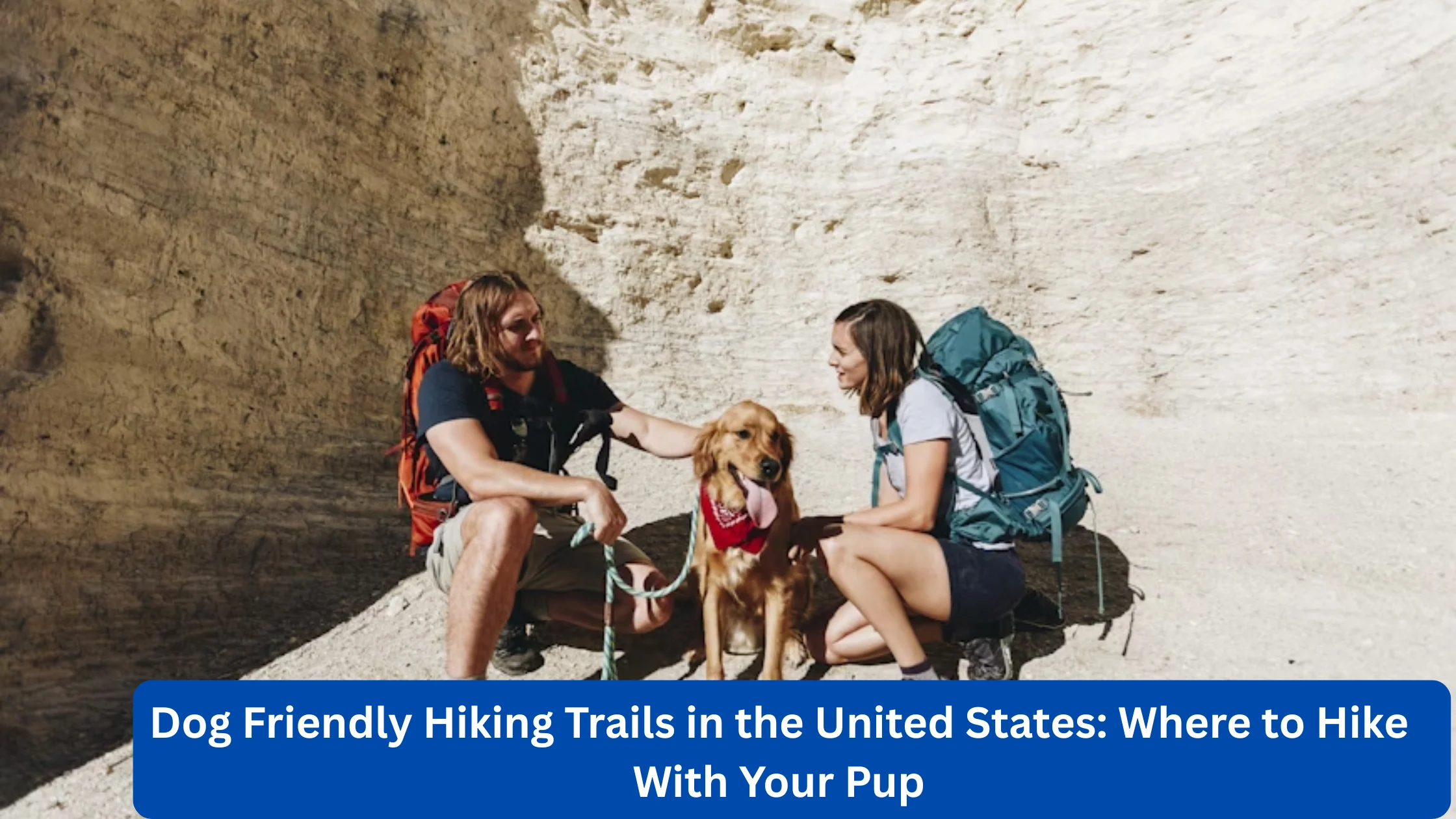
Introduction: Your Dog Is More Ready for This Than You Are
You have been staring at your laptop for six straight hours. Your dog has been staring at you for six straight hours. You are both completely over it. The difference is that your dog has been waiting with the specific unblinking patience of a creature that genuinely believes today might finally be the day you do something interesting, while you have been refreshing your email and pretending the third Starbucks of the afternoon counts as a personality. Here is the thing. Your dog is right. Today should be the day. You have a whole country full of trails that not only allow dogs but were basically made for them. This Guide is going to make sure you find the right one and that the whole experience does not end with you apologizing to a ranger.
Before You Hit the Trail: The Stuff This Guide Is Not Going to Let You Skip
Most dog hiking guides jump straight to the trail list and skip the part where they tell you that half those trails have rules your dog will violate within the first ten minutes if you do not prep properly. This Guide is not doing that. Here is what you actually need to know before you load the dog into the car and drive four hours to a trailhead.
Know the leash rules before you arrive, not when you are already there.
National parks have some of the strictest dog rules in the public land system. Most national parks require dogs to be on a leash no longer than six feet at all times. Many only allow dogs on paved roads, in campgrounds, and in parking areas, which means the actual trails are off-limits to your dog entirely. Yosemite, the Grand Canyon, Yellowstone, and Glacier are examples of parks where your dog cannot accompany you on most backcountry trails. This is not a minor inconvenience. It is the park policy. Knowing this before you make a reservation saves everyone a frustrating drive.
National forests, Bureau of Land Management lands, and state parks are generally much more dog-friendly than national parks. The rules vary but the baseline is usually dogs allowed on leash, which is workable. Off-leash areas exist on some public lands but they are the exception rather than the rule.
Fitness level matters for dogs too.
A dog that spends most of its time on apartment walks is not ready for a 12-mile mountain hike the first time out, regardless of how enthusiastic it looks at the trailhead. Dogs do not pace themselves. They run until they cannot and then they expect you to carry them. A 60-pound Labrador that has hit its wall three miles from the parking lot is a logistical situation. Build up trail distance gradually with your dog the same way you would with a human who has been mostly sedentary.
The paw protection conversation is real.
Hot pavement and desert rock can burn dog paws quickly. Rough granite and sharp talus cause abrasions that do not show up immediately but get painful fast. Dog boots exist and some dogs tolerate them and some dogs perform a theatrical protest the first time you put them on. Musher’s Secret paw wax is a less controversial alternative that provides a protective barrier without the boot drama. Check your dog’s paws at rest stops and after the hike. Cracked or bleeding pads are a signal to cut the day short.
What to pack for your dog that most people forget:
• Water and a collapsible bowl: Dogs cannot hydrate from streams safely without risk of giardia and other parasites. Bring enough water for your dog at the same ratio you bring for yourself.
• Dog-specific first aid supplies: Paw bandages, tweezers for ticks and splinters, and Benadryl in the correct weight-based dose for bee stings.
• Poop bags, more than you think: Leave No Trace applies to dog waste too. Pack it out. All of it. The trail is not a designated bathroom.
• A dog ID tag with your cell number: Cell service is often nonexistent on trails but if your dog gets separated from you near a trailhead, a tag with your number is the fastest path back.
• Tick prevention and post-hike tick check: Lyme disease is endemic across most of the country. Run your hands through your dog’s coat after every trail, especially in the ears, between the toes, and around the collar.
Now that the responsible section is done, here are the trails.
The Best Dog-Friendly Hiking Trails in the West: Your Dog Is About to Have the Best Day of Its Life
The American West has more public land than any other region, which means more places where your dog is welcome and more terrain that will make your dog’s brain completely short-circuit with joy. The smell situation alone will keep them occupied for hours.
1. Mount Rainier National Park, Wonderland Trail Sections, Washington
Distance: Varies by section, full loop is 93 miles. Difficulty: Moderate to strenuous. Dog policy: Leashed dogs allowed on paved roads and in campgrounds. Several trail sections accessible to dogs.
Mount Rainier is one of the few national parks that allows dogs on some of its trails, which automatically makes it exceptional in the national park category. The Wonderland Trail sections near the campgrounds and the Carbon River area allow leashed dogs. The scenery here is everything: old-growth rainforest, glacial rivers, subalpine meadows, and a 14,411-foot volcano that dominates the horizon regardless of where you are standing.
Your dog will try to drink from every stream it encounters. Carry enough water to give them an alternative. The Carbon River Rainforest loop is one of the more accessible and dog-friendly sections, with dense temperate rainforest and relatively flat terrain. Mud is a constant presence in the Carbon River area so unless you enjoy vacuuming your car interior for thirty minutes after every trip, bring an old towel.
Trail Tips for Dogs at Rainier:
• Check current dog regulations on nps.gov/mora before visiting as rules vary by area within the park
• Carbon River area offers the most dog-accessible trail mileage
• Bring a dedicated dog towel for post-hike paw cleaning
• Leashes must be six feet or shorter at all times on park trails
• Bears and cougars are present, keep your dog close and do not let them investigate wildlife
2. Deschutes National Forest, Oregon
Distance: Varies by trail, dozens of options from 2 to 20 miles. Difficulty: Easy to strenuous. Dog policy: Dogs allowed on leash on all national forest trails.
Deschutes National Forest in central Oregon is the kind of place that makes people reconsider their housing decisions. Volcanic peaks, high desert pine forest, crater lakes, and lava fields within a relatively compact area. Dogs are allowed on leash on all national forest trails here, which immediately makes it more welcoming than most national parks. The trail options range from easy walks around Sparks Lake to more demanding routes on the Three Sisters Wilderness.
The Todd Lake trail is an especially good dog hike because it combines easy terrain with a mountain lake that most dogs will attempt to swim in immediately regardless of the temperature. In early summer the water is snowmelt-cold, which your dog will not care about at all. Fall is the best season here with golden larch color and almost no crowds compared to summer. The town of Bend is 25 miles west and has every service you could need plus approximately one coffee shop per 40 residents.
Trail Tips for Deschutes National Forest:
• A Northwest Forest Pass is required for parking at most trailheads
• Three Sisters Wilderness requires a free self-issue permit at the trailhead for both day hikes and overnight trips
• Volcanic rock is sharp on dog paws, check pads regularly on lava field trails
• Water sources are present but require filtration, bring your dog’s water
• Rattlesnakes are present on the drier east-facing slopes, keep your dog on leash and close
3. Los Padres National Forest, California
Distance: Varies, hundreds of miles of trails throughout the forest. Difficulty: Easy to extremely strenuous. Dog policy: Dogs allowed on leash on national forest trails, not permitted in some wilderness areas.
Los Padres National Forest runs along the Central Coast of California from Ventura County to Monterey and it is the escape hatch for every dog owner in Los Angeles and the Bay Area who has exhausted the local options. The Sespe Wilderness and the Ventana Wilderness within the forest have trails through chaparral, oak woodland, and coastal redwood zones that represent a completely different California from the beach and the freeway that most people think of.
The Pine Mountain Loop near Ojai is one of the best dog hikes in Southern California with panoramic views across the Sespe Creek drainage. The Santa Barbara Backcountry is equally strong with trails through the San Rafael Wilderness. Summer temperatures in the inland sections can be extreme. Morning starts are mandatory from June through September. Rattlesnakes are genuinely very active in Los Padres from spring through fall and this is not a warning to take lightly if your dog has not had the snake avoidance training.
Trail Tips for Los Padres National Forest:
• Adventure Pass required for parking at most day use areas
• Check fire closure maps before visiting as closures are frequent and change seasonally
• Rattlesnake awareness is essential, keep dogs on a short leash on all brushy trails
• Water sources are seasonal and unreliable, carry all water for you and your dog
• The Condor Trail is a 400-mile long-distance route for ambitious multi-day dog hikers

4. Red Rock Canyon National Conservation Area, Nevada
Distance: Varies, from 1-mile scenic loops to 15-mile full day hikes. Difficulty: Easy to strenuous. Dog policy: Dogs allowed on leash on all trails.
Red Rock Canyon is 17 miles west of Las Vegas and it is the answer to the question of what to do with your dog when you are in Las Vegas and feel guilty about leaving them in the hotel. The conservation area has more than 30 miles of trails through spectacular red and orange sandstone formations, with the Spring Mountains as a backdrop and the Mojave Desert ecosystem doing its best work at every turn.
The Calico Hills area is the most visually dramatic starting point with scramble routes across red sandstone domes that your dog will navigate with embarrassing ease compared to how you are doing on the same terrain. The Moenkopi Loop is a good accessible option for dogs that are newer to trail hiking. Summer temperatures in Las Vegas regularly exceed 110 degrees and the rock surfaces get significantly hotter than the ambient temperature. This is a fall, winter, and spring destination only for dogs. Do not take your dog here in July and June and think an early start makes it okay.
Trail Tips for Red Rock Canyon:
• Timed entry reservations required during peak season, book at recreation.gov
• Dogs allowed on all trails on a six-foot leash
• Rock surfaces can reach 150 degrees in summer, avoid completely from June through August
• Desert kit foxes and coyotes are active, keep dogs under control
• Carry at minimum one liter of water per hour of hiking for your dog in warm conditions
5. Columbia River Gorge National Scenic Area, Oregon and Washington
Distance: Varies by trail, dozens of waterfall and ridgeline options. Difficulty: Easy to strenuous. Dog policy: Dogs allowed on leash on most trails, some restrictions in Oregon state parks within the area.
The Columbia River Gorge is one of the most spectacular landscapes in the Pacific Northwest and the dog-friendly trail options here are exceptional. The Historic Columbia River Highway State Trail is a multi-use paved path along the river that is ideal for dogs who are newer to trail walking. The upper trails on the Washington side including Dog Mountain, which is as on-brand a trail name as you will find anywhere, offer serious elevation and panoramic views.
Dog Mountain in Washington is a 7-mile round trip hike with 2,800 feet of elevation gain and it is one of the most popular dog hikes in the entire Pacific Northwest. The wildflower meadows on the summit in late April and May are extraordinary. The trail is steep and your dog will be significantly more energetic than you for the first four miles and then switch emotional states on you without warning. It is a full experience.
Trail Tips for Columbia River Gorge:
• Dog Mountain is on the Washington side, accessed from SR-14 with a Northwest Forest Pass required
• Oregon state parks within the gorge have stricter dog rules, check individual park pages
• The trail is very popular on spring weekends, arrive by 7am for parking
• Poison oak is present on many gorge trails, check your dog thoroughly after the hike
• The waterfall trails on the Oregon side allow dogs on leash, Multnomah Falls Trail included
The Best Dog-Friendly Hiking Trails in the East and Southeast: Old Forests, Waterfalls, and Very Confused Squirrels
The East has a dog hiking culture that is different from the West. The trails are older, the vegetation is denser, and the number of interesting smells per square mile is genuinely higher because of the moisture and the biodiversity. Your dog is going to be in sensory overload in a way that the drier West sometimes cannot match. This is not a complaint.
6. Pisgah National Forest, North Carolina
Distance: Hundreds of miles of trails throughout the forest. Difficulty: Easy to strenuous. Dog policy: Dogs allowed on leash on all national forest trails.
Pisgah National Forest in western North Carolina is a legitimate contender for the best dog hiking destination in the entire Southeast. The forest covers 500,000 acres of the Blue Ridge Mountains and contains more waterfalls per mile of trail than almost anywhere in the East. Dogs are allowed on leash on all national forest trails with no additional restrictions beyond the standard rules.
The Black Balsam Knob area offers above-treeline walking on the Blue Ridge Parkway corridor with wide-open views and cool temperatures even in summer. The MST or Mountains-to-Sea Trail passes through Pisgah and provides long-distance options for dogs with serious mileage in their legs. The Daniel Boone Scout Trail loop near the town of Brevard is one of the best moderate day hike options, passing through old-growth forest with river crossings that most dogs treat as the highlight of the entire day.
Trail Tips for Pisgah National Forest:
• No parking fees required for most forest trailheads
• Black bears are very active in this forest, especially in fall, keep dogs on a short leash
• The forest receives significant rainfall, waterproof gear for you and booties or paw wax for your dog are useful
• Brevard and Asheville are the closest service towns with food, gear, and lodging
• Tick populations are high in Pisgah, use prevention and do a full body check after every hike
7. Shenandoah National Park, Virginia
Distance: Over 500 miles of trails in the park. Difficulty: Easy to strenuous. Dog policy: Dogs allowed on leash on most park trails, a handful of trails near visitor centers are exceptions.
Shenandoah is one of the more dog-friendly national parks in the system, which is both impressive given national park policies generally and slightly misleading because the leash rule is strictly enforced. Dogs are welcome on the vast majority of the park’s 500 miles of trails, which means you have real options rather than a token path near the parking lot.
The Appalachian Trail passes through Shenandoah for about 100 miles and dogs are allowed on the AT through the park on leash. The Stony Man Trail near Skyland Resort is one of the most accessible options and offers summit views with relatively modest effort. Fall foliage in Shenandoah is legitimately one of the best displays in the East and hiking the park in October with a dog that is equally overwhelmed by the smell of fallen leaves is a specific kind of excellent afternoon that costs almost nothing.
Trail Tips for Shenandoah:
• A few trails near Dickey Ridge and Byrd visitor centers do not allow dogs, check nps.gov/shen for the specific list
• Skyline Drive entrance fee required, the America the Beautiful pass covers this
• Deer tick populations are high throughout the park, prevention and post-hike checks are essential
• Bears are very active in Shenandoah, do not let your dog investigate wildlife
• The AT through Shenandoah is busy on weekends, weekday visits are significantly quieter
8. Chattahoochee National Forest, Georgia
Distance: Over 430 miles of trails. Difficulty: Easy to strenuous. Dog policy: Dogs allowed on leash on all national forest trails.
Chattahoochee National Forest in the mountains of northern Georgia is the dog hiking resource that every Atlanta dog owner should already know about and many do not. The forest covers most of the Georgia portion of the Blue Ridge Mountains and the trail options range from short waterfall walks to multi-day backcountry routes. The Appalachian Trail enters Georgia through Chattahoochee and the southern terminus at Springer Mountain is accessible as a day hike from the USFS 42 road.
The Anna Ruby Falls Trail near Helen is one of the most accessible waterfall hikes in the forest and it is paved for most of its length. The DeSoto Falls Trail is a 4-mile round trip with two tiers of waterfalls that most dogs will try to access from every possible angle. Summer in north Georgia is hot and humid but the higher elevations in the forest are noticeably cooler. The gap between Atlanta and the mountains is only about 90 minutes and the difference in temperature and trail quality is extreme.
Trail Tips for Chattahoochee National Forest:
• No fee for most trail access in the national forest
• Copperheads and timber rattlesnakes are present on all trails from spring through fall
• Humidity is extreme in summer, start early and carry significantly more water than you think necessary
• The Cohutta Wilderness is a designated wilderness area within the forest with excellent dog-friendly backcountry routes
• Dahlonega and Blue Ridge are the nearest service towns for food and supplies

Midwest and Mountain West Dog Hiking Gems That Deserve to Be on Your List
The middle of the country does not get nearly enough credit in the dog hiking conversation. National forests in the Midwest are uncrowded, well-maintained, and genuinely accessible in a way that the more famous western destinations are not. And the Mountain West outside the national park boundaries has some of the best dog-friendly terrain in the country.
9. Shawnee National Forest, Illinois
Distance: Over 170 miles of trails. Difficulty: Easy to moderate. Dog policy: Dogs allowed on leash on all national forest trails.
Shawnee National Forest in southern Illinois is the trail system that most people in Chicago have driven past on the way to somewhere else without stopping, and that is a mistake they should correct. The Garden of the Gods is a rock formation area with bizarre sandstone monoliths rising out of forested ridgelines that looks like it belongs in Arizona and is somehow in Illinois. The Rim Rock National Recreation Trail passes through ancient bluffs above the Ohio River. Dogs are allowed on all trails on a leash.
The forest gets particularly good in fall when the oak and hickory canopy turns and the crowds that summer brings to the cliff areas thin out. The terrain is moderate enough for dogs of average fitness but varied enough to be genuinely interesting. For Midwestern dog owners who do not want to drive to Colorado for a decent trail experience, Shawnee is the answer that has been sitting 6 hours south of Chicago the whole time.
Trail Tips for Shawnee National Forest:
• Garden of the Gods is the most popular area and fills on fall weekends, arrive early
• Copperheads are present on rocky trails, keep dogs away from rock crevices
• No entrance fees for national forest trail access
• Rim Rock Trail is one of the most scenic short options at 3.5 miles
• The forest has two designated wilderness areas, the Bald Knob and Burden Falls, with more solitude and wilder terrain
10. White Mountain National Forest, New Hampshire
Distance: Over 1,200 miles of trails. Difficulty: Easy to extremely strenuous. Dog policy: Dogs allowed on leash throughout the national forest, AMC huts allow well-behaved dogs at hut master discretion.
White Mountain National Forest in New Hampshire is the dog hiking equivalent of a graduate program. The trails are serious. The weather changes without warning. The terrain above treeline is fully exposed and windy and gives zero consideration to how good you felt at the bottom. For dogs and owners who have been training up through easier terrain and are ready for a genuine challenge, the Whites are the destination.
The Franconia Notch area has some of the most accessible big-mountain terrain in the Northeast and dogs are allowed on the trails. Echo Lake Beach near the notch is one of the few places in the forest where dogs can legally swim. The Crawford Notch area offers more moderate options including the Arethusa Falls Trail which at 2.6 miles delivers the tallest waterfall in New Hampshire and the kind of dog reaction to said waterfall that justifies the whole drive up. AMC huts on the high routes allow dogs at the discretion of the hut master, which means calling ahead is worth doing if you are planning a multi-day trip.
Trail Tips for White Mountain National Forest:
• A White Mountain National Forest Recreation Pass is required for parking at most trailheads
• Above-treeline trails are exposed and weather can change rapidly, have a plan to descend quickly
• AMC huts can be called ahead to confirm dog policy for specific huts
• Black flies in late May and early June are significant, bring insect protection for both you and your dog
• The fall foliage season is the busiest time, weekday visits in September and October are strongly recommended
The Complete Dog Hiking Guide: Rules, Tips, and the Stuff That Will Make You a Better Trail Partner for Your Dog
You have the trail list. You have the location tips. Now here is the Guide section that consolidates everything into a practical framework for making every dog hiking trip genuinely good rather than just technically completed.
The leash rule is not optional and it is not a suggestion.
Off-leash hiking on trails where dogs are required to be on leash is the fastest way to get fined, get into a wildlife incident, and contribute to trails becoming dog-unfriendly for everyone else. The people who let their dogs run off-leash on leash-required trails and say my dog is friendly when it charges another dog or a child are the reason dog restrictions exist in the first place. Be the person whose dog behavior keeps trails accessible. Leash your dog.
Wildlife encounters are your responsibility to manage.
Dogs that chase wildlife cause stress to animals that are trying to survive, disrupt habitat, and occasionally trigger protective responses from animals like moose, elk, and bears that can injure or kill a dog. Keep your dog on a leash in wildlife habitat. Do not let them investigate burrows, dens, or anything dead on the trail. A dog that finds a dead animal and rolls in it is having the best moment of its entire life. You are not.
Water on the trail is not the same as clean water.
Giardia, leptospirosis, and blue-green algae are all present in trail water sources throughout the country. Giardia causes severe gastrointestinal illness in dogs and takes weeks to resolve. Leptospirosis is a bacterial infection that can cause organ failure. Blue-green algae blooms in warm standing water can be fatal within hours. Carry water for your dog. This is one of the most important things in this entire Guide and it is also the most commonly ignored.
The leave no trace rules include your dog’s waste entirely.
Dog waste bags on a trail and then left on the side of the trail are somehow worse than not bagging the waste at all because they add plastic pollution to the organic waste problem. Bag it and pack it out to a trash receptacle. There is no partial credit in Leave No Trace.
Post-hike recovery matters for dogs.
After a significant hike, dogs need water, food, rest, and a paw check just like human athletes need recovery. Check between the toes for cuts, splinters, or embedded debris. Check the pads for cracking or burns. Look for any limping that might indicate a joint or muscle issue that was not obvious during the hike but becomes apparent once the adrenaline wears off. A dog that is significantly limping the day after a long hike should see a vet rather than go on another long hike the next weekend.
The breed and age reality.
Not all dogs are built for the same terrain. Brachycephalic breeds like bulldogs, pugs, and Boston terriers overheat faster and have a reduced aerobic capacity that makes long or strenuous hikes genuinely risky. Senior dogs with joint issues may do better on flatter terrain regardless of how willing they are at the trailhead. Giant breeds can have joint concerns that make sustained downhill travel hard on their structures even if they are otherwise healthy. Know your dog’s physical profile and pick trails accordingly. The best hike for your dog is the one that ends with a tired dog that feels good, not a dog that pushed too hard and pays for it for three days.
Conclusion: Your Dog Already Knows This Was a Good Idea. Now You Do Too.
You made it to the end of a 4,000-word Guide about hiking with your dog, which means either you are genuinely committed to giving your dog the best possible outdoor experience or you were already supposed to be doing something else and this was more interesting. Either way, you now have the trails, the rules, the gear list, and the framework. Your dog has had the same information for years encoded in some instinct that says outside is better and moving is better and you are better when you come with me. Your dog is not wrong. Go prove it.

Rubie Rose is the founder of Park Trails Guide. As a USA resident and nature lover, she is dedicated to creating helpful national park guides using official sources and real visitor experiences. Her mission is to make planning trips to places like Yosemite, Grand Canyon, and Zion easier for families, beginners, and travelers.