Can You Swim in Mirror Lake Yosemite? Swimming, Trail & Best Time
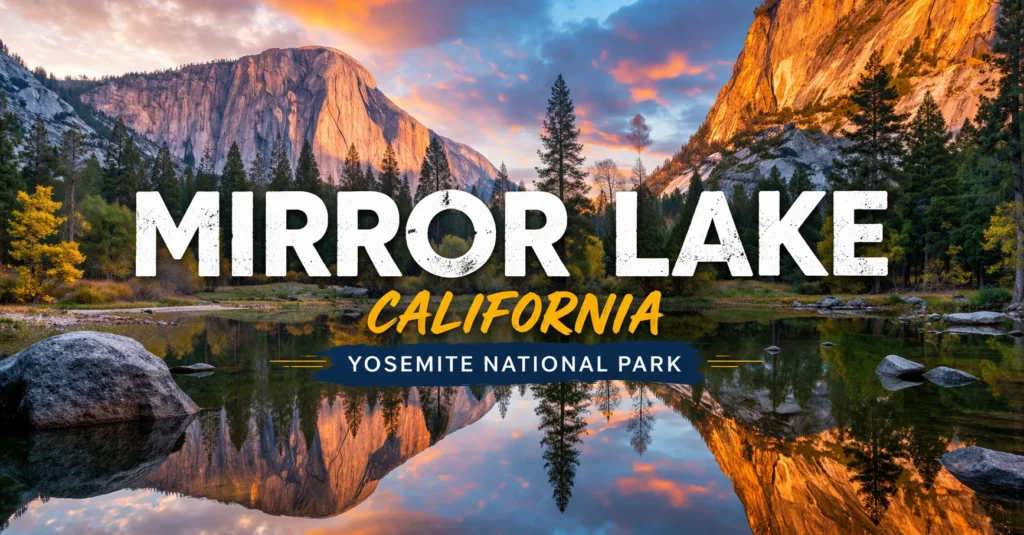
Mirror Lake sits at the eastern end of Yosemite Valley in Tenaya Canyon, directly beneath Half Dome. It is one of those Yosemite destinations that can look completely different depending on when you visit. In spring, you may find a shallow pool reflecting the surrounding cliffs; later in the year, much of the same area can look more like a meadow.
If you’re planning a visit, the most common questions are simple: Can you swim in Mirror Lake Yosemite? Does Mirror Lake have water right now? How do you get to Mirror Lake? And when is the best time to visit?
Here’s what to know before you go.
Can You Swim in Mirror Lake Yosemite?
Swimming is generally permitted in many Yosemite waters when conditions allow, but Mirror Lake is not a place where you should assume the water is safe just because it looks calm.
The National Park Service specifically warns that entering the water at Mirror Lake can be dangerous during spring and early summer, when water levels are higher. Tenaya Creek can have strong, cold-moving water, and areas that appear shallow can become much deeper or faster than expected.
This makes the answer to “can you swim in Mirror Lake?” more complicated than simply yes or no.
If water is present, visitors should follow posted warnings and current conditions, stay away from moving water and dangerous currents, and never enter water simply because other visitors are doing so.
Is swimming at Mirror Lake safe?
Safety depends heavily on the season and current water conditions.
Spring and early summer deserve particular caution because snowmelt can increase water levels and current strength. The National Park Service warns that even water that initially appears shallow can become hazardous.
The safest approach is to treat Mirror Lake as a scenic Yosemite destination first, not as a swimming beach.
If you’re traveling with children, keep them close to the shoreline and never allow them to approach moving water without close supervision.
Does Mirror Lake Yosemite Have Water Right Now?
This is one of the biggest surprises for first-time visitors.
Mirror Lake does not remain full throughout the year.
Mirror Lake is closely connected to seasonal flows in Tenaya Creek. It is generally fullest during spring and early summer, when snowmelt feeds the creek. As summer progresses and water levels fall, the lake can become very shallow or dry.
By late summer and fall, the area is often referred to as Mirror Meadow because much of the water has disappeared and grasses and sandy areas become more prominent.
So if you’ve seen beautiful photographs of Mirror Lake reflecting Half Dome but arrive later in the year and find a mostly dry basin, nothing has necessarily gone wrong. The seasonal change is part of what makes Mirror Lake unusual.
The National Park Service notes that the lake is fullest in spring and early summer and often has little water later in the year.
Does Mirror Lake have water in August?
Usually, you should not plan an August visit specifically for swimming or classic Mirror Lake reflections.
Water levels vary from year to year depending on snowpack and seasonal conditions, but Mirror Lake commonly becomes much smaller or turns into Mirror Meadow during late summer.
If your main goal is to see the famous reflective-water version of Mirror Lake, spring is generally the better bet.
Best Time to Visit Mirror Lake Yosemite
The best time depends on what you want to see.
Spring: Best for water and reflections
Spring is generally the best season if your goal is to see Mirror Lake with substantial water.
Snowmelt increases the flow of Tenaya Creek, and the lake can provide the classic Yosemite reflection photographs during this period.
The downside is that higher water levels also mean greater water-related hazards.
Early summer: Good balance
Early summer can offer a balance between scenery and accessibility.
There may still be plenty of water, although levels are generally beginning to decline. Exact conditions can vary from year to year.
Late summer and fall: Best for a quieter walk
By late summer and fall, Mirror Lake may have little water or may look more like a meadow.
That doesn’t make the hike pointless. You still get close views of Half Dome, Tenaya Canyon and the surrounding granite scenery.
Just don’t arrive expecting the same reflective lake shown in spring photographs.
Winter: Quiet but conditions can be difficult
The Mirror Lake Trail is open year-round, but winter conditions can make sections of the route icy, snowy, muddy or flooded.
The National Park Service specifically notes that the south side of the loop can be slick or flooded during winter and early spring.
Mirror Lake Trail Distance and Difficulty
There are essentially two ways to experience Mirror Lake.
| Route | Distance | Approx. Time | Difficulty |
|---|---|---|---|
| Out-and-back to Mirror Lake | About 2 miles round trip | About 1 hour | Easy |
| Full loop | About 4.5 miles | 2–3 hours | Easy to moderate |
The shorter route follows a paved road toward Mirror Lake and is the easiest option.
The full loop continues around the lake and Tenaya Creek and provides a longer experience through the canyon.
The National Park Service lists the out-and-back at about 2 miles round trip with roughly 100 feet of elevation gain and the longer loop at approximately 4.5 miles.
How to Get to Mirror Lake Yosemite
The Mirror Lake Trail begins in Yosemite Valley.
One of the easiest ways to reach the trail is using the free Yosemite Valley shuttle. The Mirror Lake Trailhead is associated with shuttle stop #17.
The first section of the route is a paved service road leading toward Mirror Lake.
You can also walk from areas around Curry Village and nearby Valley parking areas, depending on where you’re staying or parking.
Is there parking at Mirror Lake?
There is no normal public parking lot directly at the Mirror Lake Trailhead.
Yosemite’s trailhead information recommends using the Valley shuttle system for access, and parking is available elsewhere in Yosemite Valley.
During busy periods, parking can become one of the more frustrating parts of a Yosemite Valley visit, so arriving early and using the shuttle can make the trip easier.
Mirror Lake Shuttle Stop
The Mirror Lake Trail begins at shuttle stop #17.
From the shuttle stop, the first mile toward Mirror Lake follows a paved road. This is particularly useful for visitors who want a relatively easy walk rather than a strenuous Yosemite hike.
Before visiting, check the current Yosemite Valley shuttle information because transportation schedules can change seasonally.
Is Mirror Lake an Easy Hike?
Yes, the shorter Mirror Lake route is considered an easy Yosemite hike.
The route to the lake is approximately 2 miles round trip with about 100 feet of elevation gain.
The paved first section makes it more accessible than many of Yosemite’s famous trails. However, the full loop is a different experience because it includes unpaved terrain and can become slippery or muddy during poor conditions.
If you’re visiting with young children or simply want an easy walk, the out-and-back route is the better choice.
Is Mirror Lake Good for Families?
Mirror Lake can be a good option for families, especially if you stick to the paved out-and-back section.
The first mile is paved, and leashed pets, bicycles and strollers are allowed on that paved section. Beyond the paved portion, those restrictions change, so families should choose their route accordingly.
The bigger concern for families is water safety during spring and early summer. Never assume shallow-looking water is safe for children.
Mirror Lake Accessibility
The paved road from the shuttle stop provides relatively easy access toward the lake, but the final section has a noticeable slope.
The National Park Service states that the last 1,000 feet leading toward the lake has slopes ranging from approximately 6.6% to 10.6%. Visitors with a disability placard may drive to Mirror Lake under the park’s stated accessibility rules, and designated accessible parking spaces are available.
If accessibility is important for your visit, check current park conditions before traveling because road access and operational details can change.
Mirror Lake Water Temperature and Swimming Conditions
Even when swimming or entering water is permitted, Yosemite’s mountain water can be extremely cold.
Cold water combined with moving currents can create a serious safety risk even on warm days. The National Park Service warns that visitors can become incapacitated quickly in cold mountain water and that apparently calm water can hide hazards.
For that reason, don’t judge Mirror Lake’s safety based only on how calm it looks from the shore.
Why Is Mirror Lake Sometimes Dry?
Mirror Lake is not a permanent deep lake.
Its water levels are strongly influenced by seasonal flow from Tenaya Creek and snowmelt. During the spring runoff period, the area can hold much more water. As the season progresses, the water recedes and the basin can become a meadow-like landscape.
This is why photographs taken in May can look completely different from photographs taken in September.
The National Park Service describes Mirror Lake as being fullest in spring and early summer and notes that it often has little water during other parts of the year.
Mirror Lake Photography Tips
If you’re visiting specifically for the famous Mirror Lake reflections, timing matters.
Spring and early summer offer the best opportunity to see significant water.
For calmer reflections, early morning is generally preferable to the middle of the day because wind and visitor activity can disturb the water surface.
The surrounding scenery is impressive even when the lake is dry. Half Dome, Tenaya Canyon, Mount Watkins and the surrounding granite walls still make the area worthwhile for photography.
Restrooms and Drinking Water
Vault toilets are available near Mirror Lake, including at the lake area.
However, there is no drinking water along the trail, so bring enough water with you before starting the hike. The National Park Service specifically notes that there is no drinking water at the trailhead or along the route.
This is especially important during warm summer weather.
Mirror Lake Safety Tips
Keep these points in mind before starting the hike:
- Check Yosemite’s current conditions before leaving.
- Stay on the designated trail.
- Be especially cautious around Tenaya Creek during spring runoff.
- Never assume calm-looking water is safe.
- Keep children under close supervision near water.
- Carry enough drinking water.
- Wear shoes with good traction if you’re hiking the full loop.
- Be prepared for mud, ice or flooding during colder months.
- Don’t leave food unattended.
- Follow all posted Yosemite National Park warnings and closures.
Yosemite’s current conditions page warns that open trails are not necessarily free of hazards, and conditions can change because of weather, rockfall, snow, ice or fire.
Is Mirror Lake Worth Visiting When It’s Dry?
Yes — as long as you know what to expect.
If you’re visiting in late summer or fall, you may not see the postcard version of Mirror Lake. But the walk still gives you close views of Half Dome and the surrounding Yosemite Valley landscape.
The biggest mistake is planning the trip around swimming or reflections without checking the season.
If you want water and classic reflections, prioritize spring.
If you want an easy Yosemite Valley walk with impressive scenery, Mirror Lake can still be worthwhile when the basin is mostly dry.
Common Questions About Mirror Lake Yosemite
Can you swim in Mirror Lake Yosemite?
Water activities can be permitted in Yosemite, but entering Mirror Lake can be dangerous when water levels and currents are high. The National Park Service specifically warns about entering the water during spring and early summer. Always follow current warnings and conditions.
Is Mirror Lake safe for swimming?
Don’t assume it is safe simply because the water looks calm. Cold mountain water and currents can be hazardous, particularly during spring runoff.
Does Mirror Lake have water year-round?
No. Mirror Lake’s water level changes significantly throughout the year and the basin can become very shallow or dry during late summer and fall.
How long is the Mirror Lake hike?
The out-and-back route is about 2 miles round trip and usually takes around an hour. The full loop is approximately 4.5 miles and generally takes 2–3 hours.
Is Mirror Lake an easy hike?
The short out-and-back route is easy, with only about 100 feet of elevation gain. The full loop is longer and more variable in footing.
How do you get to Mirror Lake Yosemite?
Take the Yosemite Valley shuttle to stop #17, then follow the paved route toward Mirror Lake.
Is Mirror Lake worth visiting in August?
It can be, but don’t visit specifically expecting a full lake or classic reflections. By late summer, Mirror Lake is often much lower or dry and may look like Mirror Meadow.
What is the best month to see Mirror Lake reflections?
May is a good general target for seeing substantial water and reflections, although actual water levels vary each year depending on snowpack and weather.
Can you see Half Dome from Mirror Lake?
Yes. One of the major reasons to visit Mirror Lake is the close perspective of Half Dome from the base of the canyon.
Before You Visit Mirror Lake
Before heading out, check Yosemite’s official current conditions because trail, road and transportation conditions can change.
For 2026, Yosemite does not require a reservation to enter the park, according to the National Park Service’s current reservation information. However, other reservations and permits may still apply to specific activities, lodging or camping.
For the most accurate information, check the official Yosemite National Park conditions page shortly before your visit.
Pingback: Yosemite National Park Tickets 2026: Prices & Guide - Park Trails Guide