
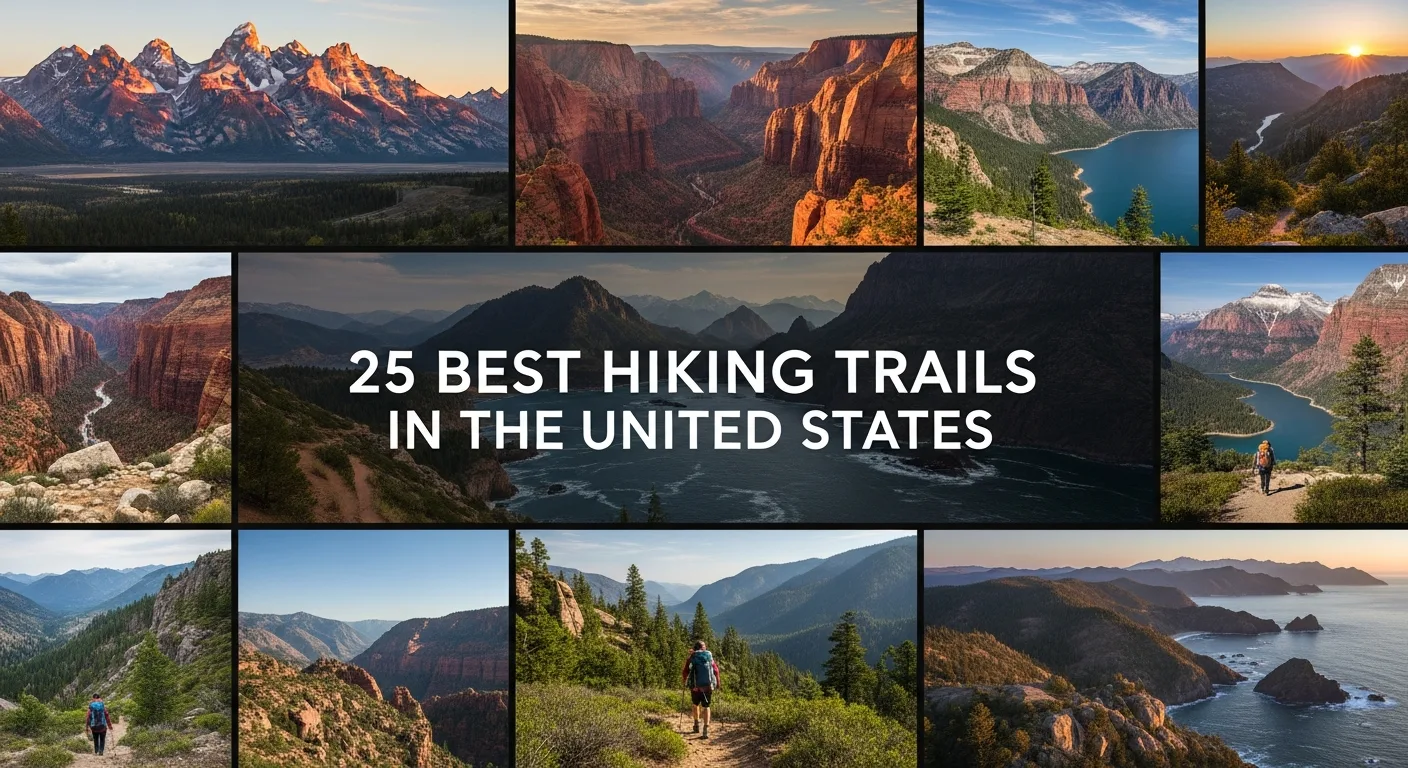
Introduction: You Said You Wanted an Adventure. Here It Is.
Congratulations. You have officially spent more time watching hiking content on TikTok than actually going outside. You have liked approximately 47 trail posts on Instagram, saved 23 camping packing lists you will never open, and told three different people this is your year to go hiking. And now, here you are, reading a blog post about it instead of actually lacing up your shoes. Honestly, respect the commitment to research. But since you are already here, let us make this worth your while. Here are 25 hiking trails across the United States that are genuinely, embarrassingly beautiful, and yes, you should actually go to them this year.
The West Coast Trails That Will Make You Question Why You Pay Rent Anywhere Else
Let us start with the obvious. The West Coast has been winning the scenic competition for decades, and it knows it. These trails do not need your validation. They were doing just fine before you found them on Pinterest.
1. Angels Landing, Zion National Park, Utah
Picture this: you are gripping a chain bolted into a cliff face, wind slapping you in the face, legs shaking, wondering why you did not just stay at the hotel with the heated pool. And then you reach the top. And everything, genuinely everything, makes sense. Angels Landing is 5.4 miles round trip with 1,488 feet of elevation gain. The final half mile is basically a trust exercise with gravity. Permits are required now, which is either annoying or a godsend depending on whether you get one.
2. Enchantments, Washington
The Enchantments in Washington is the kind of trail that makes you realize your entire life up to this point has been low resolution. Alpine lakes the color of someone filtered them on VSCO. Mountain goats that absolutely do not care about you. And a permit lottery system so competitive it makes Taylor Swift concert tickets look easy to get. Apply in February. Pray. Cry a little. Try again next year. Worth it.
3. John Muir Trail, California
At 211 miles from Yosemite Valley to Mount Whitney, the John Muir Trail is less of a hike and more of a personality transplant. People come back from this trail speaking in a slightly different tone, eating differently, and referring to everything in the city as noise. It takes around 3 weeks. You will resent every single step and miss every single step once it is over. That is not a warning. That is a promise.
4. Muir Woods Loop Trail, California
For those of us who are not quite ready for a 3-week wilderness immersion but still want to feel like we are in a Lord of the Rings scene, Muir Woods outside San Francisco is a solid alternative. The coast redwoods here are over a thousand years old, which really helps put your Tuesday in perspective. Easy to moderate trail. Parking is a disaster. Take the shuttle from Mill Valley unless you enjoy circling a parking lot for 45 minutes.
5. Kalalau Trail, Hawaii
Located on the Na Pali Coast of Kauai, this 11-mile trail is the definition of beautiful and punishing at the same time. Think lush cliffs, raging waterfalls, and a trail system that will test your knees, your resolve, and your cell phone signal simultaneously. A permit is required to go past Hanakapi’ai Beach. You want one. Get it early.

Southwest Desert Trails That Slap Harder Than Your Morning Alarm
The American Southwest is the kind of place that looks fake in photos but is somehow even more ridiculous in real life. Red rock. Blue sky. Zero humidity. The Hiking here is a completely different vibe from the Pacific Northwest because instead of wondering if your rain jacket is good enough, you are wondering if you packed enough water. You did not. You never do.
6. Bryce Canyon Navajo Loop, Utah
Bryce Canyon does not look like a real place. The hoodoos, those tall spindly rock formations, look like someone let a very caffeinated architect loose with red clay and too much free time. The Navajo Loop Trail is 2.9 miles and drops you right into the middle of this chaos. It is relatively short and absolutely worth it. Go at sunrise if you want to feel like you stepped into a screensaver.
7. The Wave, Arizona
The Wave is the trail equivalent of a viral post. Everyone knows about it. Everyone wants to go. Only 64 people per day are allowed in because the sandstone formations are so fragile they would be wrecked otherwise. The permit system is a lottery. Your odds are genuinely terrible. But if you get in, you will be walking across swirling orange and red rock patterns that look like the earth got into abstract art. It is one of those places that makes you feel both incredibly small and incredibly lucky.
8. South Kaibab to Bright Angel Loop, Grand Canyon, Arizona
The Grand Canyon is the most famous hole in the ground on the planet, and somehow it still shocks every single person who sees it for the first time. The South Kaibab to Bright Angel loop is about 9.5 miles with a brutal elevation drop and climb. Here is what nobody tells you: going down is easy. Coming back up at noon in July is a medical event. Start at dawn. Bring more water than you think you need. And then bring more water.
9. Arches National Park, Delicate Arch Trail, Utah
At 3 miles round trip, this is technically not a long hike. But you will still need water, sunscreen, and mental preparation because the last stretch is a slickrock scramble with no shade. The reward is Delicate Arch itself, a 65-foot freestanding sandstone arch that has appeared on Utah license plates and millions of people’s camera rolls. It earns its reputation every single time.
10. White Pocket Loop, Arizona
If The Wave is too exclusive for you this year, White Pocket is your backup. Also in the Vermilion Cliffs area, it has those same wild swirling rock patterns, the same surreal color palette, and a fraction of the crowds. You need a high-clearance vehicle to get there and a compass because the GPS is unreliable. Basically, it rewards people who are slightly more prepared than average, which is already a higher bar than most of us meet on a Tuesday.
The Rocky Mountain Trails Where You Will Pretend You Are Not Out of Breath
Ah, the Rockies. Where the air is thin, the views are enormous, and every trail description includes the phrase moderate to strenuous which is code for absolutely brutal if you live at sea level. Pack an extra layer. Actually two. The weather up here changes its mind every 20 minutes.
11. Maroon Bells, Colorado
Two iconic peaks reflecting in a glacial lake with wildflowers everywhere. The Maroon Bells Scenic Area is so outrageously picturesque that it looks like someone installed a 4K screensaver in the middle of Colorado. The area is accessible via shuttle from Aspen, and there are trails ranging from easy lakeside walks to serious summit attempts. Go in late September for the aspen color explosion, which is the kind of thing that makes people stop mid-trail and just stand there in silence for a minute.
12. Longs Peak, Rocky Mountain National Park, Colorado
At 14,259 feet, Longs Peak is Colorado’s highest point in Rocky Mountain National Park and one of the most technically demanding trails on this list. The standard Keyhole Route is 15 miles round trip with 5,100 feet of elevation gain. It requires scrambling, a predawn start to beat afternoon lightning, and the kind of mental toughness that you either have or discover along the way. Not for the casually curious.
13. Glacier National Park Highline Trail, Montana
The Highline Trail sits just below the Continental Divide along a narrow ledge trail that makes people who are afraid of heights rethink their entire personality. It is 14.9 miles of panoramic mountain views, glacier-carved valleys, and the kind of scenery that makes your phone storage disappear. There is literally a cable bolted into the cliff at the start of the trail for people to hold onto. That is either encouraging or concerning depending on your perspective.
14. Wind River Range, Wyoming
The Wind River Range in Wyoming is what national parks would look like if they removed the crowds and the gift shops. This is real backcountry Hiking, which means no cell service, no guardrails, and no one to save you except the ranger who will eventually find your bear canister. There are hundreds of lakes and peaks spread across the range. It requires planning, permits in some areas, and a willingness to be genuinely disconnected, which, depending on how your remote work setup is going, might be exactly what you need.
15. Hanging Lake Trail, Glenwood Canyon, Colorado
Hanging Lake is the kind of destination that went viral on Instagram and then immediately got a permit system installed because too many people showed up. The trail is only 2.4 miles but gains 1,000 feet in that short distance. The reward is a turquoise lake perched on a rocky ledge above a waterfall, looking like something from a fantasy novel. Permits are required from May through November. The off-season is your best bet for a more peaceful experience.

The East Coast and Southeast Trails That Have Been Quietly Stunning This Whole Time
While everyone is busy romanticizing the West, the East Coast has been out here doing its thing with absolutely zero chill. Old-growth forests, granite peaks, ancient Appalachian ridgelines, waterfalls tucked into hollows. The East does not have the same drama as the Rockies, but it does have character, and character ages better anyway.
16. Appalachian Trail Section: Great Smoky Mountains, Tennessee and North Carolina
The full Appalachian Trail is 2,190 miles and takes about six months to complete, which is either a dream or a nightmare depending entirely on how your relationship with your WiFi router is going. But you do not have to do the whole thing. The section through the Great Smoky Mountains National Park is stunning on its own, with old-growth forest, wildlife, and enough elevation changes to remind you that legs are for more than sitting. The park receives more visitors than any other in the country. Go in the off-season or pick less popular trailheads.
17. Mount Katahdin, Maine
Mount Katahdin is the northern terminus of the Appalachian Trail and the highest peak in Maine. It is also the kind of hike that demands your respect immediately, via steep ridgelines, exposed scrambling, and weather that does what it wants regardless of what your weather app says. The Knife Edge Trail near the summit is a narrow rocky ridge with sheer drops on both sides. It is technically optional. Most people do it anyway and then describe it in significant detail to everyone they know for the rest of the year.
18. Acadia National Park, Precipice Trail, Maine
Acadia is one of the most visited national parks in the country, but the Precipice Trail keeps most casual hikers away because it involves iron rungs bolted into cliff faces and zero room for hesitation. It is only 1.6 miles but feels considerably longer when you are halfway up a vertical section of granite trying to remember if you have a fear of heights. It is one of the most fun challenging trails on the East Coast and the views over Frenchman Bay are legitimately spectacular.
19. Old Rag Mountain, Shenandoah National Park, Virginia
Old Rag is the closest thing the mid-Atlantic region has to a classic adventure hike, which is why every person within a 200-mile radius of Washington D.C. seems to show up on weekends. The rock scramble section near the summit is genuinely fun, which is a sentence that not enough trail descriptions include. It is about 9 miles round trip. A timed entry permit is now required on weekends and holidays, which helps thin the crowd slightly but does not eliminate the line at the rock scramble entirely.
20. Linville Gorge, North Carolina
Called the Grand Canyon of the East, Linville Gorge is wild and rugged and relatively unmanaged compared to most popular hiking destinations in the Southeast. The trails here are not particularly well-marked, the terrain is rough, and the payoff is stunning. Table Rock Trail offers one of the best views in the Appalachians with almost no one around to watch you eat your trail mix in silence. That last part is a feature, not a bug.
21. Franconia Ridge Loop, New Hampshire
The White Mountains of New Hampshire are a humbling place. The weather at the higher elevations is notoriously bad, the trails are steep, and the ridge walking is genuinely exposed. The Franconia Ridge Loop is 8.8 miles with over 3,500 feet of elevation gain and a long section of open ridgeline above tree line where the wind will remind you that you are very small and the mountain does not care about your plans. It is extraordinary. Go in summer. Check the forecast obsessively.
The Trails That Deserve More Credit: Midwest and South Edition
Everyone skips the Midwest and parts of the South when they think about hiking, which is honestly their loss. While the coasts battle overcrowding and the Rockies require altitude adjustment, these trails are out here being incredible with zero lines, zero hype, and honestly a little bit of an attitude about it.
22. Pictured Rocks National Lakeshore, Michigan
Lake Superior is the largest freshwater lake in the world by surface area, and the Pictured Rocks trail runs for 42 miles along its southern shoreline through colored sandstone cliffs, beaches, forests, and waterfalls. The Chapel Loop is a fantastic day hike option at around 10 miles. The colors in the cliffs come from mineral deposits and in the right light look genuinely surreal. Almost nobody outside of the Great Lakes region talks about this trail, which means the people who go feel like they found something.
23. Congaree National Park, South Carolina
Congaree is the least visited national park in the lower 48, which is a shame because it contains the largest tract of old-growth bottomland hardwood forest in the Southeast. The trails are flat, the trees are enormous, and the biodiversity is staggering. It is also genuinely one of the best places in the country to see bioluminescent fireflies in late spring if you time it right. Low effort, high reward. The kind of hike that sneaks up on you.
24. Buffalo National River, Arkansas
The Buffalo River in Arkansas is the first national river designated in the United States, and the bluffs above it are some of the most dramatic scenery in the whole region. Hemmed-In Hollow Trail leads to the tallest waterfall between the Rockies and the Appalachians, and most people have no idea it exists. The trail is about 6 miles round trip with a challenging descent into the hollow. The payoff is standing in front of a 200-foot waterfall with, realistically, maybe ten other people around.
25. Red River Gorge, Kentucky
Red River Gorge in Kentucky has natural arches, sandstone cliffs, old-growth hemlocks, and a genuinely absurd amount of biodiversity for somewhere most hiking lists completely ignore. It is also one of the premier sport climbing destinations in the country, so the trail culture here is experienced and enthusiastic without being precious about it. The Rough Trail and Courthouse Rock Loop area is one of the best combinations of views and solitude in the region. Pack your layers. The gorge holds moisture and stays cool even in summer.
Conclusion: You Read All of This. Now Actually Go.
Look at you. You made it to the end of a 4,000-word article about hiking instead of hiking. That takes a special kind of dedication that is honestly both admirable and slightly concerning. But here is the thing: any of these 25 trails will do something to you that no amount of scrolling, planning, or tab-collecting will. The Hiking is the whole point. Pick one trail. Book the permit. Tell three people so you actually go. And for the love of everything, pack enough water. The mountain does not know you. The mountain does not care about your plans. But it will show you something worth seeing anyway.

Rubie Rose is the founder of Park Trails Guide. As a USA resident and nature lover, she is dedicated to creating helpful national park guides using official sources and real visitor experiences. Her mission is to make planning trips to places like Yosemite, Grand Canyon, and Zion easier for families, beginners, and travelers.