Hiking in Joshua Tree for Beginners: Trails, Tips & Mistakes to Avoid (2026)
If you’ve never set foot in Joshua Tree National Park, you’re in for something that’s genuinely hard to describe. It’s part desert moonscape, part giant boulder playground, and part otherworldly forest — all stitched together under one of the darkest, most star-filled skies in Southern California.
But here’s the thing: a lot of first-time visitors show up underprepared and end up spending most of their trip baking in the sun, wondering why no one told them how seriously this park takes its heat.
This guide is for anyone who’s planning their first hike at Joshua Tree — whether you’ve never hiked before or you’re just new to desert trails. By the time you finish reading, you’ll know which trails to start with, what to pack, when to go, and the common mistakes that catch people off guard every single year.
Quick Summary
- Best for beginners: Hidden Valley & Barker Dam
- Best time: October to April
- Difficulty: Easy to Moderate
- Water rule: 1 liter per hour
- Avoid: Summer heat & midday hikes
Why Joshua Tree National Park Is Worth the Trip
Joshua Tree sits at the junction of two deserts — the Mojave and the Colorado — which is part of what makes it so visually distinct from other parks. The famous Joshua trees themselves (which are actually a species of yucca, not a true tree) can grow over 40 feet tall and live for hundreds of years.
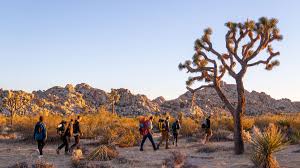
The park covers nearly 800,000 acres, and about half of it is designated wilderness. You’ll find everything from short nature walks to serious multi-day backcountry routes. For beginners, the good news is that the park has done a solid job of laying out accessible trails that don’t require technical skills or advanced fitness.
Many visitors say the first hour in the park feels almost surreal — the massive granite rock formations rise out of flat desert without much warning, and the Joshua trees line the roadsides in ways that look almost staged.
The park is also one of the top rock climbing destinations in North America, but for hikers, the focus is mostly on the trails threading through boulder fields, desert washes, and fan palm oases.
Why It’s Popular Among Beginners
You might think desert hiking is tough—and it can be—but Joshua Tree is actually beginner-friendly if you choose the right trails.
Here’s why:
- Many trails are short and well-marked
- Minimal elevation gain compared to mountain hikes
- Easy parking access near trailheads
- Great for casual walks and short hikes
If you’re visiting for the first time, you’ll notice that trails here are more about exploration than endurance.
Best Beginner Trails in Joshua Tree
One thing many people overlook is that “beginner” in a desert context still means planning carefully. Even easy trails can get uncomfortable fast if the temperature spikes or you run low on water.
Here are five trails that work well for first-timers:
Barker Dam Trail
Distance: 1.3 miles (loop) | Difficulty: Easy | Time: 45–60 minutes
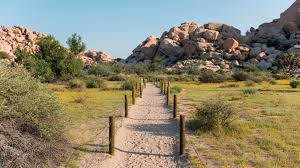
This is consistently one of the most recommended starter trails in the park. The loop takes you past a historic water tank built by early ranchers, through classic boulder scenery, and sometimes to a small pond where bighorn sheep have been spotted. The trailhead is accessible and the path is well-marked.
Hidden Valley Trail
Distance: 1 mile (loop) | Difficulty: Easy | Time: 45 minutes
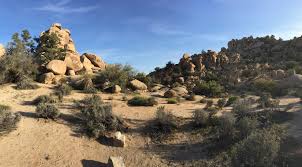
Hidden Valley is essentially a natural enclosure surrounded by massive rock walls. The trail winds through it on a sandy, mostly flat path. It’s short enough that almost anyone can handle it, and the scenery — Joshua trees framed by monzogranite boulders — is exactly what most people picture when they imagine this park.
Skull Rock Nature Trail
Distance: 1.7 miles (loop) | Difficulty: Easy | Time: 60–90 minutes
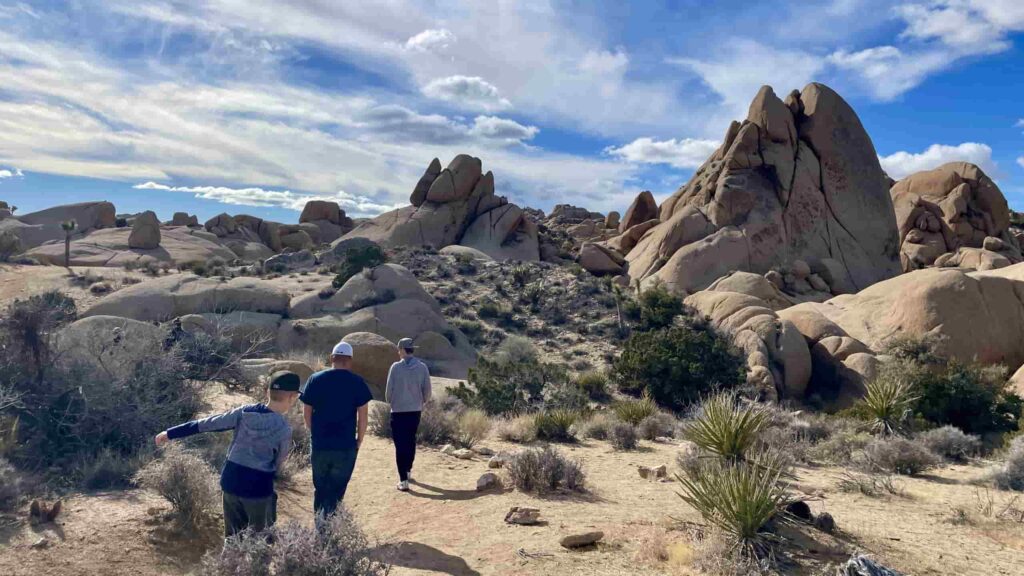
This trail starts right off the main park road and passes the famous Skull Rock formation (yes, it really does look like a skull). You’ll also see classic desert plants and some interesting geological features. The interpretive signs along the way make it a solid choice if you want to learn while you walk.
Cholla Cactus Garden
Distance: 0.25 miles | Difficulty: Very Easy | Time: 20–30 minutes
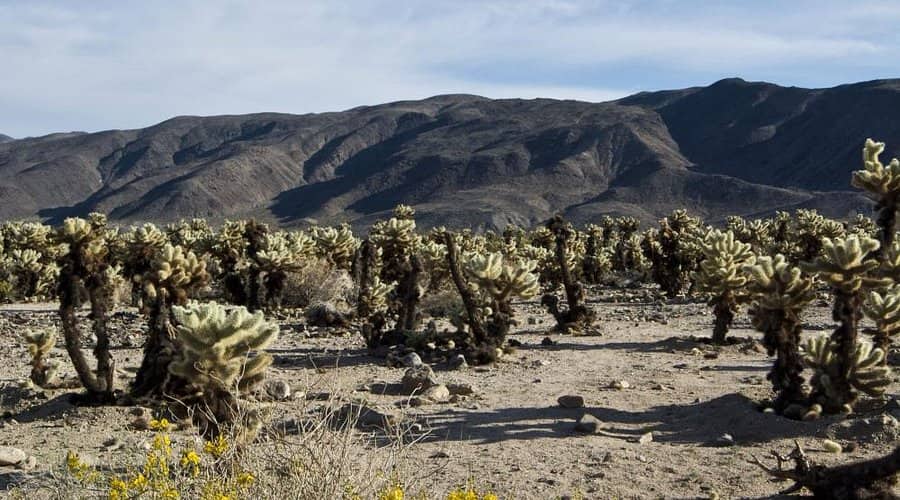
This is less of a hike and more of a short walk through one of the most photogenic spots in the park — a dense field of jumping cholla cactus. The path is flat and paved in sections. One important note: don’t touch the cholla. The barbed segments detach very easily and are notoriously difficult to remove from skin or clothing.
Fortynine Palms Oasis Trail
Distance: 3 miles (out-and-back) | Difficulty: Moderate | Time: 2–2.5 hours
This one’s slightly more challenging than the others — there’s real elevation gain — but the payoff is one of the most beautiful oases in the park. Fan palms cluster around a natural spring in a dramatic canyon setting. It’s worth the extra effort if you have the fitness for it. Start early; the trail gets full sun with limited shade.
Step-by-Step Guide for First-Time Hikers
If you’re new to hiking in Joshua Tree, here’s a simple plan to follow:
Step 1: Start Early
Desert heat builds quickly. Morning is the best time to hike.
Step 2: Pick One Easy Trail
Don’t try to do everything in one day. Choose 1–2 trails max.
Step 3: Carry Enough Water
Even short hikes can feel tiring in dry conditions.
Step 4: Follow Marked Paths
You’ll notice that some areas look open, but it’s easy to lose direction.
Step 5: Take Breaks
There’s no rush. Enjoy the views and explore slowly.
Best Time to Visit Joshua Tree
If there’s one piece of advice worth repeating, it’s this: don’t hike Joshua Tree in summer unless you know exactly what you’re doing.
Temperatures regularly hit 100–110°F between June and September, and the park sees multiple heat-related medical emergencies every year during that window. Even experienced hikers struggle in that kind of heat.
The sweet spot for beginners is:
- October through April — This is when the park is most enjoyable. Daytime temperatures range from the mid-50s to the low 80s, making it genuinely comfortable to hike for several hours.
- March and April — If the winter rains were decent, you’ll sometimes catch wildflower blooms that make the desert look completely different from its usual palette.
- November through February — Cooler, quieter, and beautiful. Nights get cold (sometimes below freezing), so dress in layers if you’re camping.
Spring break weekends (late March through mid-April) are among the busiest times in the park, so arrive early or expect full parking lots at popular trailheads by 9 a.m.
Park Hours, Entry Fees & Getting There
Entry Fees (2026):
- Private vehicle: $35 (valid for 7 days)
- Individual/bicycle: $20
- Annual America the Beautiful Pass: $80 — covers entry to all federal lands, worth it if you’re visiting multiple parks that year
Park Hours: Joshua Tree National Park is open 24 hours a day, every day of the year. Visitor centers have specific hours, so check the National Park Service website for current times.
Main Entrances:
- North Entrance (West) — Twentynine Palms, CA. Most visitor facilities and main park road access.
- West Entrance — Off Park Boulevard near Joshua Tree town. Closest to Cholla Cactus Garden and Hidden Valley.
- South Entrance — Cottonwood Spring area. More remote, fewer crowds.
Getting There: The park is roughly 140 miles east of Los Angeles — about 2.5 hours by car, longer on holiday weekends. Palm Springs is about 45 minutes from the south entrance.
Accessibility: Several accessible trails exist, including the Cholla Cactus Garden path and parts of the Skull Rock Nature Trail, which have relatively flat, packed surfaces.
What to Pack for a Desert Hike
Desert hiking has its own set of rules, and the biggest one is water.
Water: The standard advice is 1 liter per hour of hiking. In warm conditions, go higher. There are no reliable water sources on most trails in Joshua Tree, so carry everything you need from the start.
Essential Items:
- Minimum 2–3 liters of water per person (more in warmer months)
- Sun protection: hat with a brim, sunscreen (SPF 50+), UV-protective clothing
- Sunglasses (desert glare is intense)
- Closed-toe shoes with good grip — the rocky terrain is uneven
- Snacks: trail mix, bars, anything that doesn’t melt
- A small first aid kit
- Fully charged phone (cell coverage in the park is spotty)
- Park map — downloaded offline or a printed copy
- Headlamp or flashlight if there’s any chance you’ll be out near dark
Skip the flip-flops. You’ll see people in sandals on the trails, and most of them are miserable within the first quarter mile.
Tips, Safety Advice & Mistakes to Avoid
Before You Go
- Check the NPS website for trail closures or fire restrictions before your visit. Conditions change, and what was open last month may not be now.
- Download offline maps before you lose cell service inside the park.
- Tell someone where you’re going and when you expect to be back.
On the Trail
- Start early. Even in spring, midday sun is strong. Aim to be back at your car by noon if temperatures are expected to climb.
- Stick to marked trails. The terrain off-trail looks manageable but can get disorienting quickly, especially in large boulder areas.
- Watch where you step and reach. Rattlesnakes are present in the park year-round and are most active in spring and fall. They generally avoid confrontation, but a surprised snake is a different situation.
Common Mistakes Beginners Make
- Underestimating water needs. This is the number one issue. Two small water bottles is not enough for a 2-hour desert hike.
- Starting too late. Showing up at 11 a.m. during March or April spring break and expecting a cool, comfortable hike is a recipe for a rough afternoon.
- Wearing new or stiff shoes. Break them in before the trip. Blisters on rocky desert terrain are no fun.
- Not accounting for wind. The high desert can get surprisingly cold and windy, especially in early spring and late fall. A light windbreaker can make a big difference.
- Assuming the hike is “just a quick walk.” Even a 1-mile loop in 85°F sun with no shade feels much harder than a 3-mile forest trail. Calibrate expectations accordingly.
Pro Tips
Pro Tip #1: Park at Barker Dam and do both the Barker Dam Trail and Hidden Valley Trail back-to-back — they’re close to each other and together give you a thorough feel for the park in under 3 hours.
Pro Tip #2: Sunrise and sunset are spectacular at Joshua Tree. Skull Rock and Keys View (a scenic overlook, not a trail) are excellent spots to watch the light change.
Pro Tip #3: If you’re staying overnight, book campsites at Jumbo Rocks or Hidden Valley Campground months in advance. They fill up fast on weekends from October through May.
Pro Tip #4: The Cottonwood Visitor Center at the south entrance is often less crowded than the Oasis Visitor Center near Twentynine Palms — a useful alternative if the main entrance area is packed.
Read Also this: Yosemite Valley Loop Trail Guide: Distance, Difficulty & Best Time to Hike
One-Day Beginner Itinerary
Example:
- Morning: Hidden Valley
- Mid-morning: Barker Dam
- Lunch: Picnic area
- Afternoon: Skull Rock
- Sunset: Keys View
Frequently Asked Questions
Is Joshua Tree good for beginner hikers?
Yes, absolutely. The park has several short, flat, well-marked trails that work well for first-timers. The key is choosing the right season (October through April) and coming prepared with enough water and sun protection.
How much water should I bring hiking in Joshua Tree?
A safe starting point is 1 liter per person per hour of hiking. On a 2-hour trail in warm weather, that means at least 2 liters per person — and more if temperatures are above 80°F. There are no water refill points on most trails.
Can you hike Joshua Tree in winter?
Yes, and many experienced hikers actually prefer it. Daytime temperatures in December through February are often in the 50s and 60s, which is ideal for hiking. Nights get cold, sometimes below freezing, so layer up if you’re camping.
Are dogs allowed on trails in Joshua Tree?
Dogs are allowed in the park but are restricted to paved roads, campgrounds, and picnic areas. They are not permitted on hiking trails or in the backcountry. This rule exists partly to protect wildlife and partly because the terrain is genuinely hard on paws.
What’s the most popular beginner hike in Joshua Tree?
Hidden Valley Trail and Barker Dam Trail consistently come up as the top picks for beginners. Both are under 1.5 miles, easy to navigate, and hit the visual highlights of the park without requiring significant fitness or gear.
Do I need a permit to hike in Joshua Tree?
No permit is required for day hikes. You just need to pay the park entrance fee. Overnight backcountry camping requires a permit and registration at a backcountry board.
Is there cell service in Joshua Tree National Park?
Cell coverage is limited and unreliable throughout most of the park. Download offline maps (Google Maps, Maps.me, or the NPS app) before you arrive, and don’t rely on getting GPS service once you’re inside.
You should also read this: Where to Stay Near Acadia National Park for First-Time Visitors (2026 Local Guide)
Conclusion
Joshua Tree is one of those parks that tends to surprise people — not just with its beauty, but with how demanding the desert environment can be, even on a clear, mild day.
If you’re visiting for the first time, start with one of the shorter trails, get to the park early, and don’t scrimp on water. The Joshua trees, the boulders, the huge open sky — it’s all genuinely worth experiencing. You just want to make sure you’re feeling good enough to actually enjoy it.
Take the time to plan your trip properly: check the weather, check the NPS website for any closures, and pack more water than you think you need. First-time visitors who do a little preparation almost always leave wanting to come back.
If you prepare properly, even your first hike here can feel safe, comfortable, and unforgettable.
Also Read: Things to Do in Bryce Canyon National Park: Complete Visitor Guide (2026)
About the Author
Rubie Rose is a travel writer who focuses on USA national parks, hiking trails, and practical travel planning. She has researched and written extensively about desert hiking conditions and beginner-friendly national park trails. She shares easy-to-follow guides to help visitors explore parks safely and confidently. Her work covers everything from beginner-friendly day hikes to multi-day backcountry routes across the American West.

Rubie Rose is a travel writer who focuses on USA national parks, hiking trails, and practical travel planning. She shares easy-to-follow guides to help visitors explore parks safely and confidently. Her work on parktrailsguide.com is built on deep research, firsthand accounts from park visitors, and a commitment to giving readers information they can actually use on the trail.