Best Time to Visit Grand Canyon: Month-by-Month Breakdown
Here’s something most travel blogs won’t tell you: there is no single “perfect” time to visit the Grand Canyon. The real answer depends on what kind of traveler you are — whether you’re chasing golden-hour photography, planning a rim-to-rim hike, traveling with young kids, or simply trying to avoid a parking lot that looks like a Black Friday sale at a theme park.
The Grand Canyon sees roughly 6 million visitors a year, according to the National Park Service. Most of them arrive in summer. Most of them are also shocked by the heat, the crowds, and the fact that they can’t get a campsite because they booked two weeks out instead of six months.
This guide breaks down every single month in 2026 — weather, crowds, permit windows, trail conditions, and the hidden gems that most visitors miss. Whether you’re planning your first visit or your fifth, this will help you make the most of one of the world’s most extraordinary landscapes.
Quick Answer: Best Months at a Glance
Before we go deep, here’s a visual snapshot of all twelve months rated by overall visitor experience — factoring in weather, crowd level, trail accessibility, and value for money.
January
Quiet Season
Cold, snowy, serene. Crowds near zero. North Rim closed. Best for solitude seekers.
February
Quiet Season
Still cold but days lengthen. Occasional snow makes for stunning photography.
March
Great
Spring begins. Mild rim temps. Inner canyon gets warm fast. Ideal for day hikers.
April
Excellent
Wildflowers bloom. Perfect hiking weather. Crowds building but still manageable.
May
Top Pick
Peak spring. Warm but not brutal. North Rim opens mid-May. A near-perfect month.
June
Avoid Midday
Hot and getting hotter. Inner canyon can hit 110°F. Go early or go in winter.
July
Peak Crowds
Busiest month. Extreme heat below rim. Monsoon rains bring afternoon flash floods.
August
Still Busy
Monsoon season continues. Heat intense. School ending brings crowds down slightly.
September
Excellent
Crowds drop sharply. Temps moderate. Light and colors are extraordinary.
October
Top Pick
Golden cottonwood trees. Crisp air. North Rim closes mid-October. A classic.
November
Great
Quiet, cool, atmospheric. Snow possible on rim. Excellent for photography.
December
Off-Season
Peaceful and cold. Holiday week sees brief crowd spikes. Snow adds magic.
Why Timing Your Visit Actually Matters
The Grand Canyon is not a single experience. It’s a place where the same trail — say, the Bright Angel Trail — feels completely different in April versus July. In April, you might hike six miles into the canyon on a 68°F morning, eat lunch at Indian Garden (now called Havasupai Gardens), and hike back out before dinner with energy to spare. In July, that same hike has resulted in emergency evacuations. The NPS performs roughly 250 search-and-rescue operations a year, and heat-related emergencies account for a significant portion.
“The canyon doesn’t care how fit you are. It will cook you if you’re not prepared.” — A Grand Canyon park ranger, speaking to visitors at the Bright Angel Trailhead
Beyond safety, timing affects the quality of your experience in more subtle ways: the angle of light in photographs, whether you hear birdsong or the rumble of tour buses, whether the North Rim’s ancient ponderosa pine forest is open to you, and whether you actually got the campsite or hotel room you wanted.
Month-by-Month Breakdown for 2026
January & February — The Silent Months
January at the South Rim is genuinely beautiful in a way that surprises most people. The elevation sits at roughly 7,000 feet, and temperatures hover between 20°F and 43°F. Snow falls an average of 4 to 5 inches during January, and when it does, the canyon becomes something otherworldly — those layered red cliffs draped in white, barely a sound except wind.
The North Rim is fully closed from mid-October through mid-May. But the South Rim never closes. Hotels and lodges like El Tovar and Bright Angel Lodge run at a fraction of their summer capacity, and some visitors report walking the Rim Trail for an hour without passing another soul. If you’ve ever dreamed of having one of the world’s greatest natural wonders almost to yourself, January and February are your window.
ℹ️ Travel Tip Winter hiking below the rim requires microspikes and trekking poles — icy patches form overnight on switchbacks and don’t thaw until late morning. Pack accordingly and check trail conditions at the Backcountry Information Center the morning of your hike.
Best For:
Solitude, photography, budget travel (hotel rates drop by 30–50%), and visitors sensitive to crowds. Not ideal for families with young children or anyone wanting a full canyon hike.
March & April — Spring Awakening
March is when the canyon begins to feel alive again. Rim temperatures climb into the mid-50s by afternoon. Wildflowers start appearing along the Rim Trail and within the upper canyon. The inner canyon is warming too — which makes March excellent for hiking partway down the Bright Angel or South Kaibab trails without the brutality of summer heat.
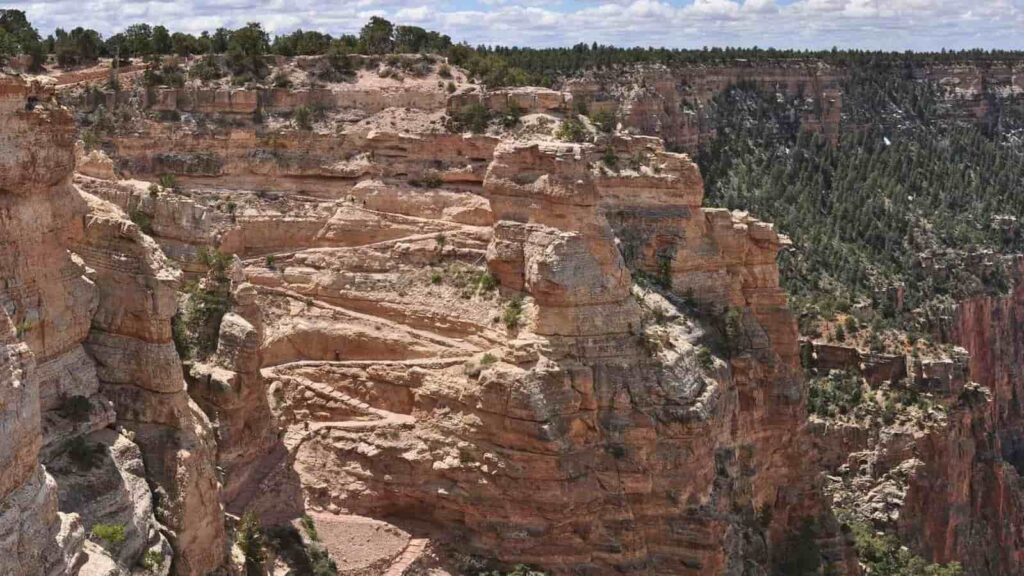
April is widely considered one of the two best months to visit. You’ll encounter highs of 60–70°F on the rim and 80–85°F at the bottom. That’s warm enough to swim in Bright Angel Creek if you’ve made it down to Phantom Ranch, but cool enough to hike safely even in the middle of the day. Crowds build through the month, particularly around spring break (mid-March through mid-April), but they’re still significantly lower than June–August levels.
✦ Pro Tip — Spring Break TimingIf visiting in March or April, aim to arrive before March 14th or after April 5th in 2026 to sidestep the heaviest spring break traffic. Weekday visits during this window can feel remarkably peaceful.
May — The Sweet Spot Nobody Talks About Enough
May is, in this writer’s opinion, the most underrated month at the Grand Canyon. The North Rim opens around May 15th, giving adventurous visitors access to one of the most spectacular and least-visited viewpoints in the U.S. national park system — Angel’s Window, Point Imperial, and Cape Royal are all accessible.
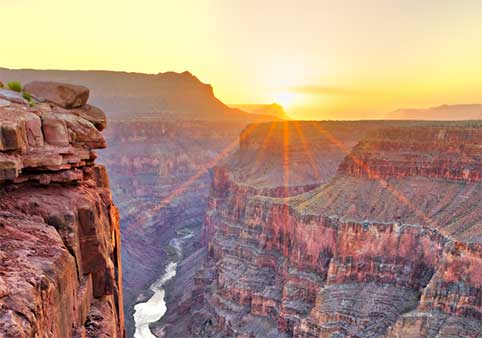
On the South Rim, temperatures are comfortable (65–80°F on the rim, up to 95°F at the bottom by late May), and the longer days mean you can start a sunrise hike at 5:30 AM and finish by 10 AM before the inner canyon heats up. Accommodation is still available with reasonable advance booking, and the landscape shows its full spring palette — rich greens from recent rains, blooming cacti, and that impossible layered light.
June — The Heat Arrives, But It’s Not All Bad
June is complicated. It’s the beginning of peak season, and with good reason: American school holidays mean millions of families hit the road. Crowds are significant, parking at the South Rim can require arriving before 7 AM or using the park shuttle from Tusayan, and inner canyon temperatures routinely exceed 100°F.
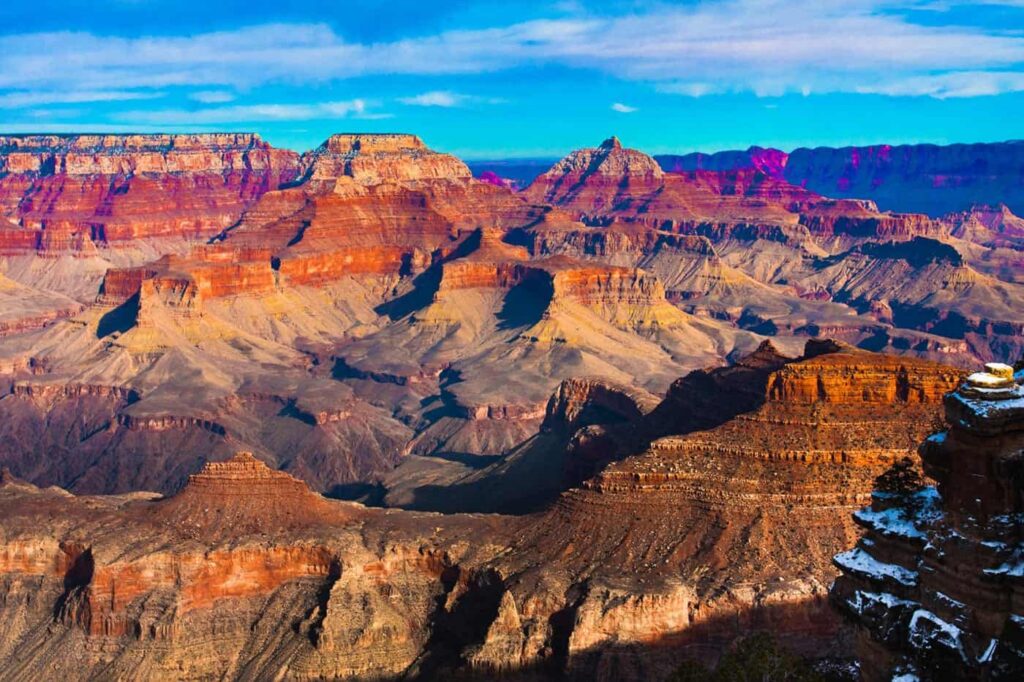
That said, early June mornings are still magical. If you’re committed to a June visit, plan all hikes for before 8 AM or after 5 PM. The Arizona Trails website and NPS hike smart guidelines are explicit about this, and it’s worth taking seriously.
July & August — Peak Crowds, Monsoons, and Maximum Heat
July is the single busiest month at Grand Canyon National Park. Over 700,000 visitors crossed through in July 2023 alone, according to NPS data. Inner canyon temperatures at the bottom frequently exceed 110°F. And starting in late July, the monsoon season brings intense but short afternoon thunderstorms that can trigger flash floods in slot canyons and side trails.
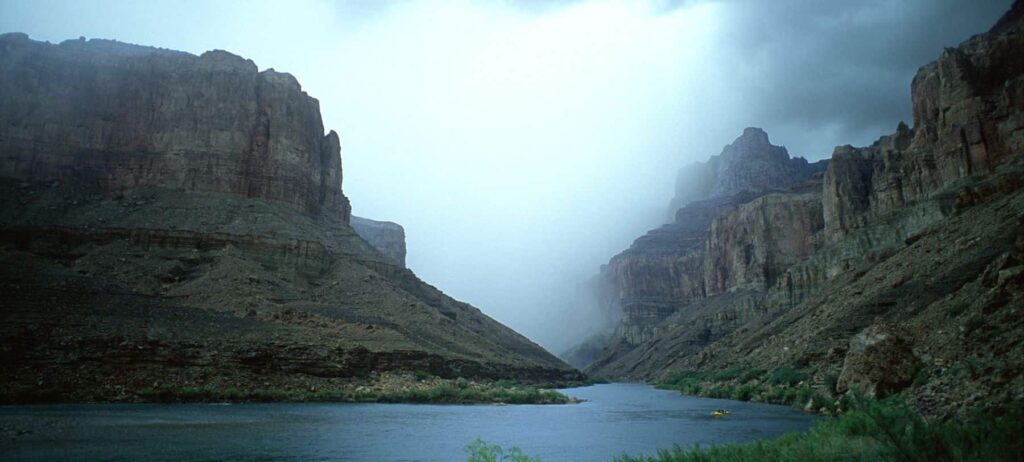
This doesn’t mean July is impossible — it means you need a completely different strategy. Rim viewing, ranger programs, the Desert View Watchtower, and early morning drives along Desert View Drive are all perfectly enjoyable. Just don’t plan a deep canyon hike during the heat of the day in July. Many experienced hikers actually flip their schedule entirely, hiking overnight and resting during afternoon hours.
⚠️ Flash Flood Warning During monsoon season (July–September), always check weather forecasts before hiking any narrow canyon side trails. Flash floods can arrive with little warning even when skies above you look clear. The NPS hotline for conditions is updated daily.
September — The Comeback Month
The crowd exodus in September is one of the most dramatic seasonal shifts in any U.S. national park. Labor Day weekend is busy, but by mid-September, the park transforms. Temperatures begin to moderate — still warm, but the brutal edge softens. The monsoon rains are tapering off. The light shifts to a lower, more golden angle that photographers call the “canyon hour.”
September is ideal for anyone who wants a summer-adjacent visit with fewer of summer’s downsides. Inner canyon temperatures are still high (90–100°F at the bottom), so smart hiking protocols still apply — but the evening rim walks and viewpoints feel genuinely peaceful again.
October — The Best All-Around Month
Ask ten experienced Grand Canyon visitors which month they’d choose if they had to pick one. Most will say October. The cottonwood trees in the inner canyon turn brilliant gold. Temperatures on the rim drop to a perfect hiking range (45–65°F highs). The North Rim is open until mid-October, so a combined South + North Rim trip is still feasible in early October. And the fall light — lower, warmer, richer — makes every photograph look like it was filtered by a professional.
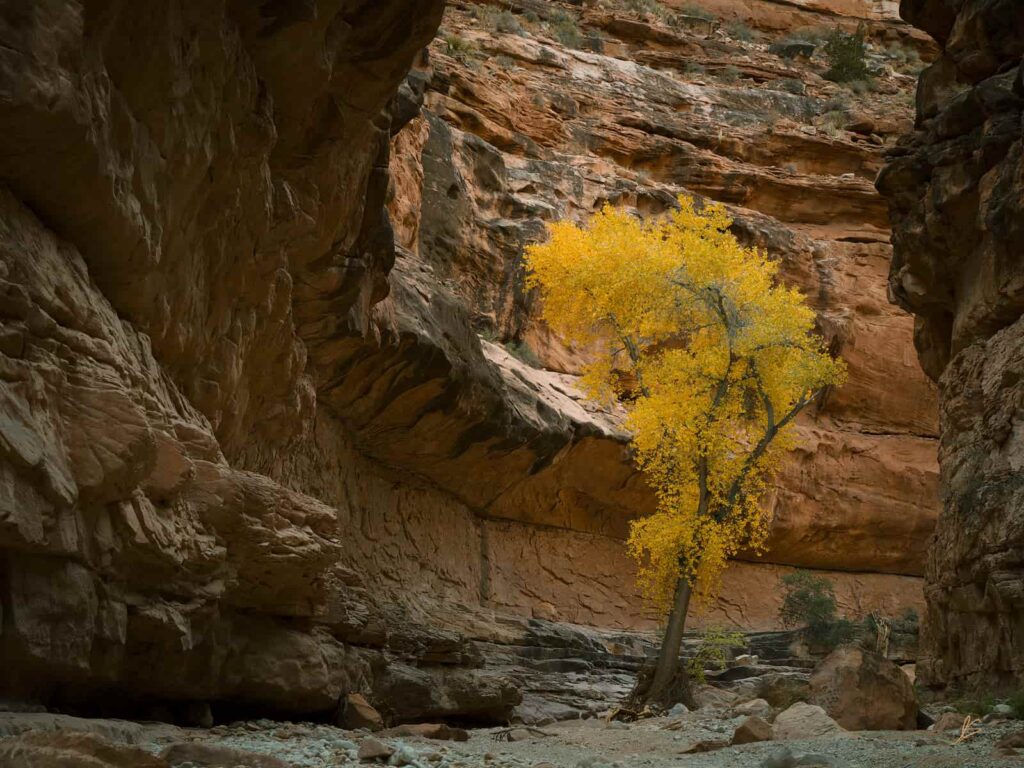
Crowds are noticeably lower than summer but ticking up from September. The serious photographers and hikers who follow the crowds have all discovered October, so you’re not alone down here. But the vibe is calmer, more intentional, more likely to involve conversations with other travelers who’ve done their homework.
November & December — Quiet Magic
November offers many of October’s benefits with further crowd reduction. The North Rim has closed, and temperatures on the South Rim can dip below freezing overnight. But daytime hikes in November can be extraordinary — cool, crisp, uncrowded, with snow-dusted canyon walls appearing on cold mornings.
December sees a brief holiday crowd spike around Christmas week (December 23–January 1), but outside of that window, it’s among the quietest times of the year. El Tovar dining room is reservable with minimal lead time. Trail parking is rarely an issue. The canyon, stripped of its busiest season, reveals a kind of dignity that’s hard to put into words.
Season-by-Season Quick Reference
| Season | Months | Rim Temp | Crowd Level | Best Activity |
|---|---|---|---|---|
| Spring | Mar – May | 50–75°F | Low–Moderate | Hiking, photography, wildlife |
| Summer | Jun – Aug | 75–90°F | Very High | Rim viewing, ranger programs |
| Fall | Sep – Nov | 45–70°F | Low–Moderate | Hiking, backpacking, photography |
| Winter | Dec – Feb | 20–45°F | Very Low | Solitude, snowshoeing, lodge stays |
South Rim vs. North Rim: Seasonal Differences
This distinction matters enormously for trip planning. The South Rim is open year-round and sits at roughly 6,860 feet. It receives about 90% of all Grand Canyon visitors and offers the most developed infrastructure — multiple lodges, restaurants, visitor centers, and shuttle systems.
The North Rim sits higher at 8,241 feet, receives far less visitation, and is only accessible from mid-May to mid-October. Its higher elevation means cooler summer temperatures (often 10–15°F cooler than the South Rim on any given day) and earlier autumn snow. The drive from the South Rim to the North Rim covers about 215 miles by road — roughly a 4.5-hour drive — so most visitors choose one or the other per trip.
✦ Insider Tip If you’re visiting in May or October specifically to see the North Rim, book Grand Canyon Lodge on the North Rim at least 6 months in advance. It books out early and there’s no comparable accommodation elsewhere on that side of the canyon.
Permits, Crowds & Booking Windows in 2026
A quick note on the logistics that most first-timers overlook until it’s too late.
Phantom Ranch Lottery
Phantom Ranch — the only lodge at the bottom of the canyon — is distributed via a lottery system through the park’s concessioner, Xanterra. Lottery applications open approximately 15 months in advance. For a spring 2026 trip, you’d have needed to apply in early 2025. Waitlist spots occasionally open 1–3 days before the desired date, so it’s worth checking regularly.
Backcountry Camping Permits
Backcountry permits for overnight camping below the rim are issued by the Grand Canyon Backcountry Information Center. Applications open on the 1st of the month, four months before the desired trip month. For May 2026 trips, applications opened January 1, 2026 — and popular campsites (Bright Angel Campground, Cottonwood) fill within hours.
Entrance Fees & Annual Passes
As of 2026, a 7-day vehicle pass costs $35. If you’re visiting multiple national parks in the same year, the America the Beautiful Annual Pass ($80) covers all entrance fees and pays for itself after two visits.
Grand Canyon Visit Planning Summary
Best months: May and October (top picks), March–April and September–November (excellent)
Worst months for heat: June–August (inner canyon can exceed 110°F)
North Rim open: Mid-May through mid-October only
Phantom Ranch: Lottery-based, opens 15 months in advance
Entrance fee: $35 per vehicle (7-day pass), $80 annual pass
- Book South Rim lodges 6–12 months out for summer/fall visits
- North Rim Lodge books out fast — plan well in advance for May or October
- Always start canyon hikes at sunrise; be off lower trails by 10 AM in summer
Insider Tips for Every Season
Photography: When the Light Is Extraordinary
The absolute best photography conditions occur on mornings in late September and October, when low sun rakes across the canyon walls at a shallow angle, producing shadows that reveal every geological layer with dramatic clarity. The second-best window is late March to early May for similar light with the added bonus of green desert vegetation. Mather Point at sunrise in October is one of the most photographed views in the world for a reason — plan to be there 30 minutes before sunrise.
Hiking: The Heat Rule Nobody Should Break
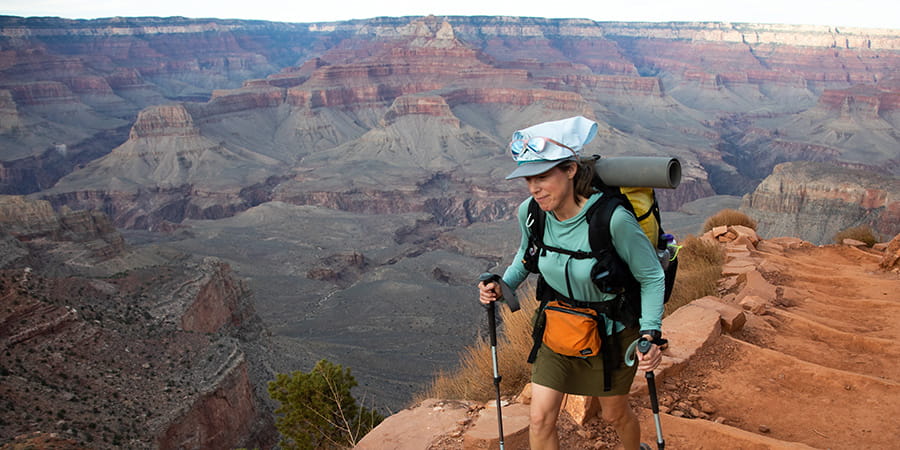
The NPS’s “hike smart” guidance is simple: below-rim hiking should happen between dawn and 10 AM, then again after 4 PM in summer. The canyon is an “inverted mountain” — it gets hotter as you descend, not cooler. A common mistake is assuming the descent is the hard part. In fact, the climb out, in full afternoon sun, after you’ve already depleted your water and energy reserves, is where emergencies happen. Carry one liter of water per hour of hiking and double it in summer.
Wildlife Watching
California condors — one of North America’s most endangered birds, with a wild population slowly recovering thanks to decades of conservation work — are frequently spotted soaring above the canyon rim, especially near Bright Angel Point and Desert View. Early morning is best. Spring migration season (March–May) also brings warblers and other songbirds through the canyon corridor.
Read Also: Best Time to Visit Yellowstone National Park (Month-by-Month Guide)
Final Verdict: When Should You Go in 2026?
If you have flexibility, choose May or October. These months offer the ideal combination of manageable crowds, comfortable temperatures, full park access, and extraordinary natural beauty.
If you’re traveling with young children or elderly family members, April and September are your best bets — warm enough to feel active and alive, cool enough to stay comfortable during a full day of rim exploration and lighter hikes.
If you’re a serious hiker planning a rim-to-rim or overnight backcountry trip, late April through May and September through mid-October are your windows. Book permits the moment they open — don’t leave it to chance.
If budget matters and crowds don’t bother you, January or February offer the most affordable lodging, the lowest crowds, and a genuinely beautiful winter canyon experience that most people never see.
Whatever month you choose, one thing is certain: standing on the rim of the Grand Canyon — watching the light move across 277 miles of layered rock that took two billion years to form — is one of those experiences that recalibrates your sense of scale in a way that never quite leaves you. Plan carefully. Go prepared. And give yourself enough time to just stand there and let the enormity of it sink in.
✦ Don’t Forget Cellular service is limited throughout the park. Download offline maps via the NPS app or Gaia GPS before you arrive. Also download the Grand Canyon’s free ranger podcast series — there’s one for every major viewpoint, and they add remarkable depth to what you’re seeing.
Rubie Rose is a travel writer who focuses on USA national parks, hiking trails, and practical travel planning. She shares easy-to-follow guides to help visitors explore parks safely and confidently. Her work on parktrailsguide.com is built on deep research, firsthand accounts from park visitors, and a commitment to giving readers information they can actually use on the trail.