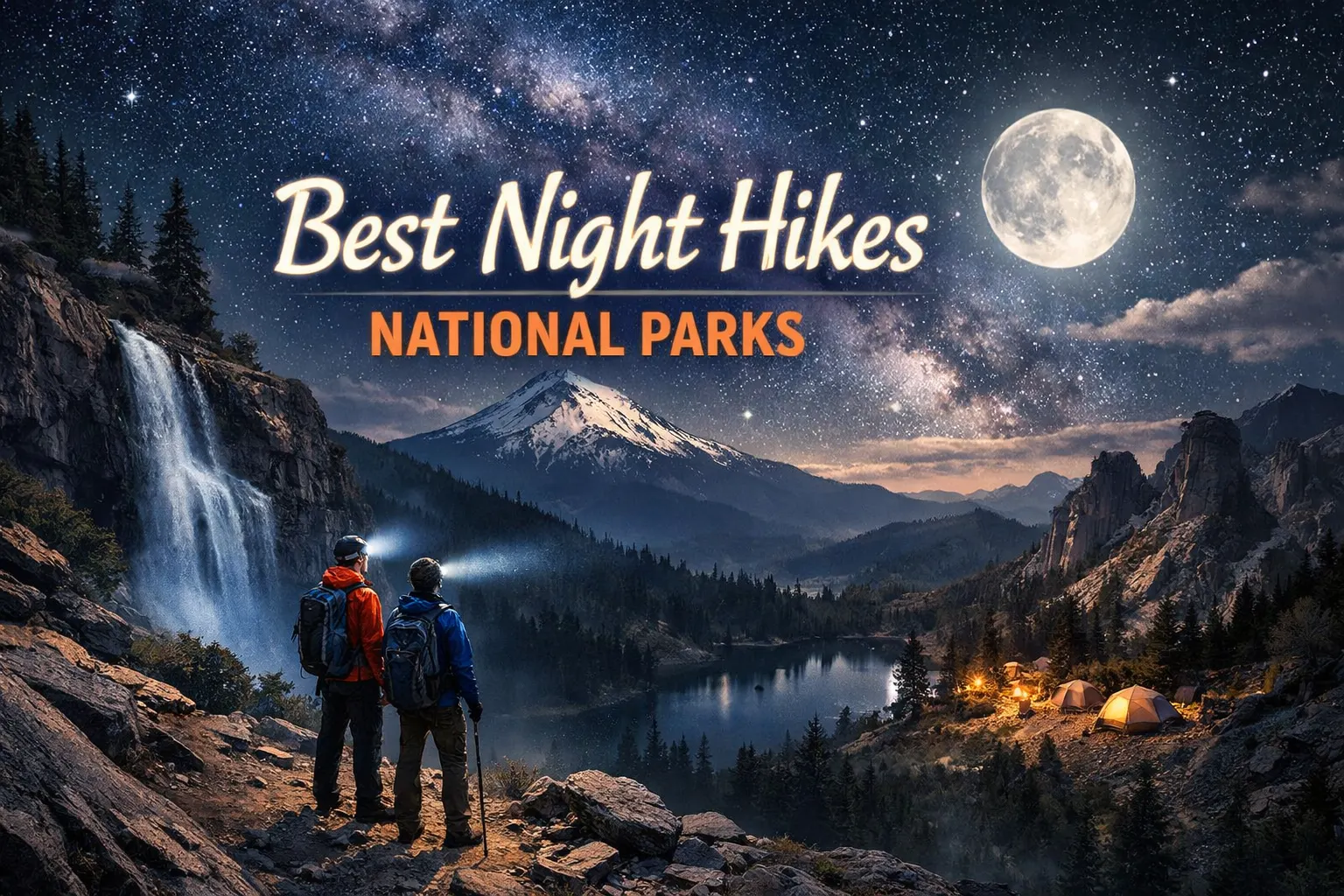
Best Night Hikes in US National Parks (Safe, Scenic & Unforgettable) 2026
There’s something about hiking after dark that changes everything. The crowds disappear. The air cools down. And the sky — well, the sky becomes the entire reason you came.
Night hiking in US National Parks has quietly become one of the most rewarding experiences a visitor can have, but most people never try it. They plan their sunrise hikes, pack up by noon, and head back to camp before it gets dark. That’s understandable — daytime hiking is comfortable and familiar.
But if you’re willing to strap on a headlamp and step outside your comfort zone, nighttime trails offer something genuinely hard to describe: silence, solitude, and skies so full of stars that you’ll stop mid-trail just to stand there and stare.
In this guide, you’ll find the best night hikes across US National Parks in 2026, practical safety tips, what to bring, and everything you need to plan a night hike you’ll actually remember.
Why Try Night Hiking in National Parks?
Most people think of national parks as daytime destinations. But park rangers and frequent visitors have known for years that some trails reveal their best side after sunset.
Here’s what makes night hiking genuinely special:
- Stargazing access you won’t get anywhere else. Many national parks are certified International Dark Sky Parks, meaning light pollution is minimal. The Milky Way is visible to the naked eye in ways that even dark rural areas can’t match.
- Wildlife is more active at night. Owls, bats, foxes, coyotes, and in the desert, certain species of lizards and insects — nighttime is when they come out.
- Temperatures drop significantly, which makes hiking in desert parks like Joshua Tree or Death Valley far more comfortable in summer months.
- The trails are empty. If you’ve ever tried hiking Angels Landing or the Navajo Loop Trail at 10 a.m. in July, you know what overcrowding feels like. At 9 p.m., you might have the whole path to yourself.
One thing many people overlook is that hiking at night doesn’t mean hiking in total darkness. A full or near-full moon can illuminate sandstone trails so well that some experienced hikers don’t even need a headlamp — though you should always carry one.
Best Night Hikes in the USA (2026)
1. Bryce Canyon National Park, Utah
Best Trail: Navajo Loop Trail or Queen’s Garden Trail
Distance: 1.3 – 3 miles round trip
Difficulty: Easy to Moderate
Best Time for Night Hike: May through September (full moon nights are magical)
Bryce Canyon might be the single best night hiking destination in the entire country. The park is a certified International Dark Sky Park, and the hoodoo formations — those tall, thin spires of red rock — take on an almost alien quality under moonlight.
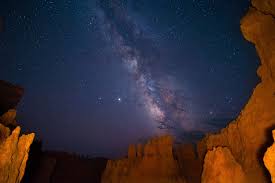
Many visitors say the Navajo Loop Trail at night feels like walking through a completely different landscape than during the day. Shadows fall differently. Colors shift to silver and rust. And above the canyon rim, the stars are layered so thick it almost looks artificial.
The park even hosts annual astronomy events and offers ranger-led night sky programs. If you’re visiting for the first time, check the park’s event calendar — joining a guided night hike takes all the guesswork out of it.
- Entry Fee: $35 per vehicle (America the Beautiful Pass accepted)
- Night Hiking Allowed: Yes, trails are open 24/7
- Nearest Town: Tropic, UT (12 miles away)
2. Joshua Tree National Park, California
Best Trail: Skull Rock Nature Trail or Boy Scout Trail
Distance: 1.7 – 8 miles
Difficulty: Easy to Moderate
Best Time for Night Hike: October through April (summer nights can still be warm)
Joshua Tree is one of those parks that genuinely looks better at night. The twisted silhouettes of Joshua Trees against a starlit sky are iconic, and the rock formations — some of the best bouldering terrain in the world — cast dramatic shadows when the moon is up.
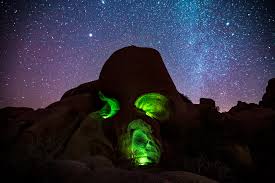
The Skull Rock Nature Trail is a great option for first-timers. It’s short, well-marked, and takes you past some of the park’s most unusual rock formations. The Boy Scout Trail is longer and more remote, suited for hikers who are comfortable navigating with a map.
One thing worth knowing: desert temperatures can swing dramatically after dark, even in spring. A 90°F afternoon can become a 55°F night fast, so layer up.
- Entry Fee: $35 per vehicle
- Night Hiking Allowed: Yes
- Nearest Town: Twentynine Palms, CA
3. Grand Canyon National Park, Arizona
Best Trail: Bright Angel Trail (upper section only)
Distance: 1.8 – 3 miles out and back
Difficulty: Moderate
Best Time for Night Hike: May through October
The Grand Canyon at night is humbling in a way the daytime version isn’t. The canyon itself becomes a void — a massive darkness below you — while the stars overhead feel unusually close.
Most experienced hikers recommend keeping night hikes at the Grand Canyon to the upper sections of the South Rim trails. Going deep into the canyon after dark isn’t recommended for casual hikers, as the terrain becomes more technical and temperatures can be unpredictable at lower elevations.
If you’re visiting for the first time, start with a short walk along the Rim Trail near Mather Point — it’s flat, paved in sections, and offers extraordinary views even after sunset.
- Entry Fee: $35 per vehicle
- Night Hiking Allowed: Yes, rim trails are open 24/7
- Nearest Town: Tusayan, AZ (1 mile from South Entrance)
4. Zion National Park, Utah
Best Trail: Pa’rus Trail or Lower Emerald Pools
Distance: 1.7 – 2.5 miles Difficulty: Easy
Best Time for Night Hike: March through November
Zion’s canyon walls feel even more imposing at night. The towering sandstone cliffs block out the horizon on both sides, which creates a narrow corridor of sky above the Virgin River — and that sky is spectacular.
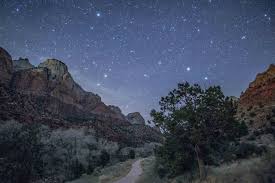
The Pa’rus Trail is the most accessible option for night hiking in Zion. It runs along the Virgin River, is paved and level, and allows both foot traffic and bikes. There’s enough ambient light from the moon or stars to walk it comfortably, and the sounds of the river at night make it genuinely peaceful.
Note that Angels Landing and the Narrows require shuttle access, which doesn’t run at night, so plan your route accordingly.
- Entry Fee: $35 per vehicle
- Night Hiking Allowed: Yes
- Nearest Town: Springdale, UT (right outside the park entrance)
5. Great Basin National Park, Nevada
Best Trail: Alpine Lakes Loop or Wheeler Peak Summit Trail
Distance: 2.7 – 8.6 miles
Difficulty: Moderate to Strenuous
Best Time for Night Hike: June through September
Great Basin is the most underrated dark sky destination in the entire national park system. It sits in one of the remotest parts of the continental US, sees relatively few visitors, and offers some of the darkest skies you’ll ever experience outside a telescope.
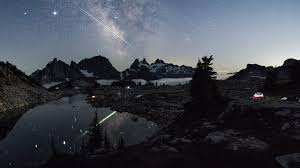
The Alpine Lakes Loop is manageable for most hikers. The Wheeler Peak Summit Trail, at nearly 9 miles round trip with significant elevation gain, is a serious undertaking that should only be attempted by experienced hikers with proper equipment.
Many visitors say Great Basin at night feels like a completely private experience — the park is quiet, uncrowded, and the sky is simply extraordinary.
- Entry Fee: Free (no entrance fee)
- Night Hiking Allowed: Yes
- Nearest Town: Baker, NV (5 miles away)
6. Death Valley National Park, California
Best Trail: Mesquite Flat Sand Dunes or Badwater Basin Walk
Distance: 1 – 3 miles
Difficulty: Easy (but terrain can be tiring)
Best Time for Night Hike: November through March
Summer night hiking in Death Valley is only for the most heat-adapted adventurers — even at midnight, temperatures can hover near 100°F in peak summer. But from November through March, the nights are cool and the landscape is otherworldly.
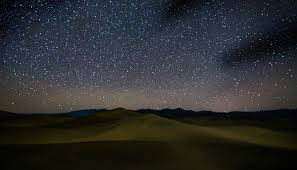
Walking across the Mesquite Flat Sand Dunes under moonlight is one of those experiences that stays with you. The dunes shift and ripple in the wind, and with no footprints from daytime crowds, the surface looks completely untouched.
Badwater Basin — the lowest point in North America at 282 feet below sea level — is equally impressive at night. The salt flat stretches into the darkness in every direction, and the sky above is enormous.
- Entry Fee: $35 per vehicle
- Night Hiking Allowed: Yes
- Nearest Town: Furnace Creek, CA (within the park)
Practical Travel Information
| Detail | Info |
|---|---|
| Best Season Overall | Spring (March–May) and Fall (September–November) |
| America the Beautiful Pass | Covers entrance to most parks ($80/year) |
| Permits | Some parks require day-use permits — check before you go |
| Cell Service | Limited to none in most park interiors |
| Ranger Stations | Hours vary — call ahead for night availability |
What to Carry on a Night Hike
- Headlamp (bring extra batteries — don’t rely on your phone flashlight)
- Layered clothing (temperatures drop fast after dark)
- Navigation (downloaded offline maps via AllTrails or Gaia GPS)
- Water (more than you think you’ll need)
- Snacks
- First aid kit (compact version is fine)
- Emergency whistle
- Fully charged phone (even without service, it can be a lifeline)
- Bear spray (in applicable parks)
Essential Night Hiking Gear
Don’t underestimate how important proper gear is.
Must-carry items:
- Headlamp (with extra batteries)
- Backup flashlight
- Fully charged phone
- Map or offline GPS
- Warm layers
- Water and snacks
One thing many people overlook is how quickly temperatures drop after sunset—even in summer.
Safety Tips & Common Mistakes to Avoid
Stay on marked trails. At night, it’s surprisingly easy to wander off-path, especially in areas with rocky terrain or multiple intersecting trails. Stick to established routes you’ve reviewed in daylight or on a map.
Tell someone your plan. Before heading out, let a friend, family member, or campground host know where you’re going and when you expect to return.
Don’t underestimate wildlife encounters. Nocturnal animals are active. In most cases they’ll avoid you, but making a little noise while you walk helps prevent surprises.
Avoid hiking alone in remote areas. Some of these trails see almost no foot traffic at night. Bring a partner when possible, especially on longer or more technical routes.
Common mistakes to avoid:
- Starting too late without knowing trail length
- Relying only on a phone flashlight
- Not checking moon phase before you go (a full moon dramatically improves visibility)
- Skipping the offline map download
- Underestimating how cold it gets after midnight
Pro Tips
⭐ Pro Tips from Rubie Rose
- Check the moon calendar before you book. Hiking around a full moon means natural light the whole way — it’s a game-changer.
- Arrive at the trailhead before sunset so you can orient yourself in daylight first.
- Use red-light mode on your headlamp while stargazing — it preserves your night vision far better than white light.
- Park permits sell out fast in popular parks. Book your entry reservation weeks in advance on recreation.gov.
- Bring a printed trail map as backup. Even downloaded offline maps can fail when your phone battery dies in the cold.
Quick Summary
- Night hiking offers quieter trails and incredible views
- Best parks include Bryce Canyon, Zion, Joshua Tree, and Arches
- Start with easy, well-marked trails
- Carry proper gear and prioritize safety
- Plan based on moon phase and weather
FAQs
1. Is night hiking safe in national parks?
Yes, if you choose easy trails, carry proper gear, and follow safety guidelines.
2. Do I need a guide for night hiking?
Not usually. Many trails are safe for self-guided hikes, especially popular ones.
3. What is the best time for night hiking?
Full moon nights for visibility, new moon for stargazing.
4. Are animals a concern at night?
Wildlife is more active, but encounters are rare if you stay on trails and remain alert.
5. Can beginners try night hiking?
Yes. Start with short, easy trails like Hidden Valley or Yosemite Falls.
Conclusion
Night hiking in US National Parks isn’t for everyone — and that’s exactly what makes it special. It takes a little more planning, a little more gear, and a willingness to step outside the usual tourist experience.
But what you get in return is real. Empty trails. Skies full of stars. Landscapes that look completely different in the dark. A version of these parks that most visitors never see.
If you’ve been thinking about trying a night hike, start small. Pick a short, well-marked trail at a Dark Sky Park like Bryce Canyon or Great Basin. Go during a full moon. Bring a reliable headlamp and download your offline map before you lose cell service.
Plan ahead, stay safe, and go experience these parks the way they were meant to be seen — quietly, under the stars, without the crowds.
Read Also this: Best Hikes in Zion National Park Ranked by Difficulty (2026 Guide)
Best Hikes in Great Smoky Mountains National Park for Beginners
Rubie Rose is a travel writer who focuses on USA national parks, hiking trails, and practical travel planning. She shares easy-to-follow guides to help visitors explore parks safely and confidently. Her work on parktrailsguide.com is built on deep research, firsthand accounts from park visitors, and a commitment to giving readers information they can actually use on the trail.