Best National Parks in the Pacific Northwest: Washington & Oregon Guide
I still remember standing in the Olympic rainforest for the first time, completely soaked through my rain jacket, laughing to myself because I hadn’t believed the ranger at the visitor center when she said “yes, it rains every day in the Hoh.” I thought she was exaggerating. She was not. But here’s the thing — that moment, dripping between moss-draped maples with fog rolling off the Hoh River — that’s when the Pacific Northwest got its hooks in me for good.
If you’re researching the best national parks in the Pacific Northwest, I get it. Washington and Oregon have this magnetic pull that’s genuinely different from anything else in the US. I’ve hiked in the Smokies, scrambled slickrock in Arches, watched geysers erupt in Yellowstone at -10°F in February — and the PNW still feels like its own universe. Wetter, wilder, more dramatic in a quiet, mossy, ancient kind of way.
But 2026 has shaken things up. New timed-entry reservations, updated America the Beautiful Pass rules (it’s $90 now, up from $80 — still worth every penny), and some parks dealing with serious overcrowding that would’ve been unimaginable five years ago. So let’s talk about all of it — the real costs, the hidden gems, and the stuff I wish someone had told me before my first trip up here.
Why the Pacific Northwest Hits Different
Okay, genuine question: have you ever been somewhere that felt genuinely prehistoric? Because that’s Olympic. That’s the North Cascades. That’s what separates the Pacific Northwest from every other park region I’ve visited.
Compared to Zion in July — hot, crowded, permit-gated from basically every trailhead — or even the Smokies, which I adore but which are absolutely mobbed from April through October, the PNW parks offer something rarer: solitude, even in peak season, if you know where to look.
And the biodiversity is just staggering. One day you’re in a temperate rainforest. The next, you’re at a glacier. Then you drive three hours and you’re standing on a black sand beach watching sea stacks rise out of the Pacific. It’s almost cheating.
Olympic National Park: Rainforest, Ridges & Rocky Coast
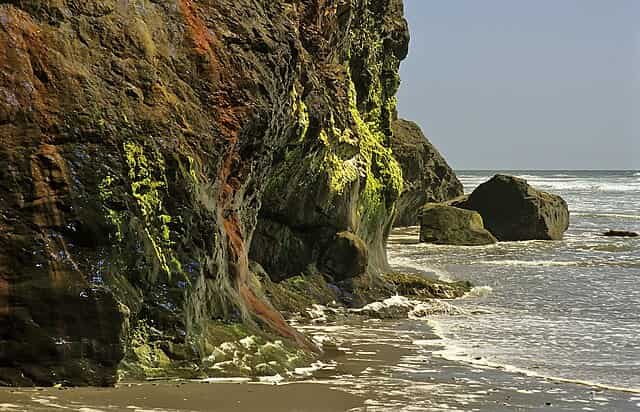
This is the big one. Three completely distinct ecosystems — alpine meadows, rainforest, and wild Pacific coastline — all within a single park boundary. I’ve been to Olympic twice now, once in late June and once in September, and both trips felt like totally different parks.
The Hoh Rainforest
I already told you about my soggy welcome. But I’d do it again tomorrow. The Hoh Rain Forest gets roughly 140 inches of rain per year — it earns the title. The Hall of Mosses trail is only about a mile and a half, but honestly, plan for an hour minimum because you will stop every thirty seconds with your jaw on the ground.
Don’t make my mistake and underpack layers. Even in June, the Hoh runs cold and damp. Bring a rain shell and waterproof trail runners or boots, full stop.
Hurricane Ridge
This is the alpine flip side. Drive up from Port Angeles (about 17 miles, about 45 minutes) and suddenly you’re at 5,242 feet with panoramic views of the Olympic Mountains and, on clear days, the Strait of Juan de Fuca. I saw three black-tailed deer just wandering the parking lot in September like they owned the place.
2026 update: Olympic now requires a timed-entry reservation for the Hurricane Ridge Road corridor between late May and early October. Reservations open 60 days out on recreation.gov. I grabbed mine about 45 days out and still had solid options — don’t wait until the week before.
Costs at Olympic (verified March 2026)
| Fee Type | Cost |
|---|---|
| 7-day vehicle pass | $35 |
| America the Beautiful Annual Pass | $90 |
| Wilderness camping permit | $8/night + $6 reservation fee |
| Hurricane Ridge timed entry (vehicle) | Included with park entry |
Pros & Cons: Olympic National Park
Pros:
- Three ecosystems in one park — incredible value for the entry fee
- Less crowded than Rainier (especially Hoh and coast sections)
- Ruby Beach and Rialto Beach are absolute stunners
- Dog-friendly on certain beach areas (unusual for national parks)
Cons:
- It will rain. Prepare accordingly.
- The park is massive and requires a car — distances between zones are significant
- Hurricane Ridge reservations sell out fast in summer
Mount Rainier National Park: The Volcano That Rules the Skyline
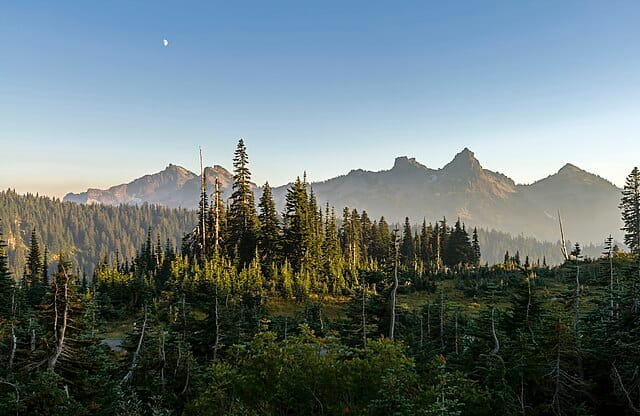
You can see Rainier from Seattle on a clear day. That should tell you something. At 14,411 feet, the mountain is a presence — not just a park. My September visit caught it in alpenglow at dusk and I genuinely teared up a little. I’m not embarrassed about that.
Skyline Trail & Paradise
The Skyline Trail loop from Paradise is the classic intro hike — about 5.5 miles with 1,700 feet of elevation gain, wildflowers in late July and August that look like someone spilled a paint box across the hillside. I’d call it moderate-strenuous. And yes, the name “Paradise” is 100% earned.
Sunrise: The Underrated Side
Most visitors go straight to Paradise. Sunrise is higher (6,400 feet), less crowded, and offers arguably better views of the mountain’s north face and the Emmons Glacier. The road to Sunrise typically opens in early July and closes by mid-October.
Insider tip: Sunrise parking fills by 9 a.m. on summer weekends. Get there before 7:30 or park at the White River Campground and walk up — it adds about 1.5 miles each way but almost nobody does it.
Pros & Cons: Mount Rainier
Pros:
- Iconic, bucket-list scenery
- Excellent trail variety from easy wildflower walks to glaciated summit attempts
- NPS visitor centers at both Paradise and Sunrise are well-staffed and helpful
Cons:
- Paradise is genuinely crowded in July-August — think Zion-level parking chaos
- Weather changes fast. Rainier makes its own weather systems
- No timed-entry yet in 2026, but NPS has signaled it may come in future years
Costs (March 2026): $35 for a 7-day vehicle pass. Same America the Beautiful Pass covers entry.
North Cascades National Park: The Hidden Crown Jewel
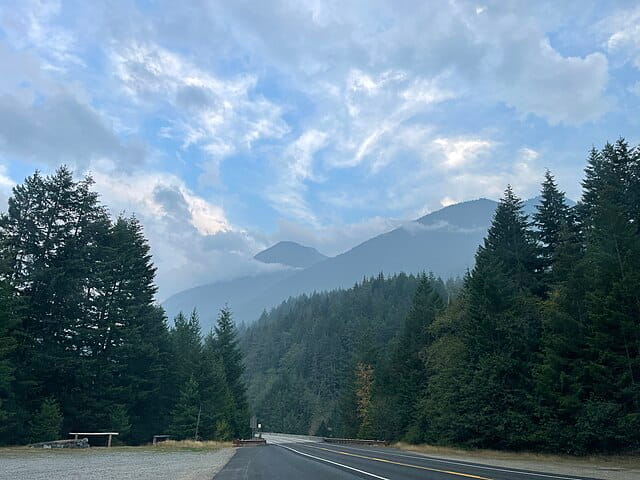
Honest confession: I saved the best Washington park for last in my own trip planning and I have never forgiven myself. North Cascades is criminally undervisited. It gets roughly one-tenth the visitors Rainier does, which is mind-boggling when you see it.
More than 300 glaciers. Jagged peaks that look borrowed from the Swiss Alps. The North Cascades Highway (Highway 20) cuts through and offers some of the most dramatic roadside scenery in the country.
What to Do
The Maple Pass Loop (7 miles, ~2,000 ft gain) near Rainy Pass is one of the best hikes I’ve ever done. Full stop. In late September when the larches turn gold, it looks like the mountain is literally on fire. Get there early — the trailhead parking fills by 8 a.m. on fall weekends.
2026 update: North Cascades remains free to enter (no entrance fee), but the Highway 20 corridor closes at higher elevations in winter, typically late November through late April. Always check road status before you go.
Pros & Cons: North Cascades
Pros:
- No entrance fee
- Dramatically less crowded than Rainier or Olympic
- Maple Pass Loop is a top-5 PNW hike, easily
- Incredible backcountry for experienced hikers
Cons:
- Limited services — fill up your gas tank before entering
- Visitor center hours are reduced outside summer
- Highway 20 closed in winter; access limited
Crater Lake National Park (Oregon): The Bluest Water You’ve Ever Seen
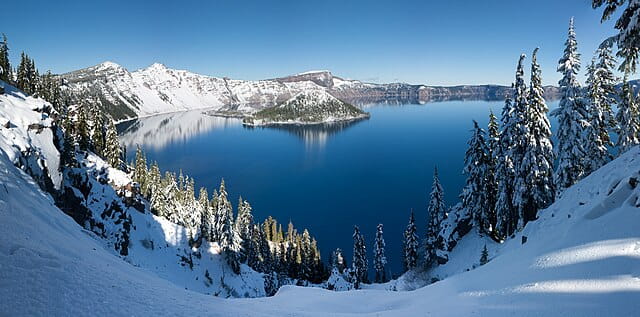
Oregon’s only national park and genuinely one of the most visually striking places I’ve ever stood. Crater Lake sits in the caldera of an ancient collapsed volcano — the deepest lake in the US at 1,943 feet. The color is otherworldly. Photos don’t capture it. I looked at my own photos afterward and thought “that looks fake.”
Rim Drive & Trails
The Rim Drive (33 miles) circles the caldera and I recommend driving the full loop even if you only stop at a few overlooks. Wizard Island looms in the middle of the lake like something out of a fantasy novel. The Garfield Peak Trail (3.4 miles, 1,010 ft gain) gives the best elevated views — do this one.
2026 Updates
The lodge at Crater Lake (Crater Lake Lodge) runs about $250–$350 per night depending on season and books out months in advance. I missed a booking window once and ended up staying in Medford and driving in — plan ahead.
Costs (March 2026): $35 for a 7-day vehicle pass. No timed-entry system currently.
Pros & Cons: Crater Lake
Pros:
- Absolutely unique, nowhere-else-on-Earth scenery
- Less crowded than coastal Oregon parks mid-week
- Good snow year-round for winter visitors (cross-country skiing available)
Cons:
- Rim Drive partially closed in winter
- Crater Lake Lodge books up extremely fast
- Limited food/services inside the park
How to Use the America the Beautiful Pass in the PNW
The America the Beautiful Annual Pass is now $90 (increased in 2025). It covers entrance fees at all four parks mentioned above — Olympic, Rainier, North Cascades, and Crater Lake. If you’re hitting even two parks in a single trip, it pays for itself immediately.
A few 2026 reminders: the pass covers your vehicle’s entry but does NOT cover camping fees, wilderness permits, or timed-entry reservation slots (those are separate fees). Always double-check recreation.gov before assuming your pass covers everything.
Prices verified March 2026 — always confirm on nps.gov as fees can change.
Best Time to Visit PNW National Parks
| Park | Best Months | Avoid |
|---|---|---|
| Olympic | July–September | November–February (heavy rain) |
| Mount Rainier | Late July–September | Before July (snow on Paradise) |
| North Cascades | July–early October | Winter (Hwy 20 closed) |
| Crater Lake | July–September | Early spring (heavy snow) |
Late September is honestly my personal favorite window for the whole region. Crowds drop noticeably after Labor Day, fall color starts creeping in, and the light turns golden in a way that makes every photo look like it was filtered.
Permits, Reservations & 2026 Rule Changes You Need to Know
This is the stuff that burns people. Don’t let it burn you.
- Olympic Hurricane Ridge: Timed-entry required May–October. Book on recreation.gov, opens 60 days ahead.
- Mount Rainier: No timed-entry currently but Paradise parking fills early. Wilderness camping requires permits ($26 per trip, booked on recreation.gov).
- North Cascades: No entrance fee, no timed-entry. Backcountry permits required for overnight trips.
- Crater Lake: No timed-entry. Crater Lake Lodge reservations open in January for the following summer — set a calendar reminder.
The NPS has been expanding timed-entry systems across the country since 2022 and I fully expect more PNW parks to join the list by 2027. Book early, check nps.gov before every trip, and subscribe to park alert emails — they’ll notify you of changes.
Read Also: Acadia National Park 3-Day Itinerary: What to See and Do
FAQs
Q: Do I need a permit to hike in Olympic National Park?
For day hikes, no. For overnight wilderness camping, yes — a wilderness permit ($8/night + $6 reservation fee) is required and can be booked at recreation.gov.
Q: Is the America the Beautiful Pass worth it for a PNW trip?
Absolutely, if you’re visiting two or more parks. At $90, it covers entry to all four parks mentioned here, saving you $35–$70+ in entrance fees alone.
Q: Can you see Crater Lake in winter?
Yes, but access is limited. The Rim Drive is mostly closed by snow, but the south entrance typically stays open and snowshoeing and cross-country skiing are popular. Check road conditions at nps.gov/crla before going.
Q: How crowded is Mount Rainier in summer?
Very. Paradise parking can fill by 9–10 a.m. on summer weekends. Go early, visit mid-week, or head to Sunrise instead for a less chaotic experience.
Q: Is North Cascades National Park free?
Yes — it’s one of the few national parks without an entrance fee as of 2026.
Q: What’s the best beginner hike in the PNW national parks?
The Hall of Mosses at Olympic (1.5 miles, nearly flat) and the Skyline Loop at Rainier are both accessible for beginners. Crater Lake’s Rim Drive overlooks require zero hiking at all if you prefer.
Q: Do I need 4WD to visit any of these parks?
Not typically in summer. But North Cascades Highway and Rainier’s Sunrise Road can have snow into early July. Check conditions. In winter, chains or AWD may be required.
Q: How far in advance should I book lodging inside these parks?
Crater Lake Lodge: aim for January for summer stays. Rainier’s Paradise Inn: 3–4 months minimum. Olympic’s Lake Quinault Lodge (just outside the park): 2–3 months for summer weekends.
Final Thoughts
If I had to pick one region of the US to road trip through with a stack of park passes and a week to burn, it would be the Pacific Northwest. Every single time.
The combination of Olympic, Rainier, North Cascades, and Crater Lake gives you volcanic peaks, ancient rainforest, glaciated alpine meadows, and a lake that looks like someone filled a caldera with liquid sapphire. You simply can’t replicate that anywhere else.
My one lasting piece of advice? Go in late September. The larch trees turning gold in the North Cascades, the quiet on the Hoh River Trail after the summer crowds leave, the way Rainier glows in autumn alpenglow — it’s worth timing your whole trip around it.
Just pack for rain. Seriously. I say this with love.
Drop a comment with your trip dates — happy to help you plan the details and avoid the rookie mistakes I made along the way!
Prices and permit rules verified March 2026. Always confirm current fees and reservation requirements at nps.gov before your trip.
Rubie Rose is a travel writer who focuses on USA national parks, hiking trails, and practical travel planning. She shares easy-to-follow guides to help visitors explore parks safely and confidently. Her work on parktrailsguide.com is built on deep research, firsthand accounts from park visitors, and a commitment to giving readers information they can actually use on the trail.