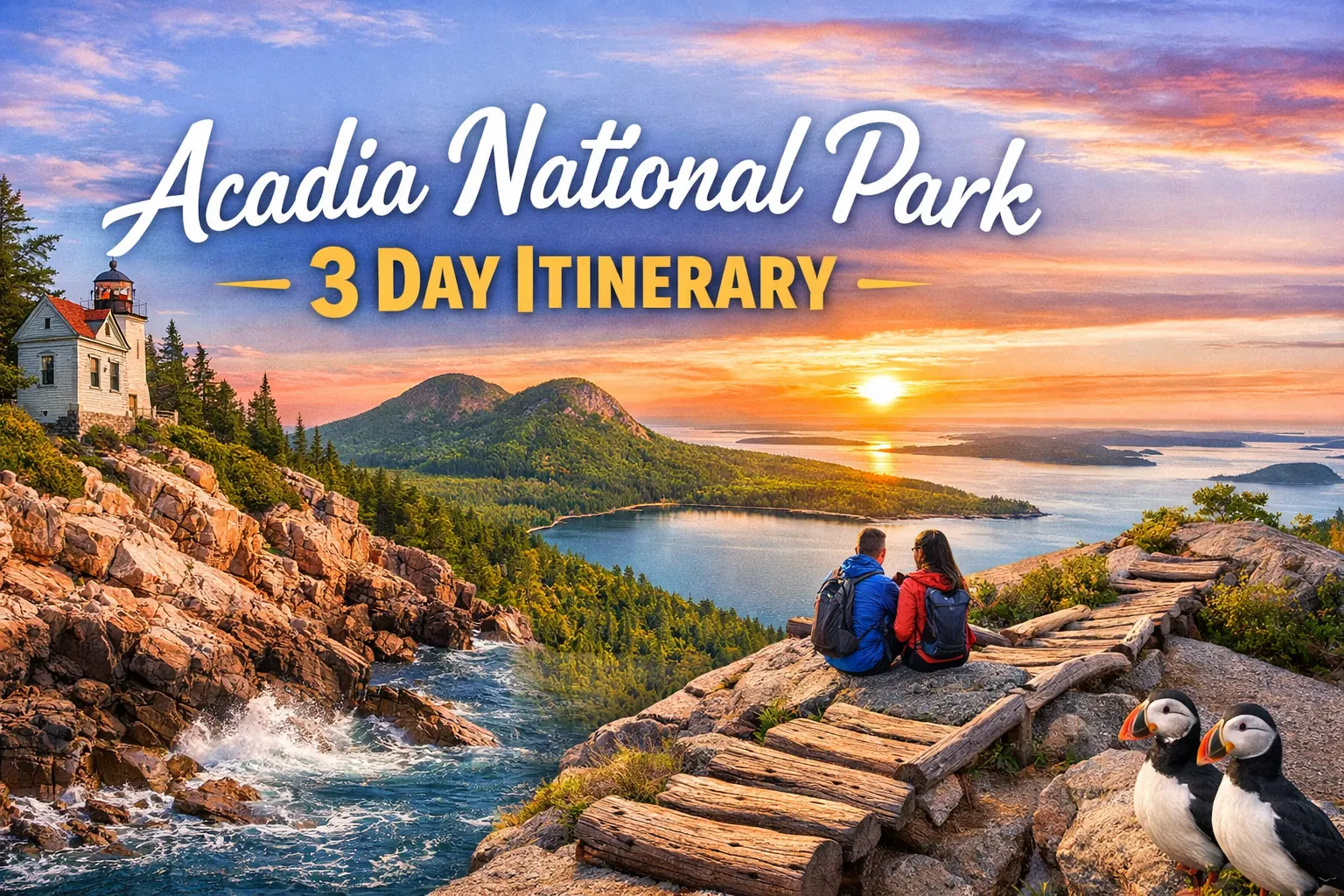
Acadia National Park 3-Day Itinerary: What to See and Do
There’s a moment on the summit of Cadillac Mountain, right before dawn, when the sky goes from deep violet to burning orange — and you realize you’re among the first people in the entire United States to see the sun rise. That alone is worth the trip to Acadia.
But Acadia National Park is so much more than one sunrise. Spread across Mount Desert Island on the rugged coast of Maine, it’s a place where granite peaks meet crashing Atlantic surf, where carriage roads wind through birch forests, and where a lobster roll eaten at a weathered picnic table tastes better than anything you’ve ever had.
The challenge? Acadia packs an enormous amount of beauty into a relatively compact space — and if you only have three days, you need a plan. This itinerary is built around exactly that: three full, deeply rewarding days that balance iconic highlights with a few lesser-known corners most visitors completely miss.
Let’s get into it.
Before You Go: What to Know About Acadia in 2026
Timed Entry Permits Are Still Required
Acadia introduced a timed-entry permit system for the Cadillac Mountain Summit Road in 2021, and as of 2026 that system remains in place. If you want to drive to the summit — especially for sunrise — you’ll need to reserve a permit in advance through Recreation.gov. Permits go live 90 days before the date, and they sell out fast, especially for June through October visits.
Pro tip: Set a phone alarm for exactly 90 days before your trip. The permits drop at midnight Eastern time, and popular slots like early morning can be gone within hours.
When Is the Best Time to Visit Acadia?
Peak season runs from July through mid-October, with fall foliage (typically late September into early October) drawing massive crowds for good reason — the color along Park Loop Road is genuinely spectacular. If you’re visiting in 2026, late May or early June offers cooler temperatures, lighter crowds, and wildflowers in bloom. Shoulder season is increasingly popular, so book accommodations in Bar Harbor or nearby towns several months in advance regardless of when you go.
Getting Around the Park
You don’t need a car for everything. Acadia’s free Island Explorer shuttle system links Bar Harbor with major trailheads, carriage road access points, and Jordan Pond House. It typically runs from late June through Columbus Day weekend. Using the shuttle on busy days saves you from parking headaches at places like Sand Beach and Echo Lake.
Day 1: Sunrise, the Summit, and the Ocean Path
Start Before Dawn: Cadillac Mountain Sunrise
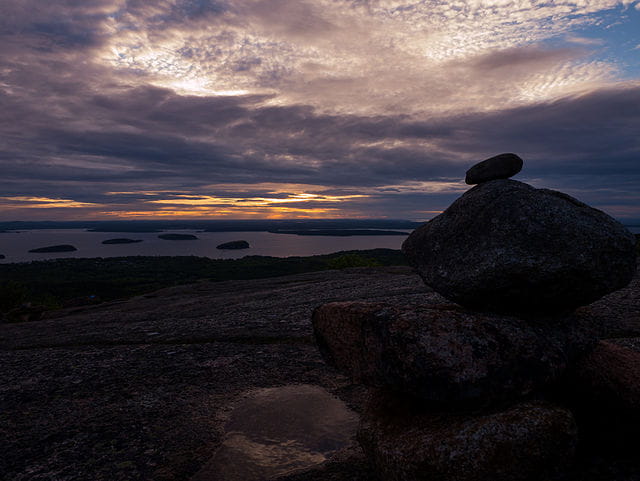
Wake up early — very early. If you have your timed-entry permit, you’ll want to be on Cadillac Mountain’s summit well before first light. From roughly late September through early March, Cadillac Mountain is the first place in the continental United States to receive sunrise. Even outside that window, watching dawn break over the islands of Frenchman Bay from 1,528 feet is an experience that stays with you.
Dress in layers. Even in summer, the summit can be 15 to 20 degrees colder than Bar Harbor below, and the wind bites. Bring coffee in a thermos. Find a spot on the south ridge loop trail away from the main overlook, and just watch.
Mid-Morning: Park Loop Road and Sand Beach
After sunrise, head down the mountain and pick up the one-way section of Park Loop Road heading south. This 27-mile loop is the backbone of the eastern side of the park, and even a partial drive offers stunning ocean views.
Your first stop should be Sand Beach — one of the few sandy beaches in Maine and the only one in Acadia. The sand here is actually a mix of ground shells and granite, giving it a pinkish hue. Swimming is possible, though the water temperature rarely climbs above 55°F even in August. Most visitors wade in, shriek, and retreat. It’s a rite of passage.
Late Morning: Thunder Hole
About a mile south of Sand Beach along the Ocean Path (a flat, accessible walking trail), you’ll find Thunder Hole. When the tide and wave conditions align just right — usually about two hours before high tide with a moderate swell — waves funnel into a narrow chasm and explode upward with a boom you can feel in your chest. Check the posted tide schedule at the trailhead to time your visit.
Afternoon: Ocean Path and Otter Cliff
Continue south along the Ocean Path to Otter Cliff — a 110-foot vertical wall of pink granite rising directly from the sea. It’s one of the premier rock climbing destinations on the East Coast, and watching climbers work their way up the face while surf crashes below is quietly hypnotic. Even if you’re not climbing, the views south toward the Cranberry Isles are exceptional.
Evening: Bar Harbor and a Maine Lobster Dinner
End your first day in Bar Harbor, the charming (and yes, touristy) town that serves as Acadia’s hub. Walk Cottage Street, browse the gear shops, and then settle in for what Maine does best. Lobster here is serious business — whether you go for a classic shore dinner at Thurston’s Lobster Pound in Bernard (a 20-minute drive but worth every minute) or grab a lobster roll at one of the stalls on the Bar Harbor Village Green. Eat outside if the weather allows.
Day 2: Carriage Roads, Jordan Pond, and Acadia Mountain
Morning: The Carriage Road Network
John D. Rockefeller Jr. spent decades and his own fortune building 45 miles of broken-stone carriage roads through Acadia — roads specifically designed for horse-drawn carriages and later opened to hikers and cyclists. In 2026, they remain some of the finest off-road cycling routes in the eastern United States.
Rent a bike in Bar Harbor (multiple outfitters open by 8 a.m.) and head to Eagle Lake for a loop that takes you through mixed forest, past working farms, and across elegant stone bridges. The carriage roads are graded and maintained, making them accessible to most fitness levels. A 10-mile loop around Eagle Lake and Witch Hole Pond takes roughly two to three hours at a leisurely pace.
Midday: Jordan Pond House and the Popovers
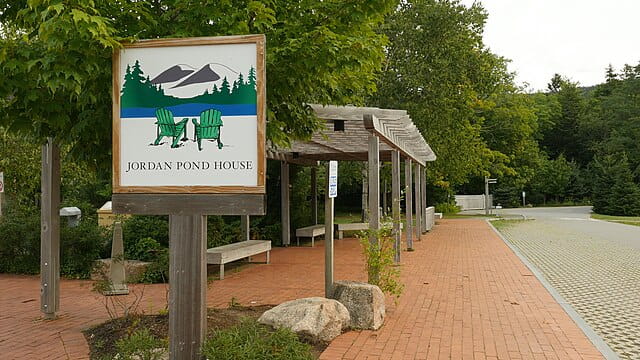
No visit to Acadia is complete without lunch — specifically popovers with butter and strawberry jam — at Jordan Pond House. The tradition dates back to the late 19th century when the original tearoom opened on the shores of Jordan Pond. The popovers are large, eggy, crispy on the outside, and nearly hollow inside. Order two.
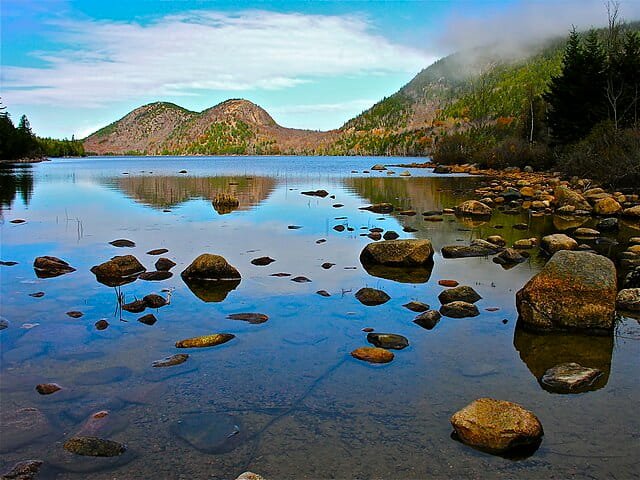
The lawn behind the restaurant overlooks Jordan Pond and the twin rounded hills known as the Bubbles. It’s one of the most photographed views in Maine, and from a picnic blanket on the grass, it’s easy to understand why.
Afternoon: The Bubbles Trail and Jordan Pond Shore Path
After lunch, burn off the popovers with a hike. The South Bubble Trail is short (about 0.8 miles round-trip with 300 feet of elevation gain) but delivers a panoramic view of Jordan Pond that few visitors get to see from above. At the summit, look for Bubble Rock — a refrigerator-sized glacial erratic boulder balanced improbably on the edge of the cliff. Geologists estimate it was deposited there roughly 18,000 years ago as glaciers retreated.
For a flatter option, the Jordan Pond Shore Path circles the entire pond in about 3.3 miles on mostly flat terrain, offering changing perspectives on the Bubbles and the surrounding forest.
Late Afternoon: Acadia Mountain
If your legs still have something left, Acadia Mountain on the quieter west side of Mount Desert Island rewards effort with one of the park’s best views — a sweeping panorama over Somes Sound, the only fjord (or near-fjord, depending on your geological source) on the eastern seaboard of the United States. The round-trip hike is about 2.5 miles with 500 feet of gain and takes most people under two hours.
The west side of the island sees noticeably fewer visitors than the east side, which makes this hike feel genuinely peaceful even on a summer weekend.
Evening: Southwest Harbor Sunset
Stay on the quiet side for dinner. Southwest Harbor is a working fishing village with excellent seafood and a fraction of the Bar Harbor crowds. Watch lobster boats come in at the town pier as the sun drops behind the hills across Somes Sound. It’s the kind of evening that makes you wonder why you don’t travel more slowly all the time.
Day 3: Isle au Haut, Schoodic, or the North Woods
Option A: Take a Ferry to Isle au Haut
If you want to experience Acadia as it was before the crowds found it, take the morning ferry from Stonington to Isle au Haut — the remote island section of the park, accessible only by boat. The ferry is operated by Isle au Haut Boat Services, and park access permits (required June through September) are limited to 60 visitors per day. That deliberate scarcity is the entire point.
The island has about 18 miles of hiking trails through dense spruce forest and along rocky shoreline. Duck Harbor Trail and Western Head Trail form a loop that most hikers describe as the most wild and unspoiled experience in all of Acadia. There are no restaurants, no souvenir shops, no crowds. Bring your own food, your own water filter, and your full attention.
Option B: Drive to Schoodic Peninsula
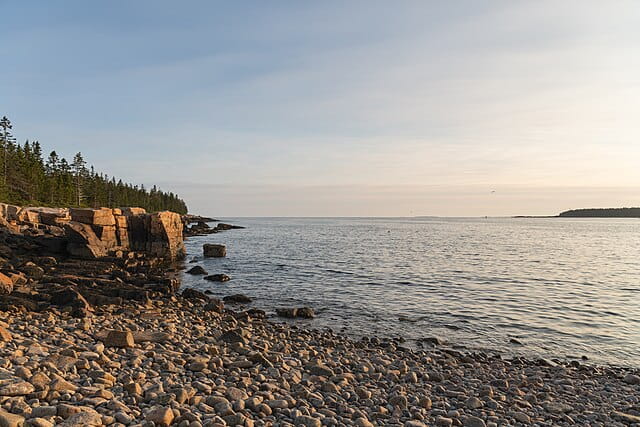
If Isle au Haut feels too remote, the Schoodic Peninsula — about an hour’s drive from Bar Harbor — offers another crowd-free slice of Acadia. The one-way Schoodic Loop Road circles a dramatic point of land where the Atlantic meets a flat shelf of granite in a display of raw, percussive force. On a windy day, the spray reaches thirty feet.
The Schoodic Head Trail (about 2 miles round-trip) provides elevated views over the peninsula and the open Atlantic. Birders come to Schoodic specifically for its excellent hawk migration viewing in September and October.
Late Afternoon: Abbe Museum and Wabanaki Heritage
Before you leave Mount Desert Island, make time for the Abbe Museum in Bar Harbor — a Smithsonian-affiliated institution dedicated to the history and contemporary culture of the Wabanaki people, the Indigenous nations whose homeland includes all of present-day Maine. Acadia National Park sits on land with a human history stretching back more than 12,000 years before European contact. Understanding that context adds a profound layer to everything you’ve seen over the past three days.
The museum is compact — most visitors spend 60 to 90 minutes — but thoughtfully curated, with rotating exhibitions featuring contemporary Wabanaki artists alongside archaeological and historical collections.
Final Evening: One More Sunset at Bass Harbor Head Lighthouse
End your three days at Bass Harbor Head Lighthouse, tucked into the southwestern corner of Mount Desert Island. Arrive 30 to 45 minutes before sunset, find a spot on the rocks below the lighthouse, and watch the sky turn. It’s one of the most photographed lighthouses in New England, and deservedly so — the composition of the red-roofed light tower above the wave-washed pink granite is almost too picturesque to be real.
It is real, though. That’s the thing about Acadia. Everything you’ve seen over these three days — the sunrise, the fog on the carriage roads, the crash of Thunder Hole, the silence of Isle au Haut — all of it is real, and all of it is waiting for you.
Read Also: Great Smoky Mountains National Park: Complete Guide for First-Time Visitors
Practical Tips for Your 2026 Acadia Visit
Entry fees: The Acadia National Park entrance fee in 2026 is $35 per vehicle for a 7-day pass. An America the Beautiful Annual Pass ($80) covers entrance fees at all national parks for one year and pays for itself after three visits.
Cell service: Coverage is spotty in parts of the park, especially on the west side of the island. Download offline maps (AllTrails or Gaia GPS) before you arrive.
Weather: Maine weather is famously variable. Pack rain gear regardless of the forecast. A foggy morning in Acadia often burns off by midday into something spectacular — don’t cancel plans based on an early forecast.
Gear: Comfortable hiking shoes with ankle support are essential for rocky trails. Trekking poles help significantly on descents like the Precipice Trail (one of the park’s most dramatic ladder-assisted climbs, worth adding if you have a fourth day).
Reservations: Book lodging, ferry tickets for Isle au Haut, and Cadillac Mountain timed-entry permits as far in advance as possible. Acadia in peak season is genuinely competitive for these resources.
Three days in Acadia isn’t enough. It never is. But three days, planned well, will give you the kind of memories that make you start looking at flight prices again before you’ve even finished unpacking at home.
Planning a longer trip? Consider adding a day for the Precipice Trail, sea kayaking around the coastline, or a whale-watching boat tour out of Bar Harbor. Acadia rewards every extra hour you can give it.

Rubie Rose is a travel writer who focuses on USA national parks, hiking trails, and practical travel planning. She shares easy-to-follow guides to help visitors explore parks safely and confidently. Her work on parktrailsguide.com is built on deep research, firsthand accounts from park visitors, and a commitment to giving readers information they can actually use on the trail.