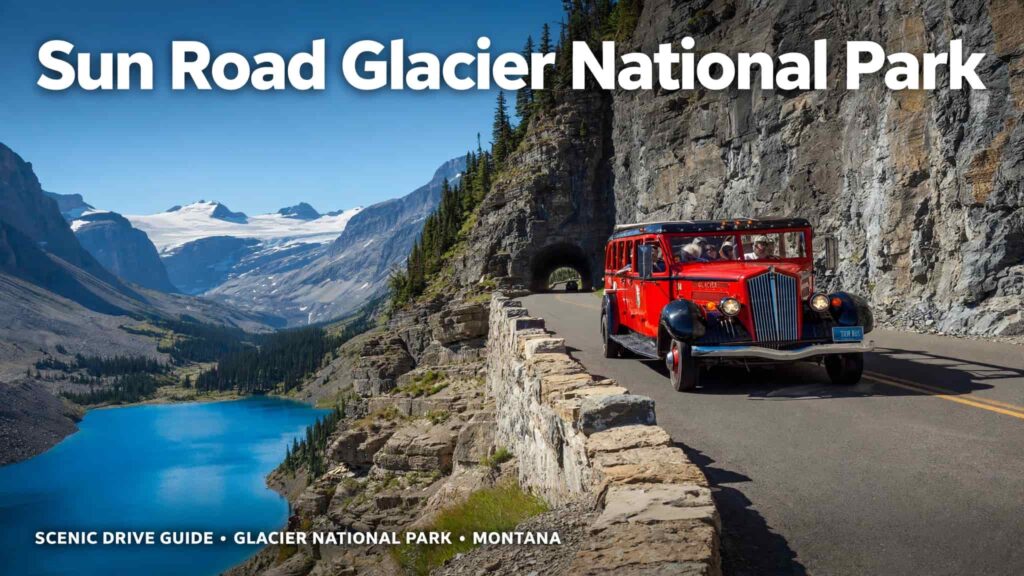
Going-to-the-Sun Road in Glacier National Park: Complete Guide for 2026
Going-to-the-Sun Road is the most famous scenic drive in Glacier National Park, Montana. The historic road crosses the park from West Glacier to St. Mary, climbs through dramatic mountain scenery, and reaches Logan Pass at 6,646 feet.
The entire route is about 50 miles long and includes alpine viewpoints, waterfalls, wildlife habitat, hiking access, and some of Glacier’s most recognizable landscapes.
If you’re planning a Glacier National Park trip in 2026, this guide covers the road’s opening season, driving directions, parking, vehicle restrictions, major viewpoints, Logan Pass access, shuttle information, and practical tips.
2026 update: Vehicle reservations are not required for Going-to-the-Sun Road in 2026. However, Glacier National Park introduced a reservation-only shuttle system to Logan Pass, and private vehicle parking at Logan Pass was limited to three hours from July 1 through September 7.
Going-to-the-Sun Road at a Glance
| Detail | Information |
|---|---|
| Location | Glacier National Park, Montana |
| Length | About 50 miles |
| Highest point | Logan Pass – 6,646 ft |
| Western entrance | West Glacier |
| Eastern entrance | St. Mary |
| Typical full-road drive | About 2 hours without stops |
| Road surface | Paved |
| Vehicle reservations in 2026 | Not required |
| Main season | Summer through fall, weather permitting |
| Speed limit | 40 mph lower elevations; 25 mph alpine section |
| Major attraction | Logan Pass |
| Major glacier viewpoint | Jackson Glacier Overlook |
The National Park Service estimates that driving the full 50 miles without stopping takes approximately two hours, although visitors should allow considerably more time because of viewpoints, traffic, wildlife, parking and hiking stops.
What Is Going-to-the-Sun Road?
Going-to-the-Sun Road is a spectacular mountain highway crossing the heart of Glacier National Park.
It begins near West Glacier on the park’s western side and travels along Lake McDonald before climbing toward the Continental Divide. The road then crosses Logan Pass and descends toward St. Mary on the eastern side.
The route was designed to fit into the surrounding mountain landscape rather than simply cutting straight through it. As you climb higher, the scenery changes from dense forests and lakes to exposed cliffs, waterfalls and alpine terrain.

Is Going-to-the-Sun Road Open in 2026?
Yes. The entire 50-mile Going-to-the-Sun Road opened for the 2026 season on June 22, 2026, allowing vehicles to travel between West Glacier and St. Mary and access Logan Pass from both directions.
However, this road is highly weather-dependent.
The National Park Service says the alpine portion typically remains open until around the third Monday of October, but weather can cause earlier temporary closures. Heavy rain, snow, rockfall, flooding and other hazards can result in short-notice closures.
This happened in September 2026: the alpine sections were temporarily closed on September 6 because of heavy rainfall and potential rockfall, then reopened after conditions were evaluated.
Before driving the road, always check the current NPS road status.
Do You Need a Reservation for Going-to-the-Sun Road in 2026?
No vehicle reservation is required in 2026.
This is an important change for visitors familiar with Glacier’s previous vehicle reservation system. The National Park Service states that vehicle reservations are not required anywhere in the park during the 2026 season.
However, that doesn’t mean you can ignore access restrictions.
Logan Pass has separate rules
For 2026, Glacier introduced:
- A reservation-only shuttle system to Logan Pass
- Three-hour parking limits for private vehicles at Logan Pass during the specified summer period
- Early-morning shuttle options
- Different access arrangements for visitors undertaking longer hikes
The three-hour private-vehicle parking limit at Logan Pass applied from July 1 through September 7, 2026.
Where Does Going-to-the-Sun Road Start?
You can drive the road from either direction.
From the west
The western side begins near West Glacier and provides access to:
- Apgar
- Lake McDonald
- Lake McDonald Lodge
- Avalanche
- The Loop
- Logan Pass
From Kalispell, the National Park Service directs visitors toward West Glacier via U.S. Highway 2.
From the east
The eastern end starts near St. Mary and travels toward:
- Rising Sun
- St. Mary Lake viewpoints
- Jackson Glacier Overlook
- Siyeh Bend
- Logan Pass
The eastern side is particularly scenic as the road climbs toward Logan Pass.
Going-to-the-Sun Road Map and Route
The basic route is:
West Glacier → Apgar → Lake McDonald → Avalanche → The Loop → Logan Pass → Siyeh Bend → Jackson Glacier Overlook → Rising Sun → St. Mary

The road’s highest point is Logan Pass, which sits at 6,646 feet above sea level. Logan Pass is approximately 32 miles from the west entrance and 18 miles from the east entrance.
Best Stops Along Going-to-the-Sun Road
There are numerous places worth stopping along the route. You don’t need to stop everywhere, but several locations are especially useful for first-time visitors.
1. Lake McDonald
Lake McDonald is one of the first major attractions on the western side.
The enormous lake is surrounded by forested mountains and is particularly scenic in the morning or evening.
It’s also a useful place to slow down before beginning the higher mountain section of the drive.
2. Avalanche Area
The Avalanche area provides access to hiking and recreation opportunities and is one of the important developed areas along the western section.
If you want to combine the scenic drive with a hike, check the current trail conditions before setting out.
3. The Loop
The Loop is one of the most recognizable sections of Going-to-the-Sun Road.
The road makes a major switchback while climbing toward Logan Pass.
It’s also an important landmark because the road becomes increasingly mountainous beyond this point.

4. Weeping Wall
The Weeping Wall is one of the most memorable roadside features.
During periods of strong snowmelt and rainfall, water flows down the rock face beside the road.
The amount of water can vary significantly depending on the season and weather.

Be careful when stopping here. Roadside conditions can be wet, and you should use only designated areas.
5. Logan Pass
Logan Pass is the highlight of the entire route for many visitors.
At 6,646 feet, it is the highest point on Going-to-the-Sun Road and sits on the Continental Divide.
The area provides access to several trails and the Logan Pass Visitor Center.
Mountain goats and bighorn sheep are among the wildlife commonly seen around Logan Pass.

Important Logan Pass tip
Parking is extremely limited and can fill early during busy periods. The NPS says the Logan Pass parking lot is often full by sunrise during peak conditions.
If you want to spend several hours hiking from Logan Pass, investigate the shuttle options rather than assuming you’ll be able to leave your vehicle there all day.
6. Jackson Glacier Overlook
If you’re interested in seeing a glacier from the road, make time for Jackson Glacier Overlook.
The National Park Service identifies it as the best opportunity along Going-to-the-Sun Road to see a glacier from the roadway.
The overlook is on the eastern side between Logan Pass and St. Mary.
7. St. Mary Lake
The eastern side of the road provides beautiful views around St. Mary Lake.
The combination of clear water, mountains and open terrain makes this section particularly different from the forested western side.
If you’re driving the entire road, don’t rush through the eastern descent.
How Long Does It Take to Drive Going-to-the-Sun Road?
Without stopping, the entire 50-mile road takes approximately 2 hours.
In reality, plan considerably longer.
Suggested time
Quick scenic drive: 3–4 hours
Scenic drive with major stops: 5–7 hours
Drive + hiking: Full day
The exact amount of time depends on:
- Traffic
- Parking availability
- Wildlife sightings
- Road conditions
- Number of viewpoints
- Hiking plans
- Weather
A common mistake is treating the road like an ordinary highway. It’s better to think of it as a scenic experience where the drive itself is part of the destination.
Can You Drive Going-to-the-Sun Road Yourself?
Yes.
Private vehicles can drive the road when the applicable section is open.
However, the road is narrow, winding and mountainous in places. Drivers should remain alert around blind curves and watch for pedestrians, cyclists and wildlife.
The posted speed limit is 40 mph in lower elevations and 25 mph in the alpine section.
If you’re uncomfortable driving mountain roads, shuttle services and commercial tours can provide alternatives.
Going-to-the-Sun Road Vehicle Restrictions
This is one of the most important things to know before renting a vehicle.
Between Avalanche Creek and Rising Sun, vehicles or vehicle combinations:
- Longer than 21 feet, including bumpers, are prohibited.
- Wider than 8 feet, including mirrors, are prohibited.
Vehicles taller than 10 feet may also have difficulty traveling west from Logan Pass toward The Loop because of rock overhangs.
What does this mean for RVs?
Large RVs and trailers may not be suitable for the full road.
If you’re traveling in an RV, camper or large vehicle, check the NPS restrictions carefully before attempting the route.
Best Time to Drive Going-to-the-Sun Road
The best period depends on what you want to see.
Late June to early July
This is when the high-elevation road typically becomes fully accessible, although opening dates vary with snow and avalanche conditions.
You may encounter:
- Snow around Logan Pass
- Waterfalls from snowmelt
- Cold temperatures
- Temporary trail closures
In 2026, the full road opened on June 22.
July and August
These are popular months for the full Going-to-the-Sun Road experience.
Expect:
- Heavy traffic
- Busy parking areas
- More open trails
- Warmer weather at lower elevations
- Cooler alpine conditions
Start early if you want easier parking and less congestion.
September
September can offer a different experience, with changing weather and fewer summer crowds at some times.
However, mountain weather can change quickly.
In September 2026, heavy rainfall caused a temporary closure of the alpine sections, demonstrating why checking road conditions immediately before your visit matters.
October
The alpine road typically closes around the third Monday of October, although the exact timing depends on weather.
Don’t plan an October trip around an assumed opening date.
What Is the Best Direction to Drive?
You can drive either direction.
West to east
West Glacier → Logan Pass → St. Mary
This route gradually takes you from Lake McDonald and forest scenery into the higher alpine landscape.
East to west
St. Mary → Logan Pass → West Glacier
This direction provides spectacular views as you approach Logan Pass from the east and then descend toward Lake McDonald.
If you have time, driving the road in one direction and exploring other park areas afterward can give you a more complete Glacier experience.
Going-to-the-Sun Road Shuttle in 2026
The 2026 shuttle system is different from previous seasons.
Glacier National Park introduced a ticketed-only shuttle service to Logan Pass, including early-morning express routes. Shuttle tickets were made available through booking windows, with some released in advance and additional next-day tickets released daily.
This option is particularly useful if your goal is to spend longer hiking at Logan Pass rather than searching for a parking space.
For the latest shuttle schedule and ticket availability, check the official NPS information before your trip.
Are There Gas Stations on Going-to-the-Sun Road?
No.
The National Park Service warns that there are no fueling stations inside Glacier National Park.
Fill your tank before entering the park, particularly if you’re planning a full-day drive.
Don’t assume you’ll be able to find fuel somewhere along the route.
Cell Service on Going-to-the-Sun Road
Cell coverage can be limited.
The National Park Service notes that service varies considerably throughout Glacier National Park. The west side has some connectivity around West Glacier and Apgar, while coverage becomes less reliable deeper into the park.
Download:
- Maps
- Trail information
- Hotel information
- Reservation details
- Important documents
before entering areas with limited service.
Wildlife Along Going-to-the-Sun Road
Glacier National Park is wild country, and wildlife can appear unexpectedly near the road.
Possible sightings include:
- Mountain goats
- Bighorn sheep
- Bears
- Deer
- Elk
- Smaller mammals
- Birds
The National Park Service specifically notes that mountain goats and bighorn sheep are consistently seen around Logan Pass, while grizzly bears are often seen near Two Dog Flats on the eastern side.
Wildlife safety
Never stop in the middle of the road to photograph wildlife.
Use designated parking areas and maintain a safe distance.
Also, don’t throw food or food scraps from your vehicle. NPS warns that this can attract wildlife to roadways and increase wildlife fatalities.
What Should You Bring?
For a full-day Going-to-the-Sun Road trip, pack:
- Water
- Food or snacks
- Warm layers
- Rain jacket
- Comfortable hiking shoes
- Sunglasses
- Sunscreen
- Camera
- Phone with offline maps
- Park pass
- Extra vehicle supplies
Don’t judge mountain conditions by the temperature in nearby towns. Logan Pass can be dramatically colder and windier.
Going-to-the-Sun Road Driving Tips
1. Start early
Early morning can make it easier to find parking and avoid some of the busiest traffic periods.
2. Check road conditions
Don’t rely on yesterday’s information. Weather can change quickly.
3. Don’t rush
The road has many viewpoints, and stopping frequently is part of the experience.
4. Watch your vehicle size
Check the NPS restrictions if you’re driving an RV, trailer or large vehicle.
5. Carry food and water
There aren’t restaurants and fuel stations continuously available along the road.
6. Stay in designated parking areas
NPS specifically asks visitors not to park outside marked spaces because it can damage vegetation and interfere with emergency access.
7. Don’t depend on cell service
Download information before leaving your hotel.
8. Check hiking conditions separately
An open road doesn’t necessarily mean every trail is open or safe.
Is Going-to-the-Sun Road Worth Visiting?
Going-to-the-Sun Road is one of the central experiences of a Glacier National Park visit because it connects several different landscapes within one continuous route.
In roughly 50 miles, you can travel from the shores of Lake McDonald through dense forests and dramatic mountain terrain to the high-elevation landscape around Logan Pass and then descend toward St. Mary.
The combination of mountains, waterfalls, wildlife, viewpoints, hiking trails and alpine scenery makes the road much more than simply a way to get from one side of the park to the other.
Frequently Asked Questions
How long is Going-to-the-Sun Road?
Going-to-the-Sun Road is approximately 50 miles long from West Glacier to St. Mary.
How high is Going-to-the-Sun Road?
The road reaches its highest point at Logan Pass, 6,646 feet above sea level.
Is Going-to-the-Sun Road open year-round?
The lower portions remain open year-round in many areas, but the alpine section over Logan Pass is seasonal. The full road typically opens in late June or early July and usually closes around the third Monday of October, depending on weather.
Do I need a vehicle reservation in 2026?
No. Glacier National Park does not require vehicle reservations for Going-to-the-Sun Road in 2026.
Do I need a shuttle reservation?
If you’re using the 2026 Logan Pass shuttle, shuttle tickets are required under the park’s new reservation-only shuttle system.
Can RVs drive Going-to-the-Sun Road?
Some larger vehicles are prohibited. Vehicles or combinations longer than 21 feet or wider than 8 feet are prohibited between Avalanche Creek and Rising Sun.
What is the highest point on the road?
Logan Pass at 6,646 feet.
How much time should I allow?
For a basic drive with several scenic stops, allow at least half a day. If you want to hike at Logan Pass and explore additional viewpoints, plan a full day.
Final Tips for Your 2026 Visit
Going-to-the-Sun Road should be treated as a mountain journey rather than a normal scenic highway.
For the best experience:
- Check the NPS road status before leaving.
- Start early when possible.
- Check vehicle-size restrictions before driving.
- Don’t assume Logan Pass parking will be available.
- Bring layers because alpine weather can be cold.
- Download maps before entering areas with weak service.
- Allow extra time for wildlife and traffic.
- Never stop in the roadway for photographs.
- Use designated parking areas.
- Check trail conditions separately from road conditions.
Most importantly, remember that mountain weather can change quickly. Even when the road is officially open, conditions at Logan Pass can be very different from those at West Glacier or St. Mary. The NPS recommends checking current conditions and road status before traveling.
Official 2026 resources
Glacier National Park — Going-to-the-Sun Road
Glacier National Park — Current Conditions & Road Status
Glacier National Park — Visiting Logan Pass in 2026
Check also: Glacier National Park Tickets: Entry Fees, Passes & Reservations (2026)