
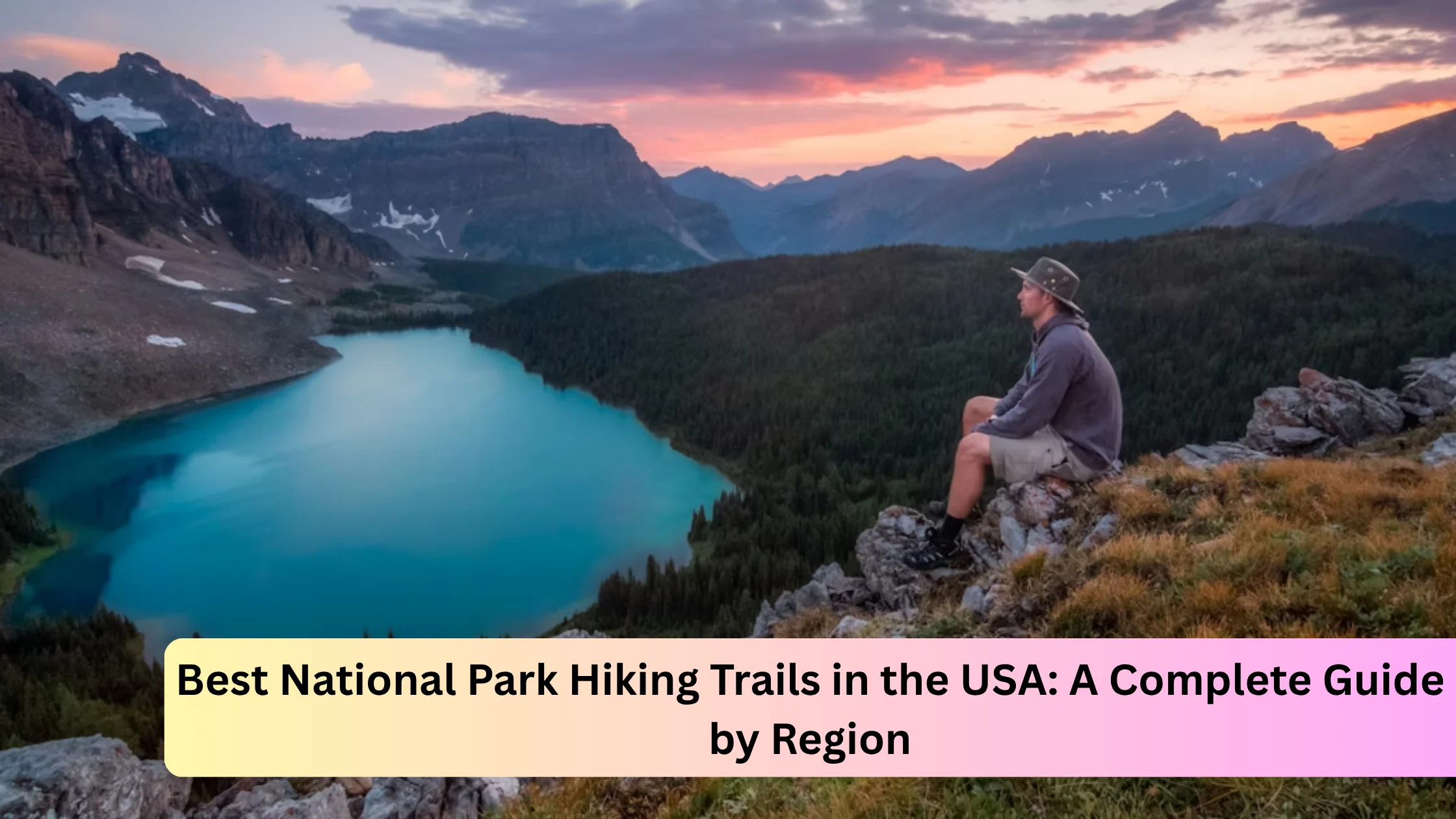
Let’s be real: hiking has become America’s favorite personality substitute. You post one photo on a cliff, suddenly you’re “an outdoors person.” But hey, who are we to judge? The United States is loaded with trails that make you question your life choices and say “wow” mid-struggle. From sun-bleached deserts to moody mountain passes, this sarcastic [Guide] breaks down the best trails by region—East, West, Midwest, and South—because apparently, nature’s trendier than therapy.
So grab your overpriced boots, fill your Hydro Flask, and prepare to sweat your soul out in places that’ll make your camera roll cry with joy.

West Coast Wonders: Where the Mountains Roast Your Ego
The West Coast is the influencer of hiking regions. Every photo looks perfect—every climb feels personal. These trails don’t just test endurance; they test your willingness to tolerate sunburn and silence.
Half Dome Trail, Yosemite National Park (California)
If you’ve ever wanted to experience all five stages of grief outdoors, this is it. 16 miles of granite, cables, and delusion. When you finally reach the top, Yosemite stares back at you like, “Was it worth it?” Spoiler: it was, but your quads won’t agree.
Pro tip: Tell everyone you “summited Half Dome”—watch them nod in fear and respect.
Angels Landing, Zion National Park (Utah)
A hike literally named after celestial beings because only they could handle it gracefully. Narrow chains, dizzy heights, and sweaty palms unite. It’s breathtaking both metaphorically and medically.
Bold truth: You might think you’re there for views—but really, you’re here to address your fear of mortality.
Mist Trail, Yosemite National Park (California)
Shorter than Half Dome but wetter, sassier, and way more tourist-packed. Every step’s mist-soaked bliss until you realize your photos look like condensation selfies. You’ll still brag about it.
Hoh Rainforest Trail, Olympic National Park (Washington)
Rainforest meets Pacific Northwest melancholy. Imagine moss-covered dreams and existential dampness. It’s like hiking inside a Studio Ghibli film with real mud.
Side note: Bring waterproof shoes—not “these are fine for rain” lies.
This [Guide] doesn’t glorify suffering, but these West Coast trails kind of make pain poetic. It’s cardio disguised as transcendence—and somehow, people keep coming back for more.
East Coast Escapes: History, Humidity, and Therapy in Forest Form
The East Coast doesn’t flex like the West, but it drips charm (and sweat). Think old-school Americana meets panic over tick bites.
Appalachian Trail (spanning 14 states)
Ah, the granddaddy of hikes—2,190 miles long. Ideal for people who hate stability and love blisters. You can hike a section or go full endurance maniac. Either way, you’ll find camaraderie, quiet, and too many squirrels watching you cry.
Cadillac Mountain, Acadia National Park (Maine)
Not long, not easy, but iconic. Sunrise views that make waking up at 4 a.m. almost worth it. Just don’t expect peace—half of New England’s on that summit.
Bold truth: It’s the perfect hike for people who crave validation and Vitamin D at the same time.
Old Rag Mountain, Shenandoah National Park (Virginia)
A classic roller-coaster of boulders, scrambles, and “why did I wear jeans?” moments. The summit makes it all worth it. Still feels illegal the first time you climb rocks without instructions.
Great Smoky Mountains Loop Trails (Tennessee/North Carolina)
Verdant, misty, undeniably gorgeous. Free entry means chaos—families, bugs, and amateur hikers everywhere. Yet somehow you’ll still find pockets of peace between collapsed picnic dreams.
East Coast hikers are a vibe—they hydrate with Dunkin and chase trails like deadlines. This [Guide] salutes their resilience and denial.

Midwest Mayhem: Flatlands with Hidden Finesse
The Midwest has entered the chat—quietly, awkwardly, but surprisingly impressive. It’s underrated hiking territory. Less crowds, more cows, and trails that look deceptively easy until humidity hits.
Ice Age Trail (Wisconsin)
Over a thousand miles carved by glaciers, sprinkled with charm, and relentlessly humid. The trail’s beauty sneaks up on you—so do mosquitoes. Bring bug spray. A lot.
Cuyahoga Valley National Park (Ohio)
The park everyone forgets exists, but it’s gorgeous—waterfalls, forests, and a scenic railway to save your dignity when hiking fails. Bold claim: You’ll call yourself “a nature person” after one waterfall selfie here.
Theodore Roosevelt National Park (North Dakota)
You hike here, you rethink life. Painted canyons, roaming bison, absolute solitude. It’s midwestern peace in weird pastel form.
Side note: Don’t try to pet bison. You’re not the main character—yet.
Badlands National Park (South Dakota)
Part alien planet, part fever dream. Endless rock formations under aggressive sunshine. Trails range from chill to “I can’t feel my legs.” The names alone—Notch Trail, Door Trail—sound like metaphors for adulthood.
The Midwest may lack elevation, but it makes up for it in humility and heart. Every trail’s a reminder you don’t need mountains to feel small.
Southern Heat and Desert Chaos: Sweat Is Your Souvenir
The South and Southwest don’t just offer beauty—they offer combustion. Think red deserts, dramatic names, and temperatures that mock hydration.
Bright Angel Trail, Grand Canyon National Park (Arizona)
The classic canyon trek. It’s steep, relentless, and heartbreakingly beautiful. You’ll descend feeling powerful, ascend feeling betrayed. Perfect metaphor for modern work-life balance.
Big Bend National Park (Texas)
Endless desert, perfect isolation, occasional rattlesnake greetings. The trails are wild—Emory Peak, Lost Mine—and the stars at night? Unreal.
Bold moment: You’ll forget your 9-to-5 briefly until the sun reminds you of mortality.
Arches National Park (Utah)
The arch of all arches—Delicate Arch—is Instagram’s favorite backdrop. Getting there involves sweat, rocks, and people pretending not to hate each other. Worth it every time.
Everglades National Park (Florida)
The humidity’s alive here. So are gators. The trails—gumbo-limbo boardwalks and swamp paths—push you to redefine “adventure.” Wear bug spray or write your will.
Southern and desert trails are war zones. You don’t conquer them; you tolerate them while pretending it’s a pilgrimage. This [Guide] insists you pack twice the water and three times the sarcasm.
Pacific Northwest & Alaska: Moody Beauty and Existential Hiking
These regions give hikers their ultimate fantasy—towering peaks, lush forests, weather-induced introspection, and enough rain to baptize your traumas.
Mount Rainier National Park (Washington)
It’s not a trail; it’s an emotional process. Stunning glaciers, alpine meadows, and the constant fear you didn’t pack enough snacks. Every view feels like a high-definition screensaver.
Harding Icefield Trail, Kenai Fjords (Alaska)
One of the most brutal and stunning hikes in the U.S. It’s as if Mother Nature went, “You want beauty? Earn it.” You’ll see glaciers older than civilization—while reconsidering your fitness level.
Crater Lake Rim Trail (Oregon)
Mind-blowingly blue lake surrounded by a volcano rim. The hike’s simple until altitude makes you stupid. Drink water. Question everything.
Tongass National Forest (Alaska)
America’s largest forest. Hiking here feels cinematic—fog, waterfalls, and the weird serenity of realizing no one’s nearby. For introverts, this is heaven.
These northern [Guide] destinations redefine quiet. You start as a stressed-out human; you end as moss with anxiety.
The “You Survived!” Conclusion
If you’ve made it through this list, congrats—you’re either planning your next great U.S. hiking trip or aggressively procrastinating adult responsibilities. Either way, admirable.
America’s national park trails aren’t just paths—they’re personality tests wrapped in dirt and majesty. Each region has its own flavor: the West flaunts, the East comforts, the Midwest humbles, the South scorches, and Alaska just transcends.
You don’t need to be a fitness god to hike them—just semi-prepared, mildly delusional, and full of snacks.
Final sarcasm: Hiking won’t solve your problems. But at least the views make denial scenic.
Now go lose signal in style.

Rubie Rose is the founder of Park Trails Guide. As a USA resident and nature lover, she is dedicated to creating helpful national park guides using official sources and real visitor experiences. Her mission is to make planning trips to places like Yosemite, Grand Canyon, and Zion easier for families, beginners, and travelers.